৩১ ভাদ্র ১৪৩৩


Iran Tightens Security Around Enriched Uranium Stockpile as Nuclear Talks Near Critical Stage
13 June 2026 16:06 PM
NEWS DESK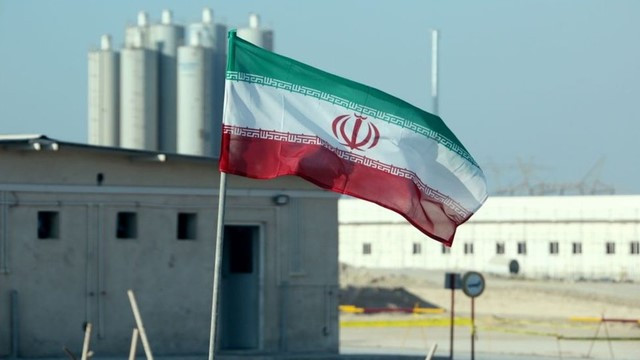
Iran has significantly increased efforts in recent weeks to secure its stockpile of near weapons-grade enriched uranium, reportedly sealing off storage tunnels, collapsing access routes, and laying explosive booby traps at key entry points, according to sources familiar with U.S. intelligence assessments.
Five sources said the measures have made access to the roughly half-ton stockpile of highly enriched uranium considerably more difficult, dangerous, and time-consuming than it was just a month ago.
The developments come after U.S. President Donald Trump publicly suggested that he could order the U.S. military to seize the uranium stockpile, a move that appears to have prompted Tehran to strengthen the protection of its nuclear assets.
Iran’s new defensive measures add a significant layer of complexity to a proposed agreement between Washington and Tehran, one of whose central objectives is the removal or destruction of the enriched uranium. The latest developments raise a critical question: who would assume the risks involved in excavating and recovering the material from heavily fortified underground facilities?
Iran’s mission to the United Nations did not immediately comment on the reports, while the White House also declined to provide an immediate response to CNN’s inquiries.
Uranium Removal a Key U.S. Priority
Trump has repeatedly identified the recovery of the enriched uranium as a top U.S. priority in negotiations aimed at ending ongoing tensions and reopening the Strait of Hormuz, which Iran has effectively restricted.
Speaking to reporters on Friday, a senior U.S. administration official said both sides were approaching a final agreement. Under the proposed deal, Iran would be required to hand over its stockpile of enriched uranium to the United States.
The official added that the material would either be neutralized on-site or removed from Iran for disposal.
However, conflicting public statements from U.S. and Iranian officials have left many of the agreement’s details unclear. The uncertainty deepened after a draft version of the proposed deal was leaked to an Iranian semi-official news agency on Friday, prompting a sharp reaction from Trump on social media.
Recovery Effort Becoming More Difficult
Sources familiar with the situation say that even Iranian personnel would now face major challenges in accessing the uranium.
Recovering the material would likely require heavy excavation equipment and extensive mine-clearing operations, making any retrieval mission both technically complex and highly dangerous.
Scott Roecker, former director of the Office of Nuclear Material Removal at the U.S. National Nuclear Security Administration, said that if the reports are accurate, efforts to recover the highly enriched uranium would become significantly more complicated.
He warned that the new security measures could also provide Iran with opportunities to avoid full compliance with any future agreement.
According to Roecker, if international negotiators require Iran to consolidate all enriched uranium at a central location for verification and eventual removal or down-blending, Tehran would bear responsibility for providing a complete inventory and ensuring that the material can be recovered.
“But in such a scenario,” Roecker cautioned, “Iran could potentially argue that some of the highly enriched uranium is no longer accessible. In that case, there would be no absolute guarantee that the material could not be recovered and used at some point in the future.”
Isfahan Believed to Hold Majority of Stockpile
International observers believe that the majority of Iran’s enriched uranium stockpile is located within collapsed tunnel networks at the Isfahan nuclear facility in central Iran, while smaller quantities are believed to be dispersed across other sites.
In mid-May, U.S. military planners reportedly considered a special operation to seize the nuclear material. The plan was ultimately abandoned because officials judged the risks to be too high.
Since then, intelligence assessments suggest that Iran has further strengthened security around the underground locations where the uranium is believed to be stored.
Trump himself previously acknowledged the dangers associated with any military attempt to recover the material. In a May interview with Fox News, he expressed confidence that Iran would not be able to secretly retrieve the uranium without attracting the attention of U.S. intelligence agencies.
Nevertheless, two sources told CNN that by publicly identifying the uranium stockpile as a potential military target, Trump may have inadvertently encouraged Tehran to increase its defensive measures and secure the material more aggressively.
Technical Negotiations Likely to Continue
Even if Washington and Tehran succeed in signing an agreement in the coming weeks, experts expect extensive technical negotiations to continue regarding the future of Iran’s nuclear program and the disposition of the uranium stockpile.
Removing the material from Iran would likely require deploying a specialized mobile uranium-processing facility operated by the U.S. National Nuclear Security Administration and associated with Oak Ridge National Laboratory in Tennessee.
Earlier this month, senior U.S. negotiators Jared Kushner and Steve Witkoff reportedly visited the laboratory as discussions over nuclear material removal intensified.
However, experts say that even with the world’s leading nuclear-removal specialists involved, the operation would be a lengthy and challenging undertaking. Trump recently told reporters that completely removing the uranium could take at least two weeks.
As negotiations approach a decisive stage, the fate of Iran’s enriched uranium stockpile remains one of the most sensitive and technically demanding issues facing both sides.