১৭ আশ্বিন ১৪৩৩


U.S. Pressures Countries to Choose Between American and Chinese AI Alliances, Reuters Reports
19 August 2026 06:08 AM
NEWS DESK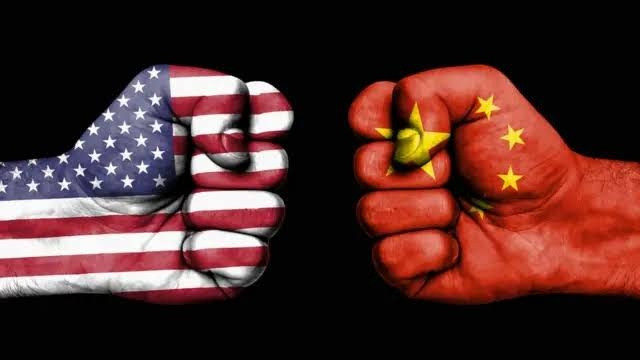
The United States is urging countries to choose between Washington and Beijing in the global race for artificial intelligence (AI), warning that joining a China-led AI initiative could jeopardize participation in a U.S.-backed technology coalition, according to an internal draft letter obtained by Reuters and a U.S. official familiar with the matter.
The draft letter cautions countries that participation in AI alliances viewed as conflicting with U.S. interests may prevent them from remaining trusted partners in Washington's AI ecosystem.
U.S. Push to Secure AI Supply Chains
Last year, the United States launched the Pax Silica initiative to strengthen cooperation on AI models, semiconductors, and critical minerals while reducing dependence on geopolitical rivals.
Around 24 countries, including Kazakhstan, have joined the initiative. Kazakhstan is a major supplier of critical minerals but has also signed on to China's AI cooperation framework, making it the only known country to participate in both initiatives. U.S. allies including Japan, Australia, and South Korea are also members of Pax Silica.
According to Reuters, the draft letter is expected to be sent to 35 countries that signed the AI Opportunity Statement, a joint declaration on cooperation in AI, semiconductor technology, and critical mineral supply chains.
Warning Against "Parallel Alliances"
The draft urges governments to make a deliberate strategic choice on AI cooperation, arguing that membership in competing technology blocs is incompatible with the commitments expected under Pax Silica.
"Being part of everything means being part of nothing," the letter reportedly states, adding that joining Pax Silica represents not merely membership but a broader commitment.
Although the draft does not explicitly mention China, it says countries cannot fulfill that commitment while simultaneously participating in parallel alliances whose objectives conflict with those of the United States.
A U.S. official, speaking on condition of anonymity, questioned how a country could join a China-led AI alliance while claiming to be a reliable partner within the U.S.-led technology ecosystem.
China's Expanding AI Strategy
In July, Chinese President Xi Jinping announced the creation of the World Artificial Intelligence Cooperation Organization (WAICO), a rival framework aimed at expanding China's technological influence as global competition in AI intensifies.
Beijing has been strengthening its international AI partnerships while promoting its own technology standards and cooperation mechanisms to counter U.S. influence.
China's embassy in Washington criticized efforts to politicize trade and technology, saying such actions would hinder global AI development and serve no country's long-term interests.
Kazakhstan's embassy did not immediately comment on the report.
Competition Extends Beyond AI Models
Pax Silica is designed to promote joint investment, export controls, and closer cooperation among U.S. allies and partners in critical technologies. Its broader objective is to reduce reliance on strategic competitors for semiconductors, AI models, and critical minerals.
The technological rivalry between the United States and China has intensified as Chinese open-weight AI models—whose trained model parameters are publicly available for modification and deployment—continue to advance alongside proprietary systems developed by U.S. companies such as OpenAI and Anthropic.
At the same time, growing AI capabilities, including increasingly sophisticated automated cyber tools, have renewed international debate over the technology's benefits and security risks.
Meanwhile, reports suggest Beijing is considering tighter restrictions on foreign access to some of its most advanced AI models, reflecting China's broader national security approach to emerging technologies.
Critical Minerals at the Center of Strategic Competition
Kazakhstan became the first Central Asian country to join Pax Silica in June, a move welcomed by Washington because of the country's vast reserves of critical minerals essential for advanced technologies.
As trade tensions have intensified under President Donald Trump's tariff policies, China has increasingly leveraged its dominance in critical mineral supply chains. In response, the United States has accelerated efforts to secure those resources domestically and through trusted international partners.
According to the U.S. State Department, Pax Silica members are eligible to participate in joint AI-related investment projects, while countries that signed the AI Opportunity Statement have expressed shared strategic goals with Washington on the future of artificial intelligence.
A U.S. official told Reuters that the purpose of the draft letter is to make one message clear: countries cannot simultaneously align themselves with both the U.S.- and China-led AI blocs.