২১ কার্তিক ১৪৩৩



NASA's 22-Year-Old Swift Observatory Set to Re-enter Earth's Atmosphere
05 November 2026 17:11 PM
NEWS DESK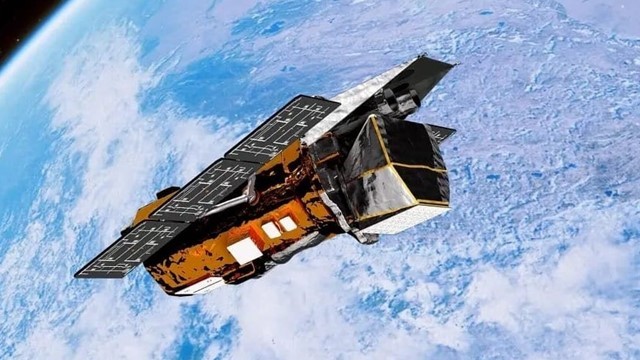
A NASA space observatory launched nearly 22 years ago to study some of the most powerful explosions in the universe is set to make an uncontrolled return to Earth.
The 3,200-pound (approximately 1.45-tonne) spacecraft, known as the Neil Gehrels Swift Observatory, was expected to re-enter Earth's atmosphere on Wednesday, where most of it would burn up.
However, NASA said some debris could survive the intense heat and reach the Earth's surface. In a statement, the agency said the risk of anyone on Earth being harmed by the falling debris was very low, estimated at one in 2,100.
According to NASA's projections, debris from Swift could fall within a region extending from 20.6 degrees south latitude to 20.6 degrees north latitude. This covers an area stretching approximately 1,420 miles (2,285 kilometres) north and south of the equator.
The potential debris zone includes large parts of Central and South America, Central Africa, southern India, Southeast Asia and northern Australia, as well as vast areas of the world's oceans.
The exact time of the spacecraft's atmospheric re-entry remained uncertain, as such predictions can vary by several hours.
According to a forecast by the non-profit Aerospace Corporation, Swift could re-enter Earth's atmosphere at 5:19 am Eastern Time on Wednesday, with a possible margin of error of two hours. Meanwhile, the latest prediction from the US Space Force put the re-entry time at 7:42 am.
The Aerospace Corporation noted that spacecraft launched today would be subject to stricter safety requirements to minimise the risks associated with uncontrolled re-entry at the end of their missions.
Under the 2019 update to guidelines governing the disposal of uncontrolled space debris, the probability of causing a casualty must be less than one in 10,000.
Aerospace Corporation spokesperson Parker Wishik said in an email that casualties in this context refer to the risk of serious injury or death.
NASA had long known that Swift could eventually descend towards Earth in an uncontrolled manner. However, the agency had hoped that a specialised recovery mission launched in July would be able to capture the observatory and move it into a higher orbit.
Such a rescue operation could potentially have extended the spacecraft's operational life by another 10 years or more. However, the attempt ultimately failed.
As atmospheric drag gradually pulled the spacecraft closer to Earth, its altitude dropped to just 171 miles (275 kilometres) above the planet's surface.
Swift subsequently stopped collecting scientific data. In a press release, NASA said the spacecraft could no longer withstand the increasing atmospheric drag and automatically entered a safe mode.
The observatory, named after astrophysicist Neil Gehrels, was launched in 2004 to study gamma-ray bursts, among the most powerful explosions in the universe. Its scientific mission has significantly contributed to astronomers' understanding of these extraordinary cosmic events.