২০ কার্তিক ১৪৩৩



From Job Advertisement to Political Leader: Kylee Wong Takes New Zealand's Opportunity Party to the Electoral Spotlight
04 November 2026 17:11 PM
NEWS DESK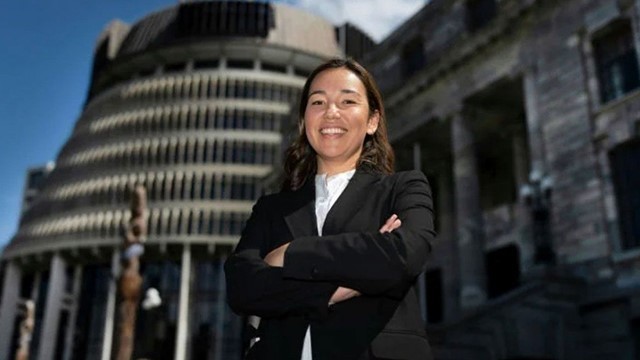
Fifteen months after responding to a job advertisement seeking a new leader for a political party, Kylee Wong is now positioning New Zealand's centrist Opportunity Party for a breakthrough in Parliament. She could even play a crucial role in determining who becomes the country's next prime minister.
The 38-year-old former KPMG consultant took charge of the party in August last year, when its support in opinion polls stood at around one per cent. Under her leadership, the party's support has risen to nearly seven per cent in several recent polls, raising the prospect of crossing the five per cent threshold required to enter Parliament, AFP reported.
Against the backdrop of growing political polarisation, Wong is advocating what she calls "pragmatic politics", with a focus on reducing political tensions and directing attention towards the country's progress.
Her message appears to be resonating with New Zealand voters.
Over the past 30 years, the emergence of a new political party outside the established National and Labour parties has been relatively rare in New Zealand.
For new parties, securing five per cent of the party vote is often a major challenge. It is one of two ways a party can enter Parliament under New Zealand's electoral system.
Consequently, one of the key questions on election night will be whether the Opportunity Party can translate its strong recent polling performance into actual votes. Analysts say achieving that target is far from guaranteed.
In recent elections around the world, support for established political parties has declined, while populist movements advocating more hardline policies on both the left and right have gained ground.
However, Wong, who has Chinese and European ancestry and was born in Fiji, told AFP that New Zealanders were moving in the opposite direction. She described them as "very compassionate and centrist".
"We want a strong economy and a thriving environment. Our call to work together to solve the country's major problems is resonating with many New Zealanders," Wong said.
She added that people were increasingly tired of politicians insulting one another, engaging in arguments and pursuing political point-scoring.
"New Zealanders are genuinely tired of seeing politicians attack each other, fight and try to score political points. They want something different. They want to feel hopeful and optimistic about the future," she said.
Richard Shaw, a politics professor at Massey University, described the Opportunity Party's rise as remarkable, given its differences from other political parties in New Zealand and Wong's relatively limited political experience.
He drew comparisons between Wong and former Prime Minister Jacinda Ardern, who became an internationally recognised symbol of progressive politics because of her personality and popularity.
"I think the way these two relatively young women have practised politics differently has set Wong apart from others," Shaw said.
He noted that at a time when national politics was becoming increasingly heated, confrontational and outspoken, and women active in public life were facing severe online harassment, Wong had stepped forward with a clear message.
"Here I am, leading a political party, and this is how we are going to do politics," he said.
"I think people are responding positively to that."
With the November 7 election approaching, several opinion polls have placed Wong's Opportunity Party in a potential kingmaker position.
This means the party could play a significant role in determining whether a coalition led by the centre-left Labour Party or one led by the right-leaning National Party forms the next government and governs New Zealand for the following three years.