১১ কার্তিক ১৪৩৩



Trump Administration Plans Hundreds of Millions in New Spending to Counter China's Global Influence
29 July 2026 06:07 AM
NEWS DESK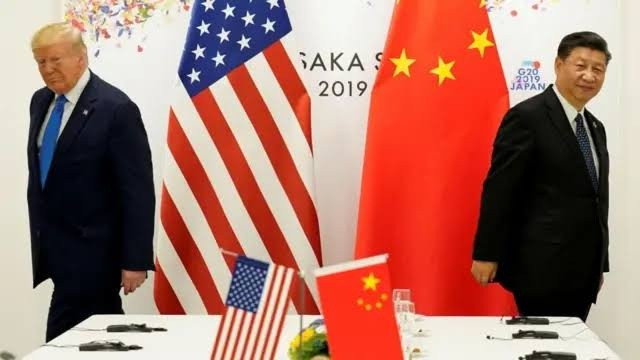
The Trump administration is planning to invest hundreds of millions of dollars in new initiatives aimed at countering China's expanding economic, technological, and diplomatic influence around the world, according to internal U.S. government documents.
The proposals would fund projects across the Caribbean, Central America, Africa, and Asia—many of which were suspended last year during budget cuts and workforce reductions.
According to documents obtained by the Associated Press (AP), the administration informed Congress last week of plans to allocate $175.8 million to replace aging undersea telecommunications cables in the Caribbean and Central America. The initiative aims to reduce China's influence over regional communications infrastructure by supporting secure and reliable alternatives.
A separate internal State Department document reviewed by AP outlines an additional $500 million in proposed programs to counter China's influence across the Western Hemisphere, Africa, and Asia. The document describes the growing economic, technological, and diplomatic reach of the Chinese Communist Party (CCP) as a challenge to U.S. national interests.
The Trump administration has long expressed concern over China's ownership interests in ports at both ends of the Panama Canal, Beijing's infrastructure investments under the Belt and Road Initiative, and Chinese involvement in Latin America's telecommunications sector.
A State Department official, speaking on condition of anonymity, said China's economic activities in the Western Hemisphere pose risks to U.S. national security and economic prosperity. While Chinese-funded projects often appear less expensive initially, the official argued that they can become more costly over time because of maintenance expenses, hidden costs, and quality concerns.
Under the proposed plan, the United States would partner with private cable companies to assist foreign governments in replacing outdated submarine telecommunications cables with secure systems based on U.S. or allied technology.
The projects would include support for submarine cable infrastructure serving El Salvador, Guatemala, Honduras, Haiti, and Nicaragua. However, because of strained bilateral relations, Washington does not intend to work directly with the Nicaraguan government.
According to AP, many of the proposed initiatives revive programs that previously received U.S. funding but were halted last year during government cost-cutting efforts led by the Department of Government Efficiency, overseen by Elon Musk. During that period, the U.S. Agency for International Development (USAID) significantly scaled back its global operations, while hundreds of diplomatic positions were eliminated, leading to the suspension of numerous China-focused initiatives.
A senior Trump administration official, also speaking anonymously, confirmed that the administration is interested in expanding funding for efforts aimed at countering China's global influence but said many proposals remain under discussion.
The internal documents indicate that programs under consideration include establishing security operations centers in Argentina and Belize to monitor potential Chinese threats to critical infrastructure and cyber networks.
Additional initiatives would assist Ecuador, Jamaica, Mexico, Paraguay, Peru, and Uruguay in strengthening port management, combating illegal deep-sea fishing, and reducing Chinese influence over critical mineral resources.
The proposals also include measures to counter Beijing's potential influence over the selection of the Dalai Lama's successor, expand secure communications technologies, reduce international support for China's space program, and push back against Chinese companies involved in exporting surveillance and censorship technologies.
The AP noted that the Biden administration had similarly proposed spending more than $340 million on over 50 China-related initiatives worldwide during fiscal year 2024. However, several projects approved for fiscal years 2024 and 2025 remain on hold.
Meanwhile, Presidents Donald Trump and Xi Jinping are expected to meet on the sidelines of the United Nations General Assembly in New York this September. As part of preparations for that meeting, U.S. Secretary of State Marco Rubio recently held talks with Chinese Foreign Minister Wang Yi during a regional security conference in the Philippines.
Analysts say the Trump administration is pursuing a dual-track strategy—maintaining diplomatic engagement with Beijing while simultaneously increasing investments to counter China's expanding influence across strategic regions of the world.