১২ আশ্বিন ১৪৩৩



Nahar's Appreciation Lunch in New York
Serving Humanity Is a Path to Paradise: Imam Daloer Hossain
12 August 2026 11:08 AM
NEWS DESK
“Working for the welfare of humanity is not merely a social responsibility; it is also one of the means of attaining the pleasure of Allah. Standing beside people affected by disasters, hunger and hardship is part of the ‘Aqaba’—the difficult path.
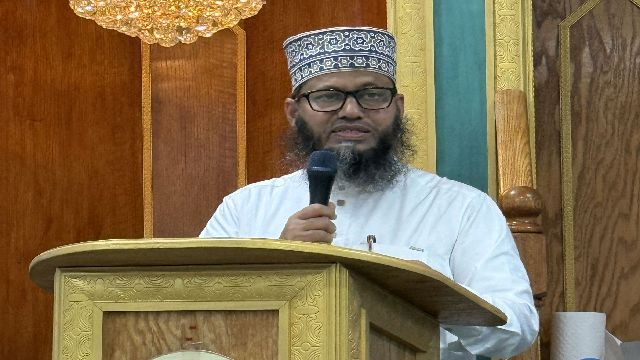
If we remain steadfast on this path, Paradise will ultimately be our destination,” said Imam Dalouer Hossain, president of the Muslim Ummah of North America - MUNA.
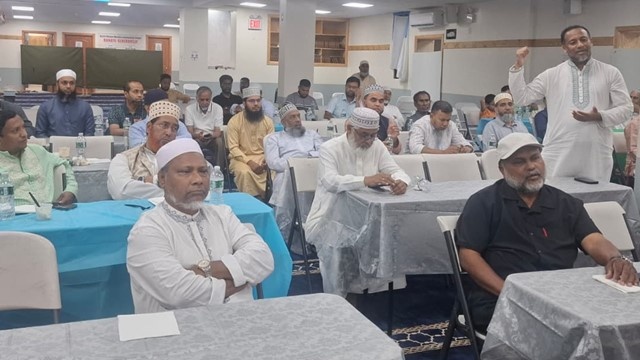
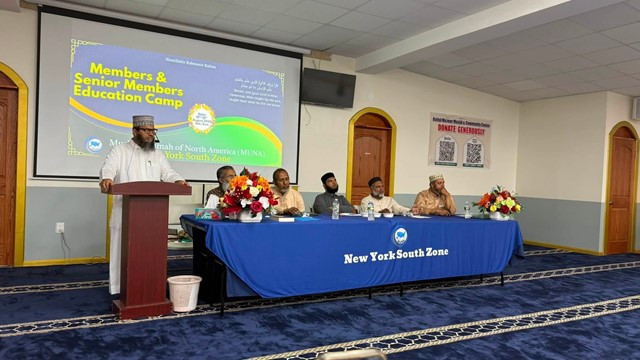
He made the remarks as the chief guest at an “Appreciation Lunch” organized for the volunteers and workers of the North American Humanitarian Aid and Relief - NAHAR New York North and South Zones. The event was held Sunday afternoon local time at Baitul Mamur Mosque in New York.
The program was presided over by NAHAR President Dr. Ataul Haque Osmani and moderated by NAHAR Director Delwar Hossain Majumder.
NAHAR visionary Abu Ahmed Nuruzzaman and MUNA National Executive Director Arman Chowdhury, CPA, attended the event as special guests.
Other speakers included Moulana Emdad Ullah, president of MUNA New York South Zone; Mominul Islam Majumder, president of the New York North Zone; NAHAR South Zone Director Abdus Sattar; and North Zone Director Advocate Abul Hashem.
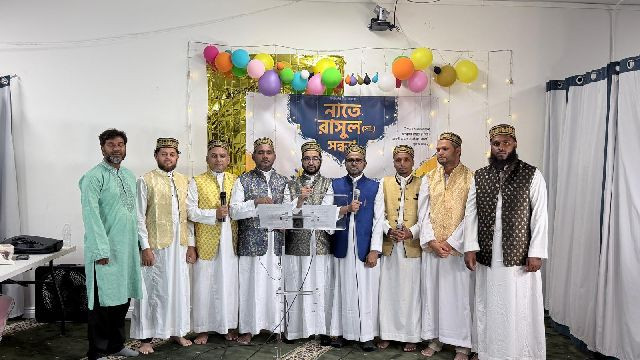
Hafiz Tanvir Ahmed recited verses from the Holy Quran at the beginning of the program.
In his keynote address, Imam Dalouer Hossain recited several verses from Surah Al-Balad and explained the significance of the concepts of “Aqaba” and “Marhamah.”
He said, “Aqaba is a difficult path toward Paradise. To follow this path, we must develop a responsible attitude toward humanity. We must stand beside people affected by disasters and extend support to the helpless and those in need. Marhamah means showing mercy, compassion and empathy toward one another.”
Drawing examples of mutual cooperation and compassion between the Muhajirun and Ansar from the lives of the Companions of the Prophet, Imam Dalouer Hossain urged everyone present to extend humanitarian services to the large Muslim community living across the United States.
“Everyone can make a significant difference in humanitarian work by extending a helping hand according to their ability. If we work together, our small individual efforts can eventually grow into a mighty tree,” he said.
In his speech, Abu Ahmed Nuruzzaman said, “Step by step, we have come a long way. It is because of your support that we have reached this stage.”
He said NAHAR’s vision is to establish an international humanitarian organization that will work for the welfare of humanity worldwide, similar to the Red Cross and Red Crescent movement.
Nuruzzaman said, “In one part of the world, children are suffering from a lack of food, while children in America are enjoying themselves by throwing apples around. To reduce this disparity, we need to reach out to more people in every community and expand our humanitarian efforts.”
He also said that NAHAR works for all people regardless of religion, race or background.
Arman Chowdhury said, “NAHAR is not a political organization; it works for humanity. Its workers are serving voluntarily, without compensation, not to gain recognition from people but to seek the pleasure of Allah.”
The MUNA National Executive Director further said that through the character, conduct and humanitarian activities of NAHAR’s workers, many people are getting an opportunity to learn about the beauty of Islam. He called for greater efforts to reach people and expand NAHAR’s activities internationally.
In his presidential address, NAHAR President Dr. Ataul Haque Osmani highlighted the organization’s humanitarian activities in Gaza, Bangladesh, Pakistan, Somalia, Sudan and various Muslim-majority countries in Africa.
He also discussed NAHAR’s assistance in various humanitarian sectors, including earthquake and flood relief, education, healthcare and food distribution, as well as educational and food assistance for orphaned children.
Dr. Osmani said that financial constraints prevent NAHAR from carrying out many humanitarian initiatives despite its willingness to do so. He emphasized the need for larger-scale assistance for children suffering from food shortages in Sudan and Somalia.
A documentary highlighting NAHAR’s humanitarian activities was screened during the event. It featured the organization’s relief and humanitarian programs in different countries, including disaster response, food distribution, education and healthcare services.
A large number of NAHAR volunteers, workers and officials from the North and South Zones attended the program. The speakers expressed their commitment to working together to further expand NAHAR’s humanitarian activities and reach more people in need.
H. M. Akter
New York