১০ কার্তিক ১৪৩৩



Campaign Spending Plans of Key Candidates Ahead of Bangladesh’s Next General Election
07 January 2026 06:01 AM
NEWS DESK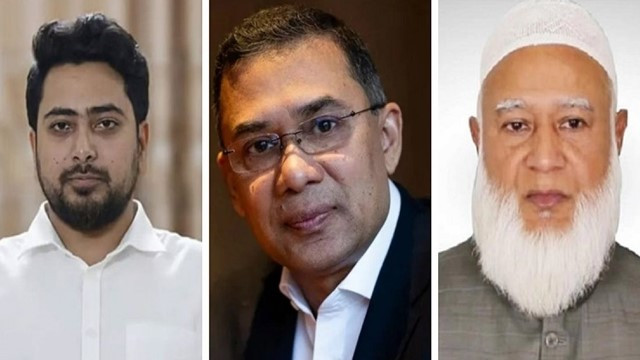
As Bangladesh prepares for its next national parliamentary election, details of candidates’ planned campaign spending and funding sources have been disclosed through affidavits submitted to the Election Commission (EC).
BNP Acting Chairman Tarique Rahman has submitted nomination papers to contest from two constituencies—Bogura-6 and Dhaka-17. He has declared a possible total campaign expenditure of Tk 6 million (60 lakh) for the two seats, funded entirely from his personal income derived from agriculture and bank deposits. According to EC calculations based on voter numbers, Rahman will be allowed to spend slightly over Tk 3.3 million in Dhaka-17 and Tk 4.54 million in Bogura-6. His affidavit shows total movable and immovable assets worth approximately Tk 19.7 million, most of which are movable assets such as cash, bank deposits, shares, gold and household items.
BNP Secretary General Mirza Fakhrul Islam Alamgir, contesting from Thakurgaon-1, has declared a possible campaign expenditure of Tk 5.12 million, which is also the legal ceiling for that constituency. He plans to finance his campaign from business income, consultancy fees, agricultural income, honorariums and bank profits. His annual income is about Tk 1.28 million, and his total declared assets amount to Tk 15.28 million.
Shafiqur Rahman, Ameer of Jamaat-e-Islami, is contesting from Dhaka-15. Based on voter numbers, he can spend up to Tk 3.5 million. He has declared two main funding sources: Tk 1 million from his own cash and bank deposits, and Tk 2.5 million from party funds collected through regular contributions from Jamaat members. His affidavit shows assets worth around Tk 15 million, including nearly Tk 6.08 million in cash.
Jamaat Secretary General Mia Golam Parwar, contesting from Khulna-5, has indicated a possible campaign expenditure of Tk 3 million, although the legal limit for the seat is slightly above Tk 4 million. He plans to fund his campaign through Tk 200,000 from his own business, Tk 500,000 from donations by siblings, Tk 800,000 from voluntary donations by five non-relatives, and Tk 1.5 million from party funds.
A notable development in this election is the reliance on crowdfunding by candidates of the National Citizen Party (NCP). NCP Convener Nahid Islam, contesting from Dhaka-11, can spend up to Tk 4.4 million. He plans to raise Tk 4.4 million through public donations nationwide and contribute Tk 100,000 from his own income. Nahid has no immovable property or vehicles in his name, though he owns movable assets worth Tk 3 million. His annual income is Tk 1.6 million.
Similarly, NCP Member Secretary Akhtar Hossain, contesting from Rangpur-4, has declared a possible campaign expenditure of Tk 5 million, against a legal ceiling of just over Tk 5.1 million. He plans to spend Tk 100,000 from his legal practice and raise Tk 4.9 million through crowdfunding. His annual income from agriculture, business and employment is about Tk 505,000.
Under current election law, a candidate’s spending limit is set at Tk 10 per voter in the constituency or Tk 2.5 million, whichever is higher. With recent amendments, candidates can now legally spend between Tk 2.5 million and Tk 8 million, depending on constituency size. An individual may contest from a maximum of three constituencies.
Although candidates and parties are required to submit post-election expense statements, the EC does not actively audit or monitor campaign spending. Allegations persist that most candidates exceed the legal limits. A Transparency International Bangladesh (TIB) study on the 12th parliamentary election held in January 2024 found that in the constituencies studied, ruling Awami League candidates spent nearly six times the EC-set limit during the official campaign period. In the 2018 election, candidates reportedly spent about three times the allowed ceiling.
The Election System Reform Commission last year recommended mandatory audits of candidate and party election expenses, with provisions for cancelling election results in cases of serious discrepancies. These recommendations were not adopted.
Former Reform Commission chief Badiul Alam Majumdar told Prothom Alo that proposals related to financial transparency and accountability within political parties were ignored. He warned that the role of money in elections has reached an “unimaginable level” and stressed that effective EC oversight of campaign spending—both during and after elections—is essential to address the problem.