১০ কার্তিক ১৪৩৩



Human Rights Watch Urges Stronger International Action Over China's Treatment of Uyghurs
31 August 2026 05:08 AM
NEWS DESK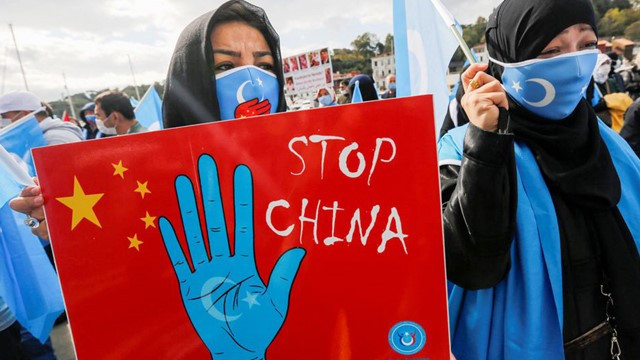
Human Rights Watch (HRW) has called on the international community to take stronger action against China, saying the widespread repression of Uyghurs and other Turkic Muslims in the Xinjiang region over the past decade amounts to crimes against humanity.
In a statement marking ten years since Beijing significantly intensified its campaign in Xinjiang, the rights group said there has been little meaningful improvement in the human rights situation. HRW alleged that arbitrary mass detention, unfair imprisonment, extensive surveillance, restrictions on religious and cultural expression, severe limits on travel and communication, and pressure on Uyghurs living abroad continue despite international criticism.
The organization also accused the Chinese government of promoting an image of normalcy in Xinjiang while continuing repressive policies behind the scenes.
Yalkun Uluyol, a China researcher at HRW, said that instead of ending what the organization describes as crimes against humanity and ensuring justice for affected Uyghurs, the Chinese government continues its campaign of repression and seeks to silence critics beyond its borders.
He also argued that while the international response was initially strong, it has weakened over time, allowing Beijing to promote what HRW described as a misleading narrative that conditions in Xinjiang have returned to normal.
HRW said the crackdown escalated after Chinese President Xi Jinping launched a nationwide campaign against what Beijing described as violent extremism in 2014. The campaign intensified further following the appointment of Chen Quanguo as Communist Party chief of Xinjiang on August 29, 2016.
Human rights organizations have previously estimated that around one million Uyghurs were arbitrarily detained in what Chinese authorities called "vocational education and training centers." While some of those facilities have reportedly closed, HRW said official data indicate that hundreds of thousands of Uyghurs and other Turkic Muslims remain imprisoned.
Among those still detained, according to the organization, are prominent Uyghur figures including economist Ilham Tohti, scholar Rahile Dawut, Gulshan Abbas, Yalkun Rozi, and Ekpar Asat.
HRW also cited a Financial Times analysis published in May, which suggested Xinjiang has the world's highest prison detention capacity relative to its population.
According to a July analysis by the Xinjiang Victims Database, more than 140,000 children in southern Xinjiang were separated from their parents between 2017 and 2018, largely because of the arbitrary detention of family members. Some were reportedly placed in state-run orphanages, although their current circumstances remain unclear.
The organization further said many Uyghurs living overseas remain unable to communicate with relatives, including their children, in China. It also alleged that Beijing continues to impose strict restrictions on overseas travel for Uyghurs and engages in transnational repression by pressuring members of the diaspora to provide information about Uyghur activists abroad.
HRW also raised concerns about allegations of forced labor in Xinjiang, saying products linked to the region continue to affect global supply chains in sectors including automobiles, solar panels, apparel, seafood, agriculture, and critical minerals.
In response to such allegations, the United States enacted the Uyghur Forced Labor Prevention Act in 2021, creating a presumption that goods produced wholly or partly in Xinjiang are linked to forced labor and restricting their entry into the U.S. market. The European Union has also adopted measures banning imports made with forced labor.
That same year, the United States, the European Union, the United Kingdom, and Canada imposed targeted sanctions on Chinese officials over alleged human rights abuses in Xinjiang.
However, HRW said several Muslim-majority countries, including Indonesia, the United Arab Emirates, and Pakistan, have helped shield Beijing from stronger action at the United Nations. The organization also criticized countries such as Thailand for returning Uyghurs to China despite concerns they could face persecution. Following similar cases of forced returns, Canada pledged in 2023 to resettle 10,000 Uyghur refugees.
On August 31, 2022, the UN Office of the High Commissioner for Human Rights (OHCHR) published a landmark assessment concluding that serious human rights violations in Xinjiang "may constitute crimes against humanity." Beijing rejected the findings.
UN High Commissioner for Human Rights Volker Türk acknowledged in August 2024 that problematic laws and policies remain in place in Xinjiang. In February this year, he expressed concern over the lack of progress in implementing previous UN recommendations and the absence of meaningful accountability. He also voiced concerns in June about China's new Ethnic Unity and Progress Promotion Law, which rights groups argue further institutionalizes policies affecting ethnic minorities.
HRW noted that the UN human rights office has not provided a significant public update on its ongoing monitoring of Xinjiang since the 2022 report.
The organization called on member states to issue a strong joint statement on Xinjiang during the upcoming session of the UN Human Rights Council, urging a dedicated discussion on the region and a review of progress in implementing the recommendations of the 2022 UN report.
HRW also urged countries including Canada, Australia, the United Kingdom, and Japan to adopt legislation banning imports linked to forced labor, and called on the European Union to classify Xinjiang as a high-risk region in its forced labor database.
China has consistently rejected allegations of human rights abuses in Xinjiang, describing its policies as lawful counterterrorism, anti-extremism, and poverty alleviation measures. Beijing denies allegations of forced labor, genocide, or crimes against humanity.