২ কার্তিক ১৪৩৩



U.S.–Iran Tensions Enter New Phase as “Operation Epic Fury” Raises Questions Over Cost and Sustainability
04 March 2026 08:03 AM
NEWS DESK
Long-simmering tensions between the United States and Iran entered a new and dramatic phase last Saturday, when Washington joined Israel in a series of coordinated airstrikes inside Iranian territory. Iranian sources claim that several senior military and civilian leaders, including Supreme Leader Ayatollah Ali Khamenei, were killed in the attacks.
U.S. President Donald Trump has suggested that the campaign—dubbed Operation Epic Fury—could last four to five weeks. The prospect of a prolonged military engagement has raised pressing questions about whether Washington can sustain another major conflict in the Middle East and at what financial and strategic cost.
While analysts say the United States likely has the economic capacity to continue operations, concerns are mounting over long-term weapons stockpiles, particularly missile defense interceptors.
Operation Epic Fury
On February 28, President Trump confirmed in an eight-minute video posted on Truth Social that the United States had taken part in what he described as a “major military operation” inside Iran. The Pentagon later announced that the campaign had been named Operation Epic Fury.
Trump stated that the objective of the operation is to ensure that “Iran never acquires a nuclear weapon.” He added, “We will destroy their missiles and level Iran’s industry to the ground. It will be completely obliterated.”
The U.S. military reported that more than 1,250 targets inside Iranian territory have been struck since the operation began. In a separate statement, United States Central Command (CENTCOM) claimed that 11 Iranian naval vessels had been destroyed.
The campaign reportedly includes coordinated airstrikes, sea-launched cruise missiles, and attacks on nuclear-related facilities. Senior figures linked to Iran’s defense infrastructure were also targeted.
Iran’s Red Crescent said that as of Monday, 555 people had been killed across 130 locations nationwide. President Trump has since stated that operations will continue “as long as necessary.”
Billions Already Spent in the Region
According to a 2025 “Costs of War” report by Brown University, the United States has provided approximately $21.7 billion in military assistance to Israel since October 7, 2023. An additional $9.65 billion to $12.07 billion has been spent on U.S. operations supporting Israel in Yemen, Iran, and the broader Middle East.
In total, recent U.S. military expenditures in the region are estimated between $31.35 billion and $33.77 billion—a figure that continues to rise.
Weapons Systems in Use
CENTCOM reports that more than 20 weapons systems are being deployed in Operation Epic Fury across air, sea, land, and missile defense domains.
Key assets include:
-
B-2 Spirit stealth bombers targeting strategic nuclear and military infrastructure
-
F-35 Lightning II and F-22 Raptor stealth fighters
-
F-15 Eagle jets (three reportedly lost over Kuwaiti airspace), alongside F-16s, F/A-18 Super Hornets, and A-10 aircraft
-
EA-18G Growler for electronic warfare
-
AWACS aircraft for airborne command and control
Unmanned systems include the MQ-9 Reaper and the newly deployed “LUCAS” drone. Long-range strike capabilities feature Tomahawk cruise missiles and the M142 HIMARS rocket system.
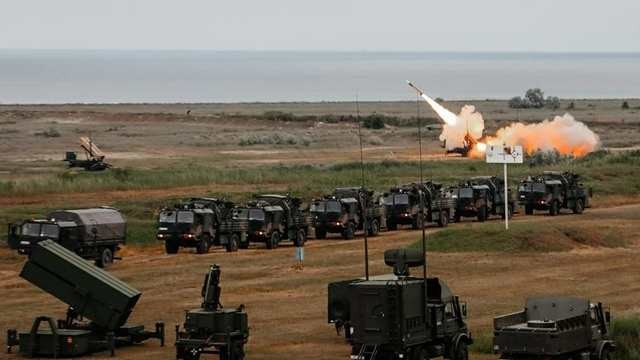
Missile defense components include Patriot interceptors, THAAD systems, and counter-drone platforms.
Naval deployments are led by the aircraft carriers USS Gerald R. Ford and USS Abraham Lincoln, supported by maritime patrol aircraft such as the P-8 Poseidon and logistics aircraft including the C-17 Globemaster and C-130 Hercules.
The Potential Cost of War
Experts caution that the total cost of Operation Epic Fury remains difficult to determine. However, during the first 24 hours alone, the United States reportedly spent approximately $779 million. Pre-operational military preparations—including repositioning fighter jets, deploying more than a dozen warships, and activating regional assets—cost an additional $630 million.
According to the Center for a New American Security, operating a single carrier strike group such as the USS Gerald R. Ford costs roughly $6.5 million per day.
Within just days, the operation has already cost Washington billions of dollars.
Financial Strength vs. Weapons Stockpiles
Christopher Preble, a senior fellow at the Stimson Center, noted that the U.S. defense budget currently stands at nearly $1 trillion, with proposals to raise it further.
While the United States may have the financial capacity to sustain the conflict, Preble warns that the more pressing concern is weapons stockpiles—particularly interceptor missiles such as Patriot and SM-6 systems.
“These interceptors cannot be used indefinitely at the current rate,” he cautioned, noting that some stockpiles had already been allocated to Ukraine and the Indo-Pacific region.
Perhaps most critically, such advanced missile systems are technologically complex and cannot be produced in unlimited quantities. “They are not manufactured in the hundreds every single day,” analysts warn.
As Operation Epic Fury unfolds, the durability of U.S. military resources—rather than its financial power—may ultimately determine how long Washington can sustain another major Middle East conflict.