৩ কার্তিক ১৪৩৩


Controversy Erupts Over Use of Donated Bodies in Military Medical Training at U.S. Universities
04 June 2026 05:06 AM
NEWS DESK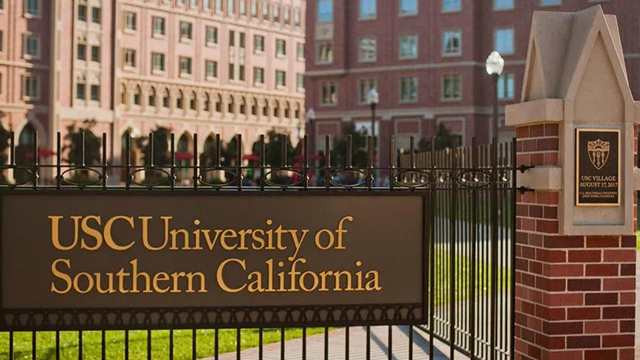
A major controversy has emerged surrounding body donation programs at University of Southern California and University of California, San Diego, following allegations that donated human remains intended for medical education and research have been used in military medical training programs, including those involving the U.S. Navy and foreign military surgeons.
The revelations have sparked concern and outrage among donor families and human rights advocates, many of whom argue that donors were never informed that their bodies could be used for military-related purposes.
Miriam Volpin, a medical case manager based in Nevada, said she recently learned from a university journalist about an investigative report claiming that bodies donated to USC may have been used in military medical training exercises.
Volpin's mother, Jeanette Volpin, died in 2021 at the age of 101 and donated her body to USC. After learning about the allegations, Volpin expressed concern that her mother's remains may have been used in simulations resembling battlefield medical scenarios.
“Hearing this made me feel sick,” she said. “We never knew something like this could happen.”
The allegations were highlighted in Al Jazeera's investigative documentary series Direct From, which reported that USC and UC San Diego have for years supplied donated bodies to the U.S. Navy under contractual arrangements for military medical training.
According to the investigation, USC provided at least 89 donated bodies to various Navy training programs since 2018. Student journalists also reported that approximately 124 bodies were transferred from UC San Diego to USC between 2024 and early 2026.
A 2020 research paper cited in the report described the use of a technique known as “perfusion,” in which artificial blood is circulated through cadavers to create realistic trauma scenarios. The method allows trainees to practice treating severe injuries similar to those seen on the battlefield.
The report states that training exercises simulated gunshot wounds, blast injuries, and other forms of major trauma.
The U.S. Navy has defended the program, describing it as a high-quality medical training system that enables experienced surgeons to refine their skills under realistic conditions.
The universities involved maintain that the activities are educational in nature. However, critics argue that donor families were not adequately informed that donated bodies could be used in military training programs.
Dr. Mohammad Raad, a physician affiliated with USC, questioned whether donors would have made the same decision had they known their bodies could be used in military exercises.
“The biggest question is whether donors truly gave informed consent,” he said.
Many families now say they feel misled. Jennifer Gomez, a relative of a body donor, said she had no idea that donated remains could potentially be used in training involving foreign military personnel.
“I never imagined that a member of our family could be used in this way for military purposes,” she said.
Reports indicate that some prospective donors have withdrawn their participation from body donation programs following the revelations.
UC San Diego has stated that it does not classify the activities as military training but rather as educational courses. However, Al Jazeera's investigation argues that the exact nature and purpose of the programs were not clearly disclosed.
Meanwhile, the U.S. Navy has reportedly expressed interest in continuing its collaboration with USC through at least 2029.
The controversy has reignited broader questions about transparency in body donation programs and whether donors and their families receive complete information about how donated remains may be used.
Human rights advocates and medical ethics experts stress that while body donation remains essential for medical education and scientific advancement, a lack of full transparency regarding the use of donated remains can create significant ethical concerns and undermine public trust.