২০ আশ্বিন ১৪৩৩



Super Typhoon Bavi Slams Guam and Northern Mariana Islands with Winds Near 290 km/h
07 July 2026 03:07 AM
NEWS DESK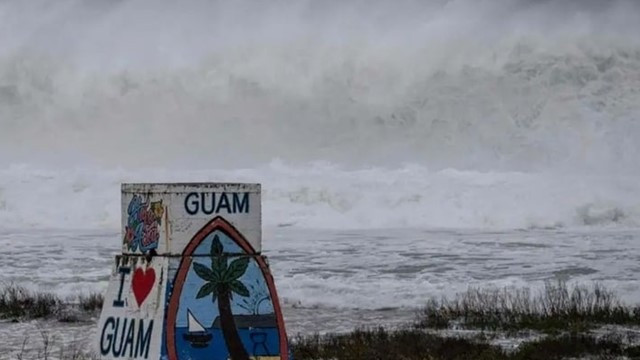
Super Typhoon Bavi battered the U.S. Pacific territories of Guam and the Northern Mariana Islands on Monday, packing sustained winds of nearly 290 km/h and disrupting normal life across the island chain.
Authorities warned that the storm could cause catastrophic damage, with waves reaching up to 11 meters in height.
According to the BBC, the U.S. National Weather Service (NWS) said the typhoon was moving across Guam and the Northern Mariana Islands with sustained winds of around 290 km/h and gusts of up to 350 km/h. The agency described the storm as "extremely dangerous" and warned of widespread destruction.
A local official told news agencies that significant damage had already been reported in the Northern Mariana Islands.
The western Pacific is one of the world's most cyclone-prone regions, although storms of this intensity are relatively rare for the U.S. island territories. Scientists have linked the growing frequency and intensity of powerful typhoons to climate change.
Ahead of the storm's arrival, many residents evacuated to emergency shelters and completed last-minute preparations. The NWS said the typhoon made a direct hit on Rota, the southernmost inhabited island of the Northern Mariana Islands, located about 50 kilometers northeast of Guam.
Rota's mayor's office urged residents to prepare for "destructive winds," warning that weather conditions would deteriorate rapidly and that it was unsafe to remain outdoors.
A spokesperson for the mayor's office said authorities were working to respond to the emergency amid severe winds and flooding. The spokesperson added that many residents had already reported extensive damage.
On Saipan, north of Rota, wind gusts exceeding 161 km/h were recorded at the island's airport, meteorologist Marcus Landon Idlet told the Associated Press. He noted that many residents were still without electricity following the impact of Super Typhoon Sinlaku in April, which killed 17 people and caused an estimated $1.5 billion in damage across Guam and the Northern Mariana Islands.
The National Weather Service said Bavi is not expected to weaken below typhoon strength before Monday afternoon, with further weakening to tropical storm intensity likely after midnight.
In Guam, home to about 170,000 people and a major tourist destination, five schools have been converted into emergency shelters with a combined capacity of around 1,700 people, primarily for vulnerable residents.
The U.S. military's Joint Typhoon Warning Center (JTWC) has classified Bavi as a super typhoon. A typhoon is designated a super typhoon when sustained winds exceed 240 km/h. According to the NWS, Bavi's destructive potential is comparable to that of a Category 4 or Category 5 hurricane.