৩ কার্তিক ১৪৩৩



Rubio Heads to Central and South Asia to Counter Chinese, Russian Influence and Secure Trade Deals
18 October 2026 19:10 PM
NEWS DESK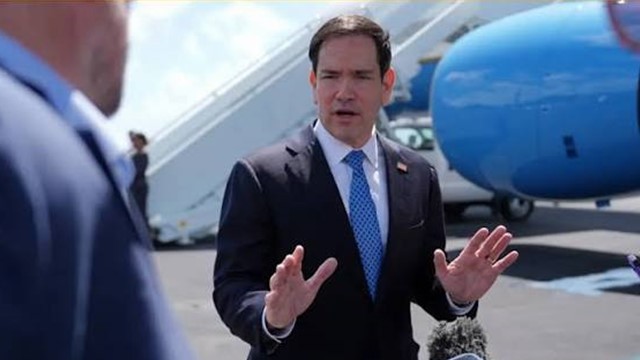
As the United States faces geopolitical tensions on multiple fronts, Secretary of State Marco Rubio has embarked on a diplomatic mission to Central and South Asia aimed at strengthening commercial ties, expanding strategic partnerships and securing new agreements amid growing Chinese and Russian influence in the region.
Rubio’s first stop is Samarkand, the historic Uzbek city along the ancient Silk Road. He is travelling with a delegation of around 200 business leaders and is scheduled to meet ministers from five Central Asian countries on Monday.
Speaking before departing on Saturday, Rubio described the trip as strategically important.
“This is very important. There are countries there with which we want to build relationships,” he said.
A senior US State Department official told reporters on Friday that Washington was seeking to deepen partnerships across Central Asia, with particular interest in the energy sector.
The official, speaking on condition of anonymity, said the administration had spent months planning the visit and viewed it as a major opportunity to strengthen US engagement with a strategically significant region.
Central Asia is rich in natural resources, including oil, natural gas, uranium and other critical minerals, despite having a combined population of roughly 80 million.
Washington Seeks Greater Influence in Central Asia
In Samarkand, Rubio is expected to meet ministers representing Kazakhstan, Kyrgyzstan, Tajikistan, Turkmenistan and Uzbekistan. President Donald Trump hosted the leaders of the five countries at the White House in November last year.
All five countries were formerly part of the Soviet Union and maintain longstanding connections with Russia through energy pipelines, security arrangements and migration networks.
However, Russia’s war in Ukraine has created opportunities for other powers to expand their presence in the region, with China emerging as a major beneficiary.
China is the leading trading partner of all five Central Asian countries. Chinese companies have secured several energy-related agreements across the region, including arrangements involving natural gas in Turkmenistan and uranium in Kazakhstan. Beijing is also seeking access to critical minerals, including rare earth elements in Tajikistan.
Washington has increasingly prioritized diversifying energy supplies and securing access to critical minerals as part of its broader foreign policy strategy.
The appointment of US Ambassador to India Sergio Gor as special envoy for South and Central Asian affairs also reflects Washington’s efforts to strengthen engagement across the region.
India Visit to Focus on Trade and Investment
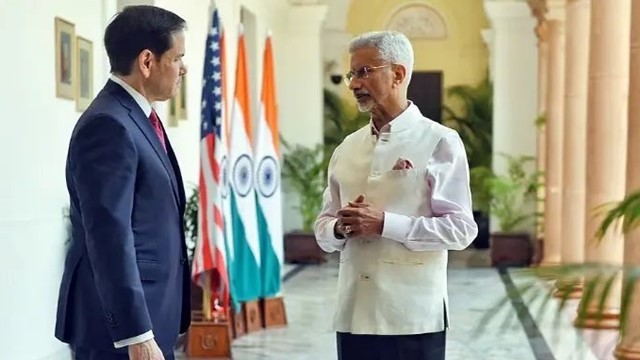
Following his visit to Uzbekistan, Rubio is scheduled to travel to India, with stops in Mumbai and Jamnagar, Gujarat. Both cities are important centres of industry, trade and port-related activity.
The trip marks Rubio’s second visit to India within four months, following visits to New Delhi and Kolkata in May, underscoring Washington’s renewed diplomatic engagement with the region.
A senior US official said Washington and New Delhi were close to reaching a trade agreement.
The two countries reached a preliminary understanding in February aimed at reducing US tariffs on Indian goods. However, the US Supreme Court subsequently struck down President Trump’s reciprocal tariffs, creating uncertainty over the timeline and framework for a bilateral trade agreement.
Following the ruling, the two sides resumed discussions on a potential deal.
Relations were further strained when the Trump administration imposed a 25% tariff on Indian goods amid continued Indian purchases of Russian oil. The additional tariff has since been withdrawn.
New Approach to Commercial Diplomacy
During meetings with Indian business leaders in Mumbai and Jamnagar, Rubio is expected to promote a new approach to what officials have described as “commercial diplomacy,” linking business engagement with broader strategic objectives.
Discussions may also cover plans for India’s Reliance Industries group to invest in a Texas oil refinery, potentially creating new opportunities for energy cooperation between the two countries.
The proposed investment would add another dimension to the growing economic relationship between Washington and New Delhi, particularly as both sides seek to address disagreements over tariffs, energy purchases and market access.
Rubio’s regional tour highlights Washington’s effort to combine trade negotiations, investment opportunities and energy partnerships to strengthen its presence in Central and South Asia.
With China expanding its economic footprint and Russia seeking to maintain its traditional regional influence, the United States is looking to deepen commercial ties with governments and businesses across the region while pursuing agreements that advance its strategic and economic interests.