১১ আশ্বিন ১৪৩৩



Mamdani's Popularity in Bangladesh, ‘Identity Politics’ or Tacit Support for Challenging Power?
06 November 2025 05:11 AM
NEWS DESK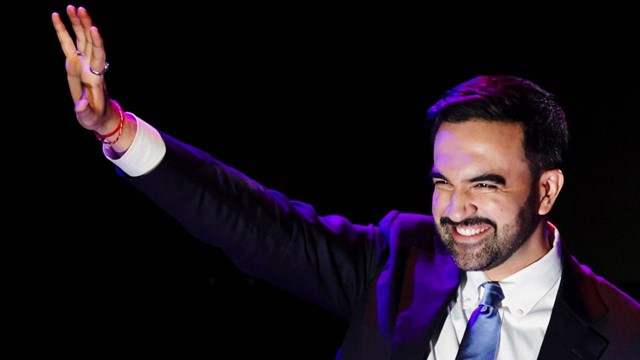
Naturally, the assurance of basic rights — especially social and economic security. In New York City’s mayoral election, Zohran Mamdani (34) attracted local voters by promising to fulfill these very expectations. But how did a young man from across the Atlantic — from the shores of the Bay of Bengal — win the hearts of Bangladeshis back home?
On Wednesday morning, as news of Mamdani’s victory spread across the media, many Bangladeshis took to Facebook to post congratulatory messages. A common phrase appeared across these posts: “New York’s first Muslim mayor.”
This raises a question: Did Mamdani win the affection of people in India, Pakistan, and Bangladesh simply because he is Muslim? Or is it something deeper — perhaps identity politics or a silent support for someone challenging power structures?
Bridging the Atlantic and the Bay of Bengal
After securing his victory, Mamdani addressed his supporters at 11:30 p.m. on Tuesday. As his speech ended, the stage came alive with the title track from the 2004 Bollywood film Dhoom — “Dhoom Machale.”
This was not an isolated moment. Throughout his campaign, Mamdani was often seen holding placards on New York’s streets, engaging warmly with South Asian communities — Indians, Pakistanis, and Bangladeshis alike.
Born in Uganda to Indian parents, Mamdani identifies as a South Asian Muslim. His campaign videos, social media posts showing him using public transport, and even speeches featuring Bengali words went viral. This multicultural identity helped forge a connection between him and South Asians globally — a bond rooted in the shared struggles of migration, identity, and self-realization.
Thus, for many Bangladeshis, Mamdani’s rise in a global city like New York evoked a sense of “one of our own.” But how exactly does such emotional identification happen?
Identity Politics and Representation Theory
When people feel connected to someone based on shared ethnic or religious identity, it’s called identity politics. Meanwhile, representation theory suggests that people see someone as their representative when their own experiences and aspirations are reflected in that leader’s actions.
Mamdani’s campaign focused on affordable housing, public transport, childcare, and the struggles of low-income communities — issues that deeply resonate with working-class people in Bangladesh as well.
In 1979, social psychologists Henri Tajfel and John C. Turner explained this phenomenon through their Social Identity Theory — people naturally feel empathy for others who share aspects of their own identity. Mamdani’s South Asian Muslim background strengthened that group connection.
However, the most critical element here is the question of power. Beyond religion or language, people often form imagined solidarities based on shared experiences of exclusion. In this sense, Mamdani’s connection with Bangladeshis stems from shared realities of immigration, racial and social inequality, and the quest for security and dignity.
Since returning to power, Donald Trump has taken a hard line against immigration — imposing tariffs and promoting an isolationist agenda that frustrated many globally. Mamdani, on the other hand, consistently opposed Trump’s policies, identified himself as a democratic socialist, and never hesitated to embrace his immigrant identity.
Mamdani’s “Trump Card”
In today’s New York, rent and living costs are major political issues. According to The Guardian, Mamdani pledged that New York must be “a city not just for the rich but for the working class.” His promises of rent control, affordable housing, and free public transit resonated strongly with lower-income voters.
Pre-election surveys showed Mamdani’s strongest support among voters aged 18 to 34. A Brookings Institution analysis noted that young voters seek leaders who speak their language, engage digitally, and maintain transparency — all qualities Mamdani embodied.
According to The Times, Mamdani’s campaign ran entirely on grassroots donations, rejecting corporate funding — a stance that positioned him as a symbol of authentic, people-driven politics among New York’s progressive voters.
In his victory speech, Mamdani reaffirmed his commitment to immigrant rights and responded directly to Trump’s threats, emphasizing solidarity and inclusion.
A Symbol Beyond Borders
New York is a mosaic of diverse ethnic and religious communities. Mamdani personally engaged with each — from Latino and Jewish groups to Indian and Bangladeshi voters. He even embraced campaign slogans in Bengali.
These gestures became his real “Trump card” against the Republican establishment. They also demonstrated that representation, when sincere, transcends borders. From New York’s subway to the social media feeds of Dhaka, Zohran Mamdani’s story became a symbol — of shared identity, hope, and a new kind of politics rooted in empathy.