UN Seeks $710 Million in Aid for Rohingya Refugees in Bangladesh in 2026
20 May 2026 21:05 PM
NEWS DESK
The United Nations and its humanitarian partners have appealed for $710.5 million in international assistance for 2026 to support Rohingya refugees living in Bangladesh and vulnerable host communities in Cox's Bazar and Bhasan Char.
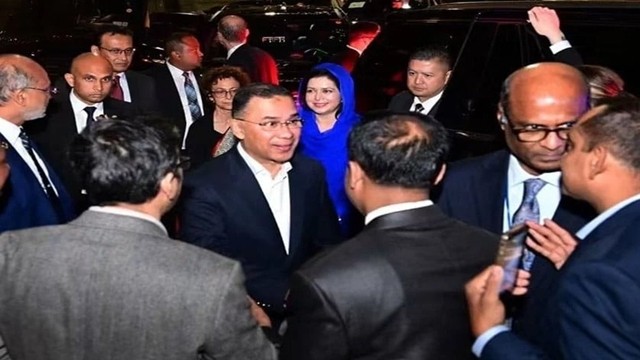
The appeal was launched Wednesday at the UN headquarters in Dhaka by senior representatives from UNHCR, World Food Programme, UN Women and the Bangladesh government.
Prepared in coordination with the government, the 2026 Joint Response Plan aims to assist approximately 1.56 million people, including Rohingya refugees and members of affected local communities.
UN agencies warned that global instability, wars and economic pressures are reducing international humanitarian funding, threatening essential services in the camps such as food assistance, healthcare, education, sanitation and protection programs.
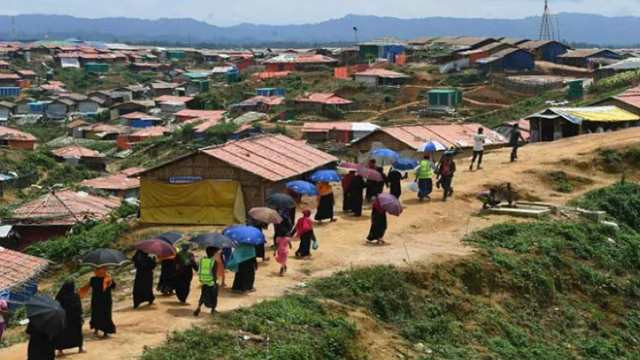
Bangladesh currently hosts nearly 1.2 million Rohingya refugees who fled persecution and violence in Myanmar. According to the UN, the crisis has continued to worsen, with around 150,000 additional Rohingya arriving in Bangladesh since early 2024, placing even greater strain on overcrowded camps and limited humanitarian resources.
The UN described the 2026 response plan as “extremely limited and prioritized,” noting that the appeal is 26 percent lower than the 2025 funding request. Despite the reduction, officials said the requested amount would only cover minimum life-saving assistance.
Under the proposed allocation:
$247.3 million would go to food assistance
$128 million for shelter
$61.2 million for water, sanitation and hygiene
$52.7 million for education
$49.9 million for healthcare
$35.1 million for livelihoods and skills development
An additional $36.2 million has been proposed for support to local host communities.
Since 2017, the international community has contributed around $5.42 billion to address the Rohingya crisis, with the United States remaining the largest donor. Aid agencies say the support has helped sustain food distribution, healthcare, education and protection services, but major humanitarian needs persist.
Kelly T. Clements said shrinking global resources make it increasingly important to help refugees become more resilient and self-reliant. However, she stressed that international support must continue until Rohingya refugees can safely and voluntarily return to Myanmar with dignity.
Rania Dagash-Kamara praised Bangladesh for its “extraordinary generosity” in hosting such a vulnerable population, while emphasizing that humanitarian aid alone cannot provide a permanent solution.
Nyaradzayi Gumbonzvanda warned that funding cuts are already affecting Rohingya women and girls, who remain particularly vulnerable to violence, displacement and insecurity.
According to UN data, about 35 percent of Rohingya families in 2025 depended entirely on food aid, while 42 percent relied on unstable temporary income sources. Only 23 percent had access to cash-for-work opportunities within humanitarian programs.
Aid agencies also expressed concern over the deteriorating security situation in Myanmar’s Rakhine State, saying prospects for large-scale repatriation remain bleak. Many Rohingya refugees are now attempting dangerous sea journeys to other countries.
The UN reported that 2025 has become the deadliest year yet for such crossings. Last month alone, a boat carrying more than 270 people capsized, with only nine survivors rescued.
Officials reiterated that the only sustainable solution to the crisis remains the safe, voluntary and dignified repatriation of Rohingya refugees to Myanmar once conditions permit.
The launch event was attended by acting Foreign Secretary M. Farhadul Islam, interim UN Resident Coordinator Carol Flore, UNHCR’s Kelly T. Clements, WFP’s Rania Dagash-Kamara and UN Women’s Nyaradzayi Gumbonzvanda.
The response plan is supported by 98 humanitarian partners, including 52 Bangladeshi organizations. International representatives from Australia, Canada, European Union, France, Netherlands, Sweden and United Kingdom recently visited Rohingya camps and surrounding communities in Cox’s Bazar as part of a high-level donor mission.
The Rohingya refugee crisis escalated after Myanmar’s military crackdown in Rakhine State on August 25, 2017, which forced hundreds of thousands of Rohingya to flee across the border into Bangladesh. Since then, vast areas of Cox’s Bazar and Ukhiya have transformed into densely populated refugee settlements, including Kutupalong Refugee Camp, now considered the world’s largest refugee camp.
Comments Here: