৩০ ভাদ্র ১৪৩৩



Government to Form Powerful Media Commission with Quasi-Judicial Powers, Says Info Minister
16 June 2026 20:06 PM
NEWS DESK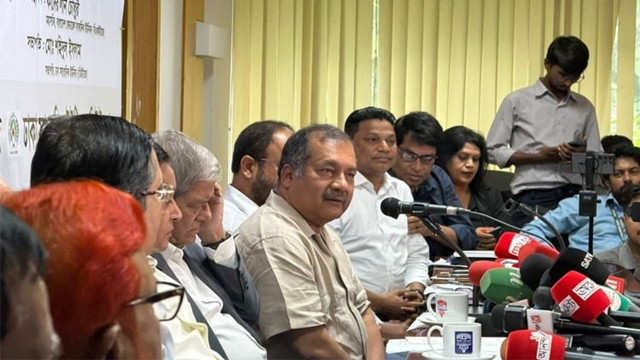
Information and Broadcasting Minister Zahir Uddin Swapan announced on Tuesday that the government will soon establish a robust 'Media Commission' with quasi-judicial powers to ensure journalistic freedom and structural reforms in post-fascist Bangladesh.
Speaking as a special planner at a discussion marking 'Newspaper Black Day' at the National Press Club, the minister highlighted that while past autocratic regimes weaponized state apparatuses to intimidate the press, the current democratic government aims to be a constructive partner to the media. The event was organized jointly by the Bangladesh Federal Union of Journalists (BFUJ) and the Dhaka Union of Journalists (DUJ).
Reflecting on the historical context of June 16, 1975, when the then one-party regime officially shut down newspapers, the minister urged stakeholders not to remain anchored in half-century-old challenges. He emphasized the need to address modern technological threats, such as artificial intelligence (AI) and deepfakes used for misinformation, alongside regulating the rise of citizen journalism. Citing regulatory frameworks introduced by the UK, Australia, and the European Union, he noted that Bangladesh must also structurally adapt to these emerging digital shifts.
The minister underscored that media freedom is deeply tied to financial security, stating that journalists cannot remain truly independent if media owners fail to provide fair wages and dignified working environments. He warned that media outlets operating as commercial industries must strictly follow national labor laws, while promising state incentives for non-profit, public-interest media organizations. Chaired by DUJ President Md. Shahidul Islam, the discussion was attended by Local Government Minister Mirza Fakhrul Islam Alamgir as the chief guest, with keynote presentations and insights delivered by BFUJ General Secretary Kader Gani Chowdhury and veteran journalist Maruf Kamal Khan Zahed, among others.