১ আশ্বিন ১৪৩৩



Bangladesh Expects Trade Deal with U.S. to Boost Investment and Strengthen Global Supply Chains
17 June 2026 19:06 PM
NEWS DESK
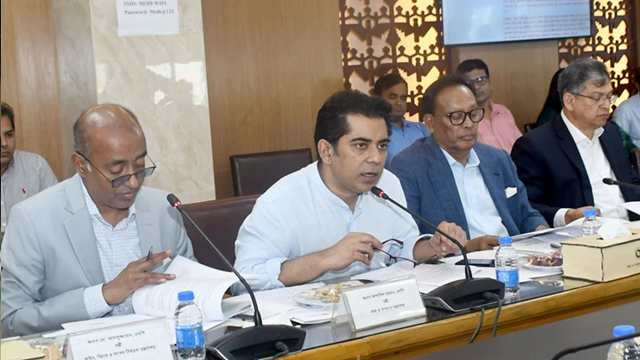
Bangladesh's Foreign Minister, Khalilur Rahman, has expressed optimism that the recently signed Agreement on Reciprocal Trade (ART) with the United States will help attract foreign investment, enhance energy security, and strengthen Bangladesh's position in global supply chains.
Responding to a question from Gazipur-5 lawmaker A.K.M. Fazlul Haque Milon during a parliamentary session on Wednesday, the foreign minister said the agreement would provide significant benefits to Bangladesh's export sector.
Rahman noted that under the agreement, ready-made garments produced using U.S. cotton will enjoy duty-free access, creating new opportunities for the country's apparel industry. He said the deal is expected to contribute positively to foreign direct investment, energy security, and Bangladesh's integration into global supply networks.
Highlighting the government's efforts to expand export markets, the minister said Bangladesh is actively pursuing Preferential Trade Agreements (PTAs), Free Trade Agreements (FTAs), and Comprehensive Economic Partnership Agreements (CEPAs) with various countries to secure greater market access and tariff benefits.
He informed Parliament that discussions on a CEPA with the United Arab Emirates have already begun, while negotiations on FTAs with Malaysia, Singapore, and Thailand are progressing. Bangladesh is also working to strengthen trade engagement with regional economic blocs, including the Gulf Cooperation Council (GCC) and Mercosur.
According to the minister, export market expansion, diversification of exports, attraction of international investment, and employment-oriented economic growth remain key priorities of the current government. He emphasized that economic diplomacy is being given special importance to integrate Bangladeshi businesses more effectively into international trade and to stimulate economic growth through foreign investment.
Rahman said the Ministry of Foreign Affairs, the Bangladesh Investment Development Authority (BIDA), the Bangladesh Economic Zones Authority (BEZA), the Ministry of Commerce, and other relevant agencies are working in coordination to achieve these goals.
He added that Bangladesh has strengthened its commercial presence not only in traditional markets in Europe and the Americas but also in emerging markets across the Middle East, Africa, Southeast Asia, South America, Central Asia, and Eastern Europe.
The foreign minister also noted that diplomatic efforts are creating new opportunities for agricultural and non-traditional exports. Recently, Bangladesh gained access to export potatoes to Vietnam, while efforts are underway to facilitate mango exports to Malaysia.
Responding to another parliamentary question, Rahman cited the latest report from the United Nations High Commissioner for Refugees (UNHCR), stating that Bangladesh is currently hosting 1,189,213 forcibly displaced Rohingya refugees.
On the issue of Rohingya repatriation, he said Bangladesh has expanded dialogue with all relevant stakeholders in light of changing conditions in Myanmar's Rakhine State. He noted that following the formation of the current government, both Myanmar's foreign minister and the leader of the Arakan Army extended congratulations to the Prime Minister, a development he described as unprecedented.
Addressing a separate question regarding Bangladesh's diplomatic missions abroad, Rahman said the government is working to strengthen, modernize, and improve the cost-efficiency of the country's diplomatic infrastructure under its "Bangladesh First" foreign policy approach.
He said Bangladesh currently operates chancery functions from government-owned buildings in 20 missions across 17 countries, while four additional projects are under implementation. The remaining missions operate from rented premises, costing the government approximately Tk 100 crore annually in rent.
The minister emphasized that establishing state-owned diplomatic facilities abroad is considered a long-term investment that will reduce government expenditure over time while enhancing Bangladesh's international standing and diplomatic effectiveness.