[email protected]
শনিবার, ১৭ অক্টোবর ২০২৬
২ কার্তিক ১৪৩৩
২ কার্তিক ১৪৩৩

Saturday, 17th October 2026


China Launches Global AI Alliance to Expand Influence and Challenge U.S. Leadership
18 July 2026 09:07 AM
NEWS DESK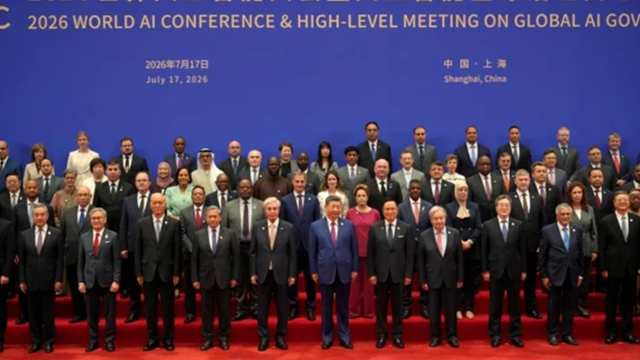
China is seeking to expand its global influence in artificial intelligence (AI) with the launch of a new international alliance aimed at strengthening cooperation and shaping global AI governance, in a move widely seen as a challenge to U.S. leadership in the sector.
Speaking at the World Artificial Intelligence Conference (WAIC) in Shanghai, Chinese President Xi Jinping said AI should not be dominated by any single country and instead should be developed through international cooperation and shared progress.
In remarks delivered on Friday, Xi indirectly criticized the United States, saying countries should not use national security as a justification to restrict others' access to advanced technologies. He stressed that the development and governance of AI should be based on global partnerships rather than unilateral control.
The World Artificial Intelligence Cooperation Organization (WAICO) was officially launched in Shanghai on Thursday. The alliance brings together 29 countries, with its headquarters based in Shanghai. Members include Indonesia, Brazil, Malaysia, South Africa, Senegal, Russia, Pakistan, and several other nations from the Global South. United Nations Secretary-General António Guterres attended the organization's inauguration ceremony.
Analysts believe China will use the new alliance to increase its influence over the development of international AI standards, regulations, and governance frameworks. The initiative comes as competition between China and the United States for technological leadership continues to intensify.
A key area of rivalry remains advanced semiconductor technology, often referred to as the global "chip war." The United States has imposed export restrictions on advanced chips to China, citing national security concerns. In response, Beijing has limited exports of several critical rare minerals used in semiconductor manufacturing.
Although China still lags behind in producing the most advanced semiconductor chips, it holds significant advantages in large-scale data center capacity, electricity generation, and access to critical mineral resources. These strengths could strengthen China's long-term competitiveness in the AI industry.
Arindrajit Basu, a governance expert at the Carnegie Endowment for International Peace, told Al Jazeera that as the United States appears to be playing a less active role in shaping global cyber and AI governance, China is moving to fill that gap and position itself as a global leader.
By building support among developing countries, Beijing aims to establish a new sphere of influence in global AI governance. Analysts say the initiative could pose a significant long-term challenge to the United States' longstanding leadership in the global technology landscape.
Advertisement