৩ কার্তিক ১৪৩৩



India's First Privately Built Orbital Rocket 'Vikram-1' Completes Successful Test Flight
20 July 2026 01:07 AM
NEWS DESK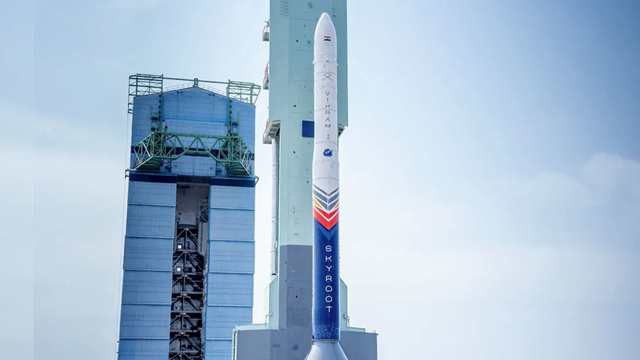
India has achieved a major milestone in its commercial space ambitions after the country's first privately developed orbital rocket, Vikram-1, successfully completed its maiden test flight on Saturday.
Developed by Skyroot Aerospace, the rocket was launched from the Satish Dhawan Space Centre in Sriharikota, Andhra Pradesh. Designed to carry small satellites into low Earth orbit (LEO), the launch was greeted with cheers from spectators gathered at the spaceport.
Following the successful mission, Skyroot Aerospace celebrated the achievement in a post on X, writing:
"Hello Space, we have arrived! Vikram-1 Test Flight-1 has successfully completed its mission. India's first private orbital launch has been successfully accomplished."
Standing roughly as tall as a seven-storey building, Vikram-1 is capable of carrying payloads weighing up to 350 kilograms.
Pawan Goenka, Chairman of the Indian National Space Promotion and Authorization Center (IN-SPACe), described the achievement as exceeding expectations for India's first privately conducted orbital launch.
Indian Prime Minister Narendra Modi hailed the mission as "a landmark moment in India's space journey."
"The growing participation of the private sector is opening new avenues of opportunity and accelerating innovation," Modi said. "This achievement will inspire countless young people to dream bigger and innovate fearlessly."
The rocket carried several experimental payloads, including a laboratory-grown diamond, a robotic arm designed for space debris removal, and a miniature rocket model made from 18-carat gold. It also included miniature sculptures of renowned Indian scientist Vikram Sarabhai, Nobel laureate C. V. Raman, and former President and aerospace scientist A. P. J. Abdul Kalam.
India's space programme, built on decades of investment by the Indian Space Research Organisation (ISRO), has expanded rapidly in recent years.
Since the government opened the space sector to private companies in 2020, India's space economy has grown significantly. The industry is now valued at approximately $8.4 billion, with more than 400 space-focused startups operating across the country.
External Affairs Minister S. Jaishankar said the successful launch had taken "India's space aspirations to new heights."
India further strengthened its position as a global space power in August 2023, when it became the fourth country to successfully achieve a soft landing on the Moon, joining Russia, the United States, and China.
Former ISRO Chairman K. Sivan said the success demonstrated the benefits of opening the country's space sector to private enterprises.
"Rocket technology is among the most complex technologies in the space industry," Sivan said. "Skyroot's achievement will inspire many more companies to enter the sector."
He added that the successful mission would also enhance India's international reputation, saying that if an Indian startup can master one of the world's most sophisticated space technologies, it will further strengthen the country's standing in the global space industry.