৫ আশ্বিন ১৪৩৩



Equating Bangladesh With Pakistan Could Hurt India's Strategic Interests, Says Shekhar Gupta
20 September 2026 18:09 PM
NEWS DESK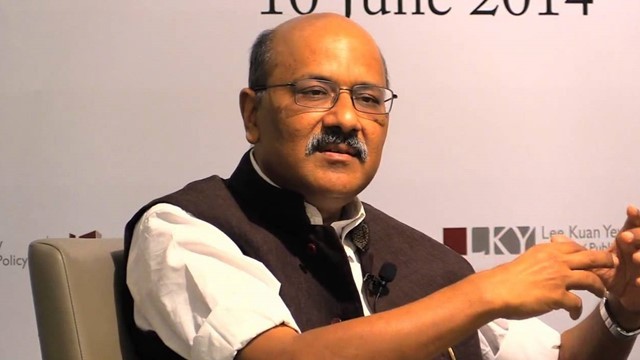
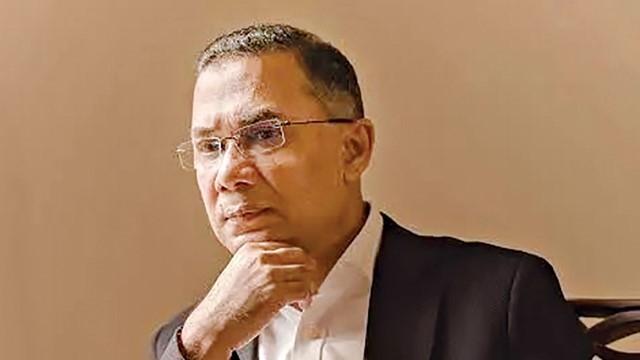
India's growing tendency to view Bangladesh through the same strategic lens as Pakistan could ultimately undermine New Delhi's own interests, according to veteran Indian journalist and ThePrint Editor-in-Chief Shekhar Gupta.
In his weekly National Interest column published on Saturday, Gupta argued that India has become trapped in a strategic dilemma of its own making, driven largely by domestic political considerations.
He wrote that relations between India and Bangladesh have entered a new phase of uncertainty following the fall of the Sheikh Hasina government and the country's subsequent political transition. At the same time, India's relationship with Pakistan has become increasingly complicated amid the growing influence of Pakistan's Army Chief, General Asim Munir. However, Gupta warned that treating Bangladesh and Pakistan as part of the same strategic equation could prove counterproductive for India.
According to Gupta, India's domestic political dynamics and frequent election campaigns have increasingly placed Bangladesh and Pakistan in the same narrative. He pointed to the use of the "Bangladeshi infiltrator" issue during election campaigns in states such as Assam and West Bengal, along with anti-Bangladesh rhetoric on social media, as factors reinforcing this perception.
He also noted that influential figures and groups aligned with India's political establishment have increasingly portrayed Bangladesh as an adversary similar to Pakistan. Combined with what he described as a "big brother" attitude toward smaller neighbours, such rhetoric has contributed to growing resentment in Dhaka.
Gupta argued that although many in India remain frustrated by the removal of Sheikh Hasina from power, her return should not be viewed as a prerequisite for restoring normal relations between New Delhi and Dhaka.
He said regime change in Bangladesh is not part of India's agenda and suggested that Prime Minister Narendra Modi's government understands this reality. According to Gupta, New Delhi's ongoing diplomatic engagement with Dhaka reflects an effort to maintain stability in bilateral relations.
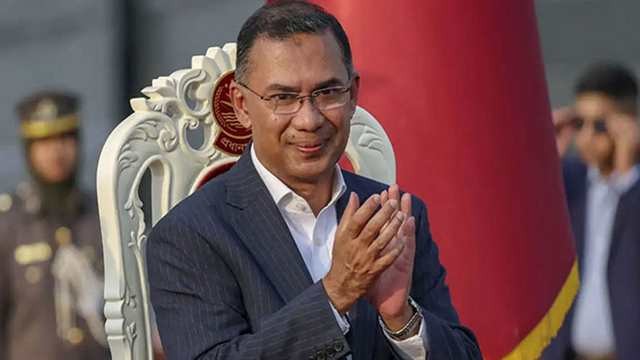
Assessing Bangladesh's current political landscape, Gupta wrote that Prime Minister Tarique Rahman must balance two competing political realities: the growing influence of Jamaat-e-Islami and prevailing public sentiment toward India.
He argued that Hasina's continued criticism of Bangladesh's current government from India, combined with increasingly negative public perceptions of India within Bangladesh, has made it politically difficult for Dhaka to pursue a rapid normalization of ties with New Delhi.
Gupta also suggested that India's own domestic politics have further complicated efforts to repair bilateral relations, adding that Bangladesh's concerns in this regard should not be dismissed outright.
The central strategic question for India, Gupta wrote, is whether Bangladesh and Pakistan should be treated as part of the same geopolitical framework. Pakistan has long occupied a central place in India's political discourse, and in recent years Bangladesh has increasingly been drawn into that conversation. As a result, he said, a narrative is emerging that portrays two Muslim-majority neighbours on India's eastern and western borders as parallel strategic threats.
Such an approach, Gupta warned, could ultimately work against India's long-term interests. If New Delhi continues to lump Bangladesh and Pakistan together and the two countries become closer to each other, India's strategic position could be weakened.
He further argued that India should carefully consider the implications of having two large neighbouring countries adopt hostile positions simultaneously while strengthening their bilateral ties.
According to Gupta, India's strategic objective should be to prevent Bangladesh and Pakistan from converging within the same geopolitical space. Achieving that goal, he said, requires insulating India's neighbourhood policy from its increasingly polarized domestic politics.
Gupta added that rebuilding relations does not necessarily require a major diplomatic breakthrough. Even a modest confidence-building measure—such as accepting Bangladesh's invitation for a cricket tour—could serve as a constructive first step toward normalizing bilateral ties.