২২ কার্তিক ১৪৩৩



India Seeks Access for Private Container Trains on Bangladesh Rail Network
06 November 2026 19:11 PM
NEWS DESK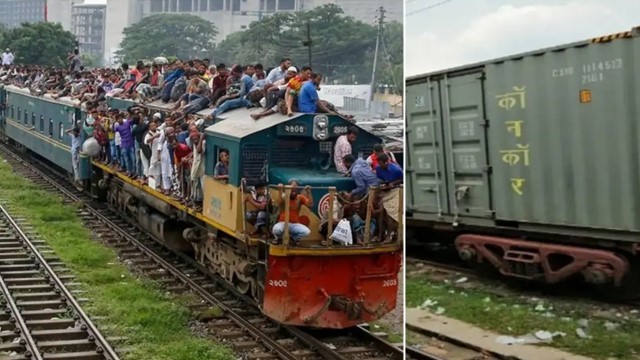
India has sought permission for its private container train operators to run freight services inside Bangladesh using the country's railway network, a proposal that could mark a significant expansion of cross-border rail operations between the two neighbours.
Alongside the proposal, India has requested round-the-clock freight train operations on three international routes, increased capacity for receiving trains and the introduction of direct cargo bookings between railway stations in the two countries.
Bangladesh, however, has made it clear that Indian Railways must assume full responsibility and liability if any Indian private company is allowed to operate trains on Bangladeshi tracks.
The differing positions emerged in the minutes of the 38th India-Bangladesh Inter-Governmental Railway Meeting (IGRM), held in Dhaka from September 8 to 10.
The document, signed by the heads of the two countries' delegations, was obtained by Ajker Patrika from sources at Bangladesh's Ministry of Railways.
It shows that Bangladesh has asked India to submit formal proposals and technical details for several initiatives before they can be considered. In some cases, Dhaka has also expressed a preference for retaining existing arrangements.
India seeks access for private container train operators
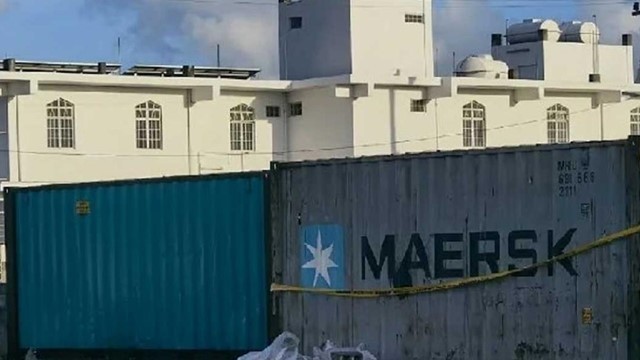
Currently, Indian government and private container trains transport cargo up to the Indian side of the Benapole border, opposite Bangladesh.
Once the containers enter Bangladesh, they are transferred to local trailer trucks for transportation to inland container depots (ICDs) and other destinations.
According to the meeting minutes, India wants its private Container Train Operators (CTOs) to receive permission to run trains directly into Bangladesh and transport containers to their designated destinations within the country.
In response, Bangladesh reiterated the position it had taken at the 37th IGRM, held in New Delhi in January 2025.
The Bangladeshi delegation said that if Indian private container train operators are permitted to operate on its railway network, the Indian government-owned railway authority must bear full responsibility and liability for their operations.
Bangladesh suggested that the issue could be discussed at an appropriate forum.
The minutes also indicate that some of India's proposals reflect operational capabilities that its much larger railway network already possesses, while Bangladesh faces infrastructure, manpower and technical limitations that make immediate implementation difficult.
India proposes 24-hour freight operations on three routes
India has requested permission to operate freight trains around the clock, replacing the existing daylight-only arrangements, on three cross-border routes:
- Darshana–Gede
- Petrapole–Benapole
- Rohanpur–Singhabad
Currently, freight train movements on these routes generally take place between sunrise and sunset.
Bangladesh said freight traffic on the routes had declined over the past two years but had recently begun to increase again.
It added that any decision on extending operating hours should take into account the volume of cross-border trade.
India has also urged Bangladesh to increase the speed at which it receives freight trains on the Rohanpur–Singhabad route.
Indian officials complained that delays in accepting trains leave Indian railway wagons and locomotives stranded for extended periods.
Bangladesh responded that it had received 57 freight rakes through five interchange points in August 2026.
However, it said accepting additional trains on the Rohanpur–Singhabad route would be difficult because of limitations involving locomotives, manpower and railway infrastructure.
As an alternative, Bangladesh proposed handling more freight trains through other interchange points.
Bangladesh outlines plans to expand freight-handling capacity
India has also requested improvements to loading and unloading facilities at freight stations in Bangladesh's western railway region.
In response, Bangladesh said it had initiated measures to increase the clear standing length at 12 freight unloading stations.
Capacity expansion work is also under way at Sirajganj Bazar, Ibrahimabad, Nawapara, Faridpur and Ullapara stations.
Bangladesh further said it was working to improve yard capacity and manpower arrangements to reduce the turnaround time of Indian wagons to less than five days.
The measures are intended to improve the efficiency of cross-border freight transportation and reduce delays.
Bangladesh reluctant to introduce direct cargo bookings
India has proposed introducing direct bookings from its freight stations to destinations at freight stations inside Bangladesh.
The proposed arrangement is intended to reduce congestion at border points and streamline cargo transportation.
Bangladesh, however, said implementing the system would require amendments to the existing basic and supplementary rules governing railway traffic exchanges between the two countries.
It also expressed concern that the limited capacity of domestic stations to receive additional wagons could place further pressure on the network.
For this reason, Bangladesh favoured retaining the existing rebooking system for the time being.
Disagreement over wagon carrying capacity
India has proposed increasing the authorised carrying capacity of BCN and BCNA-type freight wagons to 63 tonnes and 66 tonnes, respectively.
Bangladesh said its railway infrastructure in the western region, including tracks, bridges and culverts, was not capable of supporting such heavy loads across the entire network.
However, it indicated that specific routes could be examined if India submitted a formal proposal identifying the proposed operating corridors.
India has also sought permission to receive full-length, 45-wagon container trains at Benapole, a review of freight charges and approval for the movement of open-top containers.
Bangladesh said Benapole could accommodate full-length trains, but it lacked the equipment needed to unload cargo from open-top containers.
The two sides also discussed proposals to introduce customs facilities at four stations, including Jashore and Nawapara.
Bangladesh rejected the proposal for Jashore but agreed to examine its feasibility at Nawapara.
India's proposal to transport cargo from Kamalapur Inland Container Depot to Indian destinations will be considered after a new ICD becomes operational at Dhirasram.
Proposed rail links between Chattogram and India's northeast
The meeting also explored opportunities to expand railway connectivity between Bangladesh and India's northeastern region.
One proposal involves operating freight trains from Chattogram Port to Nishchintapur, near Agartala, the capital of India's northeastern state of Tripura.
The possibility of introducing passenger train services between Dhaka and Nishchintapur was also discussed.
Bangladesh asked India to provide formal proposals along with forecasts of potential import and export cargo demand before the initiatives could be considered.
Delays in cross-border railway projects
Bangladesh attributed delays in the Kulaura–Shahbazpur railway connection project to financial difficulties faced by the Indian contractor, shortages of construction materials and complications involving project costs.
India, meanwhile, requested Bangladesh to pay Tk 45 crore in value-added tax (VAT) owed to the contractor.
Regarding the Dhaka–Tongi–Joydebpur railway project, India assured Bangladesh that construction materials would be supplied more quickly following Dhaka's request.
Major disagreement over outstanding railway payments
The two countries also have significant differences over their financial accounts relating to the use of each other's railway wagons.
India claimed that Bangladesh owed it 39.099 billion rupees as of June 2026.
Bangladesh's calculations, however, showed that Indian Railways owed Bangladesh a net amount of Tk 2.1384 billion.
Outstanding payments also exist in connection with passenger train operations.
Bangladesh informed the meeting that steps were being taken to pay India Tk 500 million.
Both sides agreed to update their accounts regularly and reconcile outstanding payments.
India seeks changes to passenger train services
India also proposed introducing customs and immigration services throughout the journey of the Bandhan Express, rather than limiting such facilities to designated points.
It further proposed operating the Maitree Express across the Padma Bridge.
Bangladesh said a decision on extending customs and immigration services for the Bandhan Express would depend on passenger demand and practical considerations.
Regarding the Maitree Express, Dhaka asked India to submit a formal proposal through diplomatic channels before the matter could be examined.
Bangladesh also proposed attaching luggage vans or VPU coaches to passenger trains to facilitate parcel transportation.
India agreed in principle but requested a formal proposal.
Other subjects discussed during the meeting included railway electrification, updating regulations, station development and training programmes.
The next Inter-Governmental Railway Meeting is scheduled to take place in India in September 2027.
No proposal to resume three suspended passenger trains
Notably, Bangladesh did not raise any proposal at the meeting to resume three important and previously popular passenger train services that remain suspended.
Asked about the omission, Mohammad Ziaul Haque, additional secretary at the Ministry of Railways who led the Bangladeshi delegation, told Ajker Patrika: "This is a government decision. We discussed the issues that Bangladesh had placed on the negotiating table."
Experts call for stronger negotiating capacity
Transport expert Professor Shamsul Haque of the Bangladesh University of Engineering and Technology (BUET) said political disagreements and economic interests should be considered separately when dealing with bilateral railway cooperation.
"Political differences and economic interests must be viewed separately. In international negotiations, priority should be given to whatever serves the country's interests," he said.
However, he pointed to a lack of specialised expertise and research within government ministries as a major obstacle to making effective decisions and negotiating favourable terms for Bangladesh.
The discussions highlight the growing importance of railway connectivity between Bangladesh and India, particularly for regional trade and access to India's northeastern states.
They also underline the challenges Bangladesh faces in balancing the potential economic benefits of expanded cross-border rail operations with infrastructure constraints, operational responsibilities and the need to protect its national interests.