২২ কার্তিক ১৪৩৩



Global Tech Stocks Plunge Amid Fears of Tighter US AI Regulations After Democrats’ Midterm Election Victory
06 November 2026 18:11 PM
NEWS DESK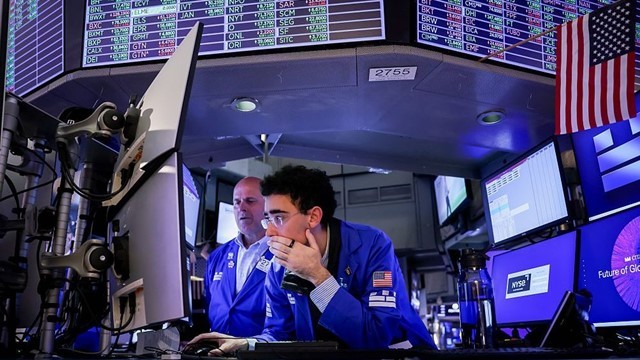
Heavy selling hits Asian markets as South Korean and Japanese technology stocks tumble, following Wall Street's sharpest losses in months. Investors fear Democratic lawmakers could curb data centre expansion and threaten the massive investments underpinning the global AI boom.
Global technology stocks have suffered a major sell-off amid growing concerns that the Democratic Party's sweeping victory in the US midterm elections could lead to tighter regulations on the artificial intelligence industry.
The fallout has spread to Asian markets, where shares of major technology companies in South Korea and Japan came under intense selling pressure at the opening of trading on Friday.
Following a sharp decline on Wall Street, investors across Asia also rushed to sell their holdings. Just five months ago, many of these technology companies had helped drive stock markets to record highs. Now, however, uncertainty is mounting over their future prospects.
Some investors initially welcomed the Democrats' historic victory in Tuesday's US elections, hoping the outcome would increase pressure on President Donald Trump to end the war with Iran.
However, concerns soon shifted towards the potential implications of the election results for the expansion of the artificial intelligence industry.
Opposition to the construction of data centres has been growing across the United States, cutting across political and ideological divisions. Several politicians who won seats in the midterm elections have also pledged to rein in the expansion of such projects.
Analysts say calls by progressive US Senator Bernie Sanders for a nationwide moratorium on data centre construction have further unsettled investors.
The election results come at a particularly sensitive time for the technology industry. Major companies have already committed hundreds of billions of dollars to artificial intelligence infrastructure and development, but questions remain over when these enormous investments will begin generating substantial returns.
Rising borrowing costs have added to concerns about companies' financial capacity to sustain such spending.
At the same time, the share prices of many technology companies had already climbed to exceptionally high levels, leaving markets vulnerable to a correction.
Michael Hewson, an analyst at MCH Market Insights, said investors were selling shares amid fears that opposition to the expansion of AI infrastructure could intensify.
"Investors are selling shares amid concerns that opposition to AI expansion plans could increase," he said.
He also pointed to the election results in Texas, suggesting that politicians could target Elon Musk's companies, Tesla and SpaceX, because of their association with Trump.
Wall Street suffers its sharpest losses in months
The Nasdaq Composite plunged 5.5 per cent on Thursday, marking its biggest single-day percentage decline since April last year.
That earlier market rout followed Trump's announcement of sweeping tariffs on imports from countries around the world.
The S&P 500 fell more than 4 per cent, while the Dow Jones Industrial Average dropped over 3 per cent on Thursday.
According to Bloomberg data, the Philadelphia Semiconductor Index has declined by approximately 16 per cent this week. If the trend continues, it would mark the index's worst performance since April last year.
Trump blamed the Democrats for the market collapse.
In a post on his social media platform, Truth Social, he wrote: "The Stock Market is down BIG today because of the big win by the Democrats on Tuesday. It's sad to see. You caused this, and you own it!"
Asian technology stocks bear the brunt
The sell-off continued across Asian markets on Friday, with some of the region's leading technology stocks recording steep losses.
South Korea's benchmark KOSPI index fell by nearly 9 per cent at one point during trading.
Shares of SK Hynix, one of the country's largest semiconductor manufacturers, plunged 10 per cent. Rival Samsung Electronics also suffered an 8 per cent decline.
The KOSPI had more than doubled between late December last year and mid-June this year, reaching record highs. Since then, however, the index has lost approximately 50 per cent of its value.
Japan's Nikkei index also dropped 7 per cent.
Shares of Japanese technology companies Kioxia and SoftBank fell by more than 10 per cent, while Advantest lost over 8 per cent.
In Taiwan, shares of leading semiconductor manufacturer Taiwan Semiconductor Manufacturing Company (TSMC) declined by 7 per cent, pushing the benchmark TAIEX index down by nearly 8 per cent.
Markets in Hong Kong, Shanghai, Sydney and Singapore also recorded losses of more than 1 per cent. Trading in Wellington and Manila likewise showed a negative trend.
Investors fear the AI boom could lose momentum
Neil Wilson, an analyst at Saxo Markets, described the widespread sell-off in stark terms.
"There's blood on the streets everywhere," he said.
He added that investors' biggest concern was that the market's broader upward momentum could collapse completely.
The possibility that Democrats might obstruct the expansion of the AI industry and halt data centre construction has become a major source of anxiety for investors.
Wilson said that although some of the market's reaction might appear exaggerated, the widespread selling across different sectors suggested that investors would have to wait for stability to return.
The concerns are particularly significant because the global technology rally has been heavily driven by expectations surrounding artificial intelligence.
Companies have invested hundreds of billions of dollars in data centres, semiconductor manufacturing, computing infrastructure and AI development. Any regulatory restrictions on new data centre projects could potentially affect the industry's growth plans and the expected returns on those investments.
For investors, the central question is increasingly whether the enormous spending on AI infrastructure can be sustained if political opposition and regulatory uncertainty intensify.
Rising oil prices add to market uncertainty
Meanwhile, rising oil prices have added another layer of uncertainty to global financial markets.
Oil prices fell on Thursday amid hopes that the US midterm election results could increase the prospects of an end to the war with Iran.
However, prices subsequently reversed course and began rising again.
The combination of renewed concerns over the conflict in the Middle East, higher oil prices, rising borrowing costs and uncertainty surrounding AI investment has further complicated the outlook for global markets.
With technology stocks facing mounting pressure on both sides of the Pacific, investors are now closely watching whether the latest sell-off represents a temporary market correction or the beginning of a more prolonged reassessment of the global AI boom.