৬ আশ্বিন ১৪৩৩



Europe Steps Up War Readiness Amid Growing Fears Russia Could Expand Conflict Beyond Ukraine
21 September 2026 17:09 PM
NEWS DESK
Europe is increasingly preparing for the possibility that Russia could widen its confrontation beyond Ukraine, with governments across the continent strengthening defenses, reviewing emergency plans, and warning citizens to prepare for potential conflict.
The renewed sense of urgency follows a series of military, political, and intelligence developments that have heightened concerns among European leaders about Moscow's long-term intentions.
Earlier this week, Belarus, Russia's closest military ally, conducted large-scale joint military exercises near the Suwałki Gap—a narrow corridor between Poland and Lithuania that connects the Baltic NATO members of Lithuania, Latvia, and Estonia with the rest of the alliance. The corridor has long been viewed as one of NATO's most strategically vulnerable locations.
At the same time, French President Emmanuel Macron convened senior political leaders for a classified intelligence briefing before announcing new measures to strengthen the protection of France's critical infrastructure against what he described as growing Russian "hybrid" threats.
Polish Prime Minister Donald Tusk also issued a stark warning, saying Russia could launch drone or missile strikes against NATO territory and attempt to portray them as accidental incidents.
Britain has likewise urged citizens to prepare for potential wartime disruptions by storing long-lasting food and drinking water. The head of the UK's armed forces recently described the current security environment as the most dangerous the country has faced in decades.
Germany has begun preparing hospitals for the possibility of a future Russian attack, while Chancellor Friedrich Merz warned that Europe is approaching a decisive moment in safeguarding its freedom and peace.
Even traditionally neutral Switzerland has adopted a new national security strategy aimed at strengthening its resilience and improving its ability to defend itself in the event of an armed attack.
Across the Atlantic, U.S. President Donald Trump announced progress toward establishing a permanent American military base in Poland. The announcement came just weeks after reports that he had dispatched the CIA director to Moscow on a confidential mission to warn Russia against attacking any NATO member.
Taken together, these developments reflect growing concern on both sides of the Atlantic that Russian President Vladimir Putin could eventually seek to expand the conflict beyond Ukraine.
The United States also reinforced those concerns this week after federal prosecutors charged five individuals accused of working on behalf of Russian intelligence. Prosecutors alleged the network was involved in planning assassinations and attacks around the world, including plots inside the United States and operations targeting civilian and military infrastructure across Europe.
European governments have for years accused Russia of engaging in cyberattacks, sabotage, arson, drone operations, and attacks on critical infrastructure as part of a broader campaign of hybrid warfare. Germany last month also blamed Russia for a drone incident affecting a civilian airport.
For NATO, one of the greatest strategic challenges is that such activities often remain below the threshold of conventional warfare. Drone incursions into NATO airspace, attacks on infrastructure, airport disruptions, and covert assassination plots are widely regarded as "gray zone" operations, allowing Moscow to deny direct responsibility while testing the alliance's resolve.
Analysts argue that the Kremlin uses this ambiguity to measure NATO's willingness to respond, fully aware that alliance members may disagree over how forcefully such incidents should be addressed.
The larger concern is what might happen if Russia escalates further.
Attention has increasingly focused on the Suwałki Gap, a roughly 65-mile (105-kilometer) corridor linking Poland and Lithuania. It is the only land route connecting NATO's Baltic members with the rest of the alliance.
Security experts have long examined scenarios in which Russia, potentially with Belarusian support, could deploy forces into part of the corridor during a crisis. Moscow could present such an operation as a limited incursion rather than a full-scale invasion while warning that any NATO military response could risk nuclear escalation.
Such a move would not only threaten to isolate the Baltic states but could also test the credibility of NATO's collective defense commitment under Article 5.
The key question would be whether all 32 NATO members would agree to wage war against Russia to recover a relatively small stretch of territory. It also raises broader questions about whether the United States, Germany, France, and other major allies would be willing to risk direct confrontation with a nuclear-armed Russia.
No definitive answer exists—and many analysts believe that uncertainty itself could become part of Russia's strategy.
Earlier this year, NATO Secretary General Mark Rutte was asked about military exercises involving a hypothetical Russian operation around the Suwałki Gap. He said NATO routinely prepares for such scenarios and warned that any attack on the alliance would be met with a "devastating" response.
Whether President Putin believes that warning remains an open question.
The uncertainty comes at a time when Washington's relations with some close allies, including Canada, have faced periodic tensions, potentially encouraging Moscow to reassess NATO's unity and political resolve.
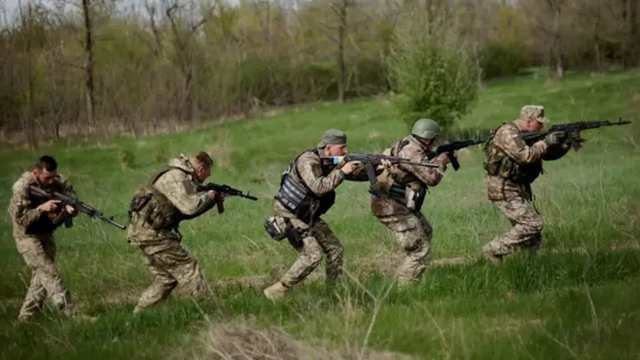
The war in Ukraine has also transformed Europe's understanding of modern warfare.
Beyond military hardware, Ukraine has demonstrated the importance of maintaining electricity supplies, keeping hospitals operational, preserving communications and transport networks, and ensuring governments continue functioning during prolonged attacks. Societies must also remain economically and socially resilient to withstand sustained pressure without political collapse or deep internal divisions.
Reflecting those lessons, NATO this week released updated resilience requirements for member states, emphasizing continuity of government, secure energy supplies, food, water, healthcare, communications, and other essential services during crises and wartime.
Alliance officials are closely studying Ukraine's experience in maintaining critical public services despite years of sustained Russian attacks.
The shift marks a significant reversal. For years, Ukraine learned military and defense practices from NATO. Today, NATO is increasingly learning from Ukraine's experience in sustaining a functioning state under wartime conditions.
The alliance hopes that by demonstrating both military strength and national resilience, it can convince Russia that aggression against NATO would not succeed.
Another factor shaping Europe's response is the growing strain on U.S. global military commitments.
The United States is simultaneously maintaining its military presence in Europe, managing security challenges in the Middle East, and sustaining deterrence against China in the Indo-Pacific. As a result, air defense systems, naval assets, intelligence capabilities, and ammunition stockpiles cannot be concentrated equally across every theater.
Although President Trump has taken steps to reinforce NATO, uncertainty remains over how firmly the alliance's collective defense obligations would be implemented during a future crisis—a calculation that analysts believe Moscow is closely monitoring.
Despite Russia's continued military commitment in Ukraine, experts argue that Putin would not necessarily need to launch another full-scale invasion to challenge NATO.
Instead, Russia could gradually escalate pressure through sabotage, cyberattacks, assassination plots, drone or missile strikes, and ultimately limited military operations. At each stage, the objective would be to test whether NATO is willing to translate its security guarantees into concrete military action.
The Suwałki Gap has therefore become a symbol of a much broader strategic question: whether uncertainty over Western unity could weaken deterrence.
Following the end of the Cold War, many European nations significantly reduced military spending, troop numbers, and civil defense capabilities, believing that large-scale war on the continent had become unlikely. For decades, there was also a widespread assumption that the United States would ultimately guarantee Europe's security.
European leaders increasingly acknowledge that this era may be coming to an end.
Today, they argue that deterrence depends not only on military capability but also on what an adversary believes. If Moscow concludes that NATO would struggle to respond with unity during a major crisis, that perception alone could increase the risk of conflict.
Belarus's military exercises near the Suwałki Gap have therefore reinforced concerns among European policymakers that years of relative complacency may have weakened parts of the continent's deterrence posture.
European governments now appear to be pursuing a clear objective: convincing Russia that any aggression against NATO would fail.
The recent wave of emergency measures across Europe suggests that leaders no longer regard the possibility of Russia expanding the conflict beyond Ukraine as a distant scenario, but as a contingency requiring immediate preparation.