২২ আশ্বিন ১৪৩৩



Will BNP–Jamaat Form a National Government?
10 January 2026 05:01 AM
NEWS DESK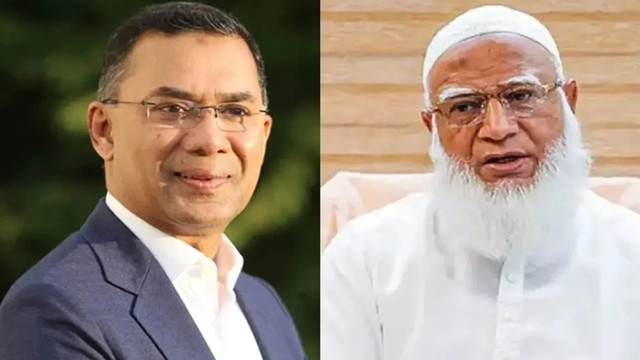
Following the parliamentary election scheduled for 12 February, fresh discussions have begun in political circles over the formation of the next government. Jamaat-e-Islami has spoken of forming a national government after the election, while the BNP has proposed a government of national consensus. This has raised questions about whether there is any connection between the two proposals or whether
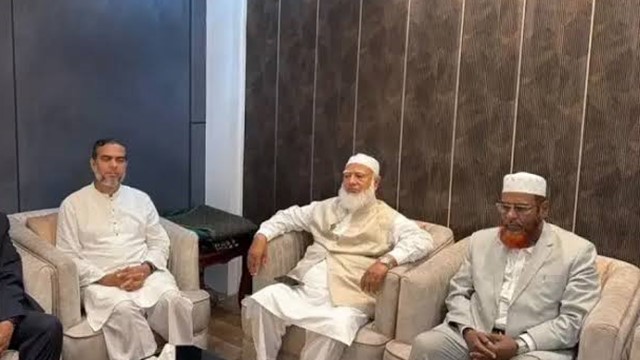
The issue came back into focus after a recent meeting between BNP Acting Chairman Tarique Rahman and Jamaat Ameer Shafiqur Rahman. Although Jamaat did not present any specific government structure at that meeting, Shafiqur Rahman’s remarks suggested that they want to sit down with the BNP for talks before government formation after the election and are interested in reaching a joint decision in the interest of national stability.
Political analysts view these remarks as “suggestive.” According to them, Jamaat wants to keep the issue of post-election government formation at the center of political discussion. As a result, questions are being raised: will the BNP and Jamaat eventually agree on forming a national government, or will there once again be a one-sided parliament, or a parliament with an effective opposition?
The meeting between Tarique Rahman and Shafiqur Rahman took place in a different context. On 1 January, a day after the death of BNP Chairperson Khaleda Zia, Jamaat’s Ameer went to the BNP’s Gulshan office to sign the condolence book, and the meeting was held there.
Despite the different circumstances, Jamaat’s Ameer outlined his party’s position on politics and post-election government formation during the meeting. Speaking to journalists afterward, he said the time had come to consider whether all parties together could find a good path to restore stability and a healthy environment in the country for the next five years. He added that Jamaat would sit for discussions before the formation of the government after the election and try to take decisions in the national interest.
Although his remarks did not include any clear proposal regarding the structure of the government, his expressed interest in talks with the BNP before government formation has generated considerable discussion. Shafiqur Rahman himself acknowledged that there was an “indication” in his remarks, though he did not elaborate on it.
He said that during the Awami League’s more than fifteen and a half years in power, various sectors—including the economy and law and order—have deteriorated, and these problems have not yet been fully resolved. In this reality, Jamaat believes that it would be difficult for any single party to govern the country alone without consensus and cooperation.
In practice, however, the relationship between the BNP and Jamaat is currently strained. After the fall of the Awami League government through the July mass uprising, Jamaat—once a BNP ally—has emerged as its main rival. Leaders of the two parties have exchanged statements and accusations.
Ahead of the national election, the BNP and Jamaat are leading two different political camps. Some analysts believe that since the Awami League and its allies are politically inactive, the active parties are now focused on creating a competitive electoral environment.
However, cracks in the BNP–Jamaat relationship became clear even during the anti–Awami League movement. Jamaat was not included in the BNP-led simultaneous movement, and Jamaat carried out its programs separately. Analysts say this distance was created due to political interests and has now widened further.
In this context, the question arises: whichever party comes to power after the election, will it include the other party in government? Analysts say that after the political shift, all active parties believe they have influence over the interim government, which has increased their desire to share power.
Writer and analyst Mahiuddin Ahmed believes that Jamaat is calling for talks with the BNP before government formation because it wants to stay close to power. Jamaat leaders reject this interpretation and instead emphasize the need for cooperation among all parties.
Jamaat has outlined three conditions for forming a national government: no scope for corruption, an end to government interference in the judiciary, and the implementation of reform proposals agreed upon by all parties in line with the spirit of the July movement. According to Jamaat, if it wins the election, it wants to form a national government with those who agree to these conditions.
Jamaat’s Ameer has said that they are not prepared to take responsibility for corruption by joining any government. Analysts believe this remark may also be directed at the BNP. However, Jamaat’s interest in talks with the BNP before government formation keeps alive the question of whether Jamaat wants to join a government with the BNP.
On this issue, Shafiqur Rahman said that the BNP is talking about forming a government of national consensus without Jamaat. He added that Jamaat is raising the proposal of a national government to highlight the need for cooperation among all parties in the current political and economic reality.
If Jamaat gets the opportunity to form a government, it will move forward with implementing the idea of a national government. If the BNP forms the government, Jamaat has said it wants to cooperate. Parties that have seat-sharing arrangements with Jamaat—such as Islami Andolan and the National Citizens Party—also support forming a national government under these three conditions.
Both parties deny that there is any linkage between their proposals. However, the difference is clear: Jamaat speaks of a national government, while the BNP speaks of a government of national consensus.
In its 31-point reform proposal announced during the simultaneous movement in 2022, the BNP mentioned forming a government of national consensus with its allies, excluding Jamaat. BNP Standing Committee member Salahuddin Ahmed said they remain committed to forming a government without Jamaat.
Another BNP leader said that forming a government with all parties would leave no effective opposition in parliament and could result in a one-sided legislature. Therefore, the BNP wants to maintain a distinction between cooperation and power-sharing.
According to political analysts, based on their public positions, the possibility of the BNP and Jamaat jointly forming a government is currently low. This is because both parties are contesting the election while leading different political camps and are talking about forming governments without each other.
(Taken from BBC Bangla)