১১ আশ্বিন ১৪৩৩



The Diplomat Predicts Tarique Rahman as Bangladesh’s Likely Next Prime Minister
05 February 2026 09:02 AM
NEWS DESK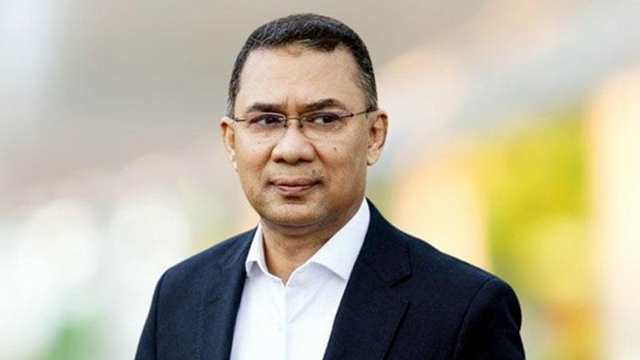
US-based current affairs magazine The Diplomat has published an analysis today on Bangladesh’s upcoming 13th National Parliamentary Election, scheduled for February 12, predicting Bangladesh Nationalist Party (BNP) Chairman Tarique Rahman as the country’s likely next prime minister.
The analysis, titled “An Interview With Tarique Rahman—Likely Bangladesh’s Next Prime Minister,” cites multiple pre-election opinion polls that place Rahman ahead of other contenders.
Ahead of the election to be held under the supervision of an interim government led by Nobel laureate Dr Muhammad Yunus, global media outlets including Bloomberg, Time, and The Economist have already identified Tarique Rahman as the frontrunner. The Diplomat has now gone a step further by describing him as the future prime minister.
According to the report, a public opinion survey conducted in December shows nearly 70 percent support for the BNP, while its closest rival, Jamaat-e-Islami, received 19 percent support.
Another survey conducted by private research firm Innovation Consulting found that more than 47 percent of respondents believe Tarique Rahman is most likely to become prime minister, while 22.5 percent expect Jamaat-e-Islami chief Dr Shafiqur Rahman to assume the role.
The Diplomat observed that Generation Z voters are expected to play a decisive role in the election, as they make up a significant portion of the electorate. The magazine noted that young voters are likely to determine Bangladesh’s next prime minister.
The report also stated that many Gen Z voters are actively participating in BNP political programs, particularly those led by party chairman Tarique Rahman.
The interview with Rahman was conducted while he was traveling by bus from a campaign rally in Sirajganj to another rally in Tangail, during which he responded to questions on domestic and foreign policy.
Speaking about Gen Z voters, Rahman told The Diplomat that the BNP is closely engaging with their mindset. He said the party is prioritizing job creation, technical education, sports, the IT sector, and labor market reforms, which he believes strongly align with the aspirations of younger voters. He noted that a large proportion of attendees at campaign rallies are Gen Z.
Rahman also highlighted an initiative called “The Plan,” through which he listens to university students as they share their ideas, concerns, and perspectives. He said he genuinely enjoys engaging with young people through this platform.
The report noted that the Awami League government of ousted Prime Minister Sheikh Hasina faced criticism for pursuing an India-centric foreign policy, at a time when Bangladesh attracted strategic attention from the United States, China, and India.
Asked about his own foreign policy outlook, Rahman said national interest would be his top priority. He described his approach as a “Bangladesh First” foreign policy, emphasizing an economy-driven strategy focused on safeguarding national interests. He said Bangladesh believes in mutual trust, mutual respect, and mutual benefit in its international engagements.
On governance and democratic values, Rahman said the BNP is committed to peaceful coexistence in society and mutual respect in politics, while upholding the rule of law, freedom of expression, and human rights for all.
Regarding electoral competition, The Diplomat noted that a segment of Gen Z voters is gravitating toward the National Citizen Party (NCP), which is expected to challenge the BNP both in parliament and on the streets.
Responding to this challenge, Rahman said he does not feel threatened, stressing that all political parties present their plans to the people and that voters ultimately decide which vision they prefer.
Addressing questions about his pledge to transform Bangladesh into a one-trillion-dollar economy, Rahman acknowledged the difficulty of the goal but said it is achievable. He said Bangladesh needs to create employment for 50 million people out of its population of 200 million, restore law and order, strengthen the economy, and support business development nationwide.
Rahman noted that Bangladesh’s economy currently rests on two main pillars—the garment industry and remittances—both of which were initiated during BNP governments. He said future priorities would include the IT sector, semiconductors, light engineering, footwear, and small and medium enterprises.
He also pointed to significant potential in the food sector, including processed foods, fisheries, and vegetable exports, as well as opportunities in the creative economy.
On tackling loan defaults and money laundering, Rahman said these challenges can be addressed through strong financial governance. He pledged to establish a transparent and accountable system with zero tolerance for corruption and strict legal action against abuse of power.
Regarding law and order, Rahman said the BNP aims to create a security environment where citizens can move freely without fear at night and economic activities can function smoothly.
On climate change, he said action must begin immediately, emphasizing responsible resource management and the mobilization of funds from global climate financing mechanisms. He added that the BNP would prioritize the excavation of 20,000 kilometers of canals and the planting of 250 million trees.
Rahman also highlighted the growing groundwater crisis, noting that water once found at 20 feet now often requires drilling as deep as 300 feet.
Concluding on electoral commitments, Rahman said the BNP would work to implement its 31-point reform agenda, prioritizing family cards, farmer cards, healthcare, employment, and education.
He said his ultimate goal is to bring positive change by fulfilling the aspirations of the people and restoring people’s power, calling it his core commitment to the nation.