১৪ আশ্বিন ১৪৩৩



Opposition Leader Calls for Respectful Parliamentary Culture, Warns Against Weakening Opposition
30 June 2026 04:06 AM
NEWS DESK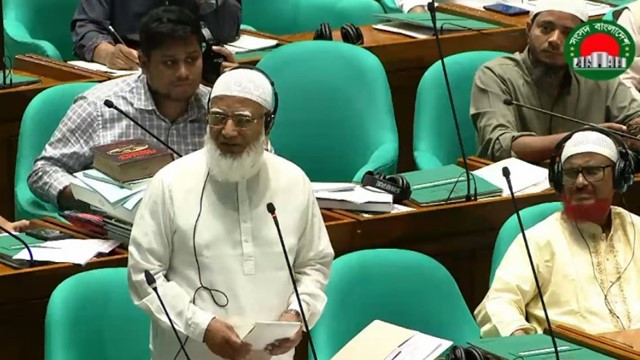
Opposition Leader Shafiqur Rahman has criticized what he described as a growing tendency to weaken opposition parties, urging the government to foster a parliamentary culture based on mutual respect and cooperation.
Speaking during the concluding debate on the proposed 2026–27 national budget in Parliament on Monday, Rahman said an effective legislature requires both the government and the opposition to function as equal partners.
"We are seeing a disturbing trend where everyone tries to tear the opposition apart and then invites them to join the ruling side. We did not come here to be dismantled," he said.
He stressed that the opposition should not automatically support every government proposal, nor oppose every initiative for political reasons. Instead, he called on both sides to respect each other's constitutional roles.
"The government must have the mentality to respect the opposition, and the opposition must be willing to cooperate with the government on issues that serve the national interest," he said.
Comparing Parliament to a vehicle running on two wheels, Rahman said the ruling party and the opposition are equally essential to democratic governance.
"If one tire is punctured, the vehicle cannot move. Weakening the opposition ultimately weakens Parliament itself," he remarked.
The opposition leader also criticized what he described as unhealthy parliamentary practices of the past, including personality cults, excessive praise of those in power, and character assassination.
"This Parliament is not a place for flattery. It is a place to fulfill our responsibilities," he said, urging Speaker Hafiz Uddin Ahmed to ensure that such practices are not repeated.
During his speech, Rahman also raised several policy recommendations, including strengthening public healthcare before building new hospitals, protecting the academic future of students at private medical colleges facing regulatory action, increasing support for Qawmi madrasas, reforming the education and healthcare sectors, recovering illicitly transferred funds from abroad, improving oversight of budget implementation, and addressing the challenges faced by Bangladeshi migrant workers.
He proposed establishing a parliamentary task force to resolve migrant workers' issues and called for dismantling recruitment syndicates that allegedly charge workers several times the official migration cost.
Rahman welcomed the government's decision to continue allowances for freedom fighters while also calling for state recognition of those who were killed or persecuted in past political violence. He further urged that all offenders, regardless of their influence, be brought to justice.
He also recommended presenting budget implementation progress reports to Parliament every three or four months and proposed changing Bangladesh's fiscal year from the current July–June cycle to a January–December calendar.
Concluding his speech, Rahman called for the speedy completion of major infrastructure projects, including the Sylhet–Dhaka four-lane highway, a permanent solution to waterlogging in the southwest, construction of the Bhola Bridge, and implementation of a comprehensive river management plan with Chinese cooperation.
"We are not hungry for recognition; we are hungry for results. We want to see real work," he said before thanking the Speaker and expressing hope for a more prosperous Bangladesh led by its younger generation.