১২ আশ্বিন ১৪৩৩



International Groups Urge Bangladesh Ministers to Clarify Remarks on Indigenous Peoples
14 August 2026 06:08 AM
NEWS DESK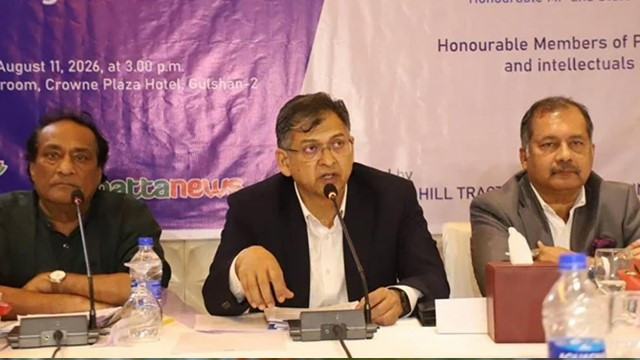
Two international organizations have called on Bangladesh's home minister and information minister to withdraw or clarify recent remarks that they say deny the existence and distinct identity of Indigenous peoples in the country.
In a joint statement issued on Thursday, the International Chittagong Hill Tracts Commission (CHTC) and the International Work Group for Indigenous Affairs (IWGIA) said that Indigenous identity and Bangladeshi citizenship are not mutually exclusive.
"The Indigenous peoples of Bangladesh are both citizens of the state and members of distinct Indigenous communities," the organizations said.
According to the statement, the remarks were made during a roundtable discussion in Dhaka on Aug. 11 titled "Indigenous Identity Is Irrelevant for Bangladesh," organized by the Chittagong Hill Tracts Research Foundation (CHRF).
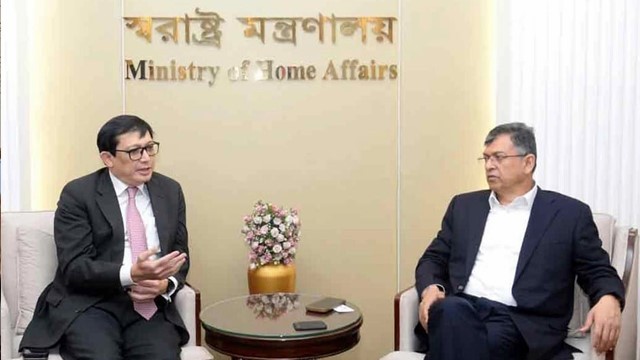
Citing media reports, the organizations said Home Minister Salahuddin Ahmed stated that there are no Indigenous peoples in Bangladesh and that all citizens should be identified simply as Bangladeshis. Information and Broadcasting Minister Zahir Uddin Swapan also reportedly described the use of the term "Indigenous" in Bangladesh as inappropriate.
The organizations argued that recognizing Indigenous identity does not threaten national unity, sovereignty, security, or territorial integrity. Instead, they said, recognition of Indigenous identity can coexist with citizenship.
Referring to Bangladesh's international legal commitments, the statement noted that while the country has not ratified the International Labour Organization's Convention No. 169 on Indigenous and Tribal Peoples, it has ratified ILO Convention No. 107 of 1957. As a result, the organizations said Bangladesh has legal obligations to protect the identity, culture, institutions, and traditional land rights of Indigenous communities.
They further argued that denying Indigenous identity is inconsistent with Bangladesh's Constitution, laws, and public policies. The statement pointed to Article 23A of the Constitution, which recognizes communities with distinct cultures and traditions, as well as references to Indigenous and tribal communities in various national laws and policies.
The organizations also referred to the 1997 Chittagong Hill Tracts Peace Accord, which recognizes the region as a tribal-inhabited area with unique characteristics. They warned that continued denial of Indigenous identity could undermine confidence in both the spirit of the accord and the ongoing peace process.
The CHTC and IWGIA called on the government to engage in meaningful dialogue with Indigenous representatives, implement Bangladesh's international commitments, and adopt a time-bound roadmap for the full implementation of the Chittagong Hill Tracts Peace Accord.
The statement concluded that recognizing Indigenous peoples would not divide Bangladesh. Instead, it argued, denying their identity and subjecting them to discrimination and repression risks deepening social divisions.