৫ আশ্বিন ১৪৩৩



Bangladesh's Top Qawmi Madrasa Body Bans Corporal Punishment, Orders Student Protection Committees
20 September 2026 18:09 PM
NEWS DESK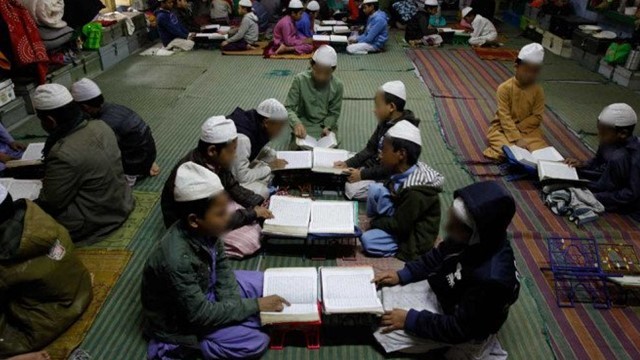
Bangladesh's highest unified Qawmi madrasa authority, Al-Haiatul Ulya Lil-Jami'atil Qawmia Bangladesh, has officially banned all forms of corporal punishment for students and directed all affiliated institutions to immediately establish and activate Student Protection Committees.
The directive, issued on Saturday on the instructions of Al-Haiatul Ulya Chairman Allama Mahmudul Hasan, comes amid recent media reports and social media allegations involving student abuse and misconduct by individuals at several Qawmi madrasas.
According to the directive, discipline should be aimed at correcting and safeguarding students rather than punishing them. Teachers are prohibited from disciplining students while angry. Instead, they have been instructed to follow a gradual approach that begins with gentle advice and warnings, followed, if necessary, by mild reprimands. If a student's behavior does not improve, guardians must be formally notified in writing before any further administrative action is taken.
The directive makes clear that under no circumstances may students be physically punished. It explicitly bans beating students, using sticks, canes or any other objects, striking the face, head or other sensitive parts of the body, and imposing any punishment that could cause broken bones, bleeding, bruises or permanent marks.
It also prohibits public humiliation, verbal abuse, insulting language, derogatory nicknames and all forms of psychological abuse. Teachers found violating the directive will be held accountable under both Islamic principles and the country's existing laws.
Al-Haiatul Ulya has instructed every affiliated madrasa to establish or reconstitute an active Student Protection Committee. The committees must provide students, teachers and staff with a mechanism to report allegations of misconduct, abuse or harassment.
The directive requires investigations to be completed within seven days of receiving a complaint. In cases involving serious allegations, the accused individual must be temporarily relieved of duties while the investigation is underway.
It further warns that any madrasa found without a functioning protection committee, or that fails to act on credible complaints, could face suspension or cancellation of its affiliation with the Qawmi education board.
Beyond disciplinary reforms, the directive calls for regular Islahi Majlis (moral and spiritual guidance sessions) for both teachers and students. It also mandates compulsory Tarbiyati Majlis (teacher orientation and training sessions) for newly appointed teachers and encourages more frequent parent meetings to strengthen communication and trust between guardians and madrasa authorities.
The authority said these measures are intended to ensure that student concerns are identified and addressed promptly.
To improve oversight and counter what it described as misinformation targeting Qawmi madrasas, each of the country's six Qawmi madrasa boards has been instructed to establish a dedicated monitoring cell for affiliated institutions. Separate complaint hotlines will also be introduced.
The directive says that once a complaint is received, the relevant board, madrasa administration and Student Protection Committee must jointly conduct a prompt and impartial investigation. It also instructs institutions to carefully verify the character and integrity of prospective teachers and staff before recruitment.
At the same time, the boards have been advised to provide legal support through their panel of lawyers for teachers, principals, administrators or institutions that become victims of false accusations, baseless media reports or media trials.
The directive states that complaints may also be submitted through Al-Haiatul Ulya's central WhatsApp hotline at 01700-763178, where necessary.
Al-Haiatul Ulya said the directive was formulated based on decisions taken at the 69th meeting of its Standing Committee on September 12, chaired by Allama Mahmudul Hasan, as well as an earlier meeting of the relevant subcommittee on July 29.
The organization said the policy draws on the educational and ethical teachings of prominent Deobandi scholars, including Hakimul Ummat Mawlana Ashraf Ali Thanvi and Shaykhul Hadith Mawlana Muhammad Zakariyya Kandhlawi, along with fatwas issued by well-known Islamic educational institutions.
Reaffirming its position, Al-Haiatul Ulya said that anyone found guilty of criminal or unethical conduct should face a fair investigation and due legal process, and that offenders should receive no protection. At the same time, it stressed that isolated incidents should not be used to discredit the entire Qawmi madrasa education system, its teachers, students or the broader community of Islamic scholars.
The directive, signed by Chairman Allama Mahmudul Hasan, instructs all six Qawmi madrasa education boards and their affiliated institutions across Bangladesh to implement the new measures without delay.