২৫ আশ্বিন ১৪৩৩



Bangladesh Needs Tk 60,000 Crore Annually to Recover from Banking Sector Looting: Governor
10 October 2026 18:10 PM
NEWS DESK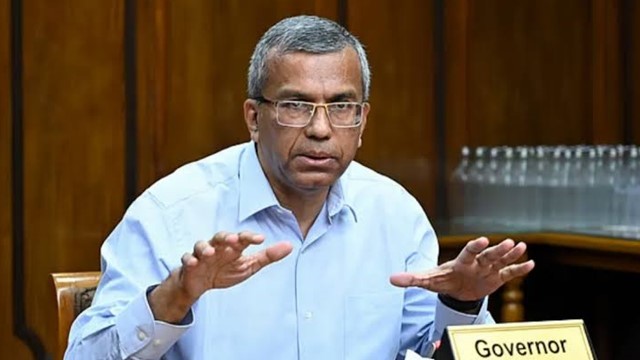
Bangladesh will need Tk 60,000 crore annually from the national budget over the next five to eight years to recover losses caused by looting in the banking sector, Bangladesh Bank Governor Mostakur Rahman has said.
The central bank is currently supplying funds to the affected banks to enable them to repay customers, with the money ultimately coming from taxpayers, the governor said.
He made the remarks on Saturday while addressing a ceremony marking the launch of the Bangla QR payment service at United International University (UIU), organised by ONE Bank PLC.
UIU Vice-Chancellor Professor Dr Abul Kashem Mia and ONE Bank Managing Director Muhit Rahman attended the event.
The governor said Bangladesh Bank had submitted a draft proposal to the government last week seeking an annual allocation of Tk 60,000 crore to address the damage inflicted on the banking sector over the next five to eight years.
Responding to a question from a student, Rahman said that when he assumed office, he found that approximately one-third of the banking sector's money had been taken by individuals involved in large-scale financial misconduct.
He said the problem originated from the alleged plundering of public money and explained that the proposed annual allocation was intended to address the resulting crisis.
Rahman highlighted the scale of the proposed expenditure, saying Tk 60,000 crore could otherwise be used to support two crore families through family cards or finance the construction of two Padma bridges.
“The money that was looted belonged to the people. Now those same people will have to pay it back,” the governor said, warning that ordinary citizens were bearing the financial burden of money taken by others.
He stressed the need to raise public awareness about the consequences of financial misconduct in the banking sector.
The governor also announced that direct person-to-person (P2P) money transfers through Bangla QR would be introduced from November 1.
Bangladesh Bank is also prioritising the development of digital public infrastructure (DPI) to make financial services more accessible, efficient and effective.
To encourage small businesses to adopt Bangla QR, the central bank has introduced various incentives and eliminated inter-operator transaction charges.
Despite these measures, the governor said more work was needed to achieve the desired level of adoption.
Bangla QR transactions currently average Tk 143 crore per day. The central bank aims to increase the daily transaction volume to Tk 3,000 crore.
Rahman said the introduction of P2P payments would enable people from different walks of life, including rickshaw pullers and day labourers, to transfer money conveniently and transparently using QR codes.
Speaking at the event, UIU Vice-Chancellor Professor Dr Abul Kashem Mia said the university had introduced dynamic QR codes to replace static QR codes as part of a joint initiative involving Bangladesh Bank, participating banks and the university administration.
The initiative aims to make the university's campus cashless, allowing students to pay tuition fees and complete other financial transactions more conveniently and securely.
Students can also share their personalised dynamic QR codes with family members, enabling relatives to scan the codes and pay fees on their behalf.
Acknowledging that technical glitches could occur during the initial phase of the digital transition, the vice-chancellor urged students to report problems directly to the authorities rather than spread confusion or negative information on social media.
ONE Bank Managing Director Muhit Rahman said digital transformation becomes meaningful when financial services are made simpler and more accessible in everyday life.
He said the introduction of Bangla QR at UIU would give students practical experience of interoperable digital payments and help them better understand the potential of a digital financial system.
Rahman added that the bank was pleased to partner with UIU to support Bangladesh Bank's vision and involve young people in shaping the future of digital payments.
The service was launched at UIU in support of Bangladesh Bank's broader goal of building an inclusive, technology-driven and cashless economy.
Students can now use Bangla QR for designated payments on campus. Several businesses also set up stalls at the event, allowing students and guests to experience QR-based payments firsthand.