২৭ আশ্বিন ১৪৩৩



Rooftop Solar Could Save Bangladesh Tk 5–6 per Unit, Cut Fossil Fuel Dependence
12 October 2026 19:10 PM
NEWS DESK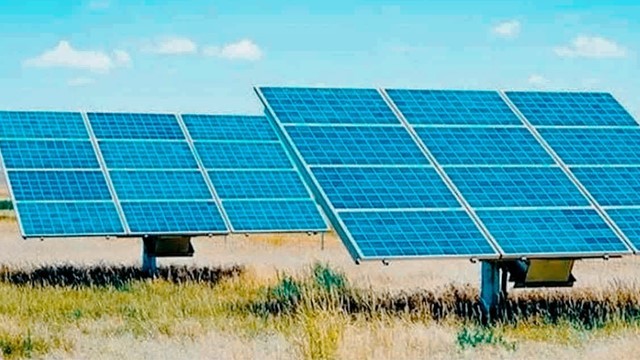
Bangladesh is stepping up efforts to expand renewable energy and reduce its dependence on fossil fuels, with rooftop solar power offering the potential to save consumers Tk 5–6 per unit of electricity compared with grid power, while also helping protect the environment.
According to the Sustainable and Renewable Energy Development Authority (SREDA), Bangladesh currently has 1,871.5 megawatts (MW) of renewable electricity generation capacity. Solar power accounts for 1,578.415 MW of this total, including 1,200.94 MW connected to the national grid and 377.47 MW operating off-grid.
Shafiqul Alam, lead analyst at the Institute for Energy Economics and Financial Analysis (IEEFA), said installing solar panels at the individual consumer level could save at least Tk 5–6 per unit of electricity, depending on requirements and consumption patterns.
“This would also reduce the burden on the government exchequer. Households with higher electricity consumption could lower their power bills as well,” he said.
Industrial consumers generally pay between Tk 11.45 and Tk 16.06 per kilowatt-hour (kWh) for grid electricity during the daytime, Alam said. In comparison, rooftop solar systems can generate electricity at a substantially lower cost, potentially delivering savings of Tk 5–6 per unit.
According to the energy expert, the cost of generating electricity from rooftop solar systems is around Tk 4–5 per unit, while utility-scale, ground-mounted solar power plants incur costs of Tk 8–9 per unit.
If the government provides land, transmission infrastructure and other facilities, the average cost of solar electricity generation could fall to approximately Tk 6.50 per unit. Without such support, the cost could rise to around Tk 9 per unit, Alam said.
Electricity generated by rooftop solar panels can be consumed directly by homes and businesses, reducing their purchases from the national grid. The long-term savings depend on installation costs, financing arrangements, maintenance expenses and electricity consumption.
Data from the Bangladesh Power Development Board (BPDB) show that electricity generation costs Tk 13.13 per unit from coal-fired power plants and Tk 27.40 per unit from furnace oil. Domestic gas-fired power generation costs approximately Tk 7.09 per unit.
These figures highlight the potential economic benefits of expanding solar power, particularly as Bangladesh seeks to reduce its exposure to volatile international fossil fuel markets and ease pressure on public finances.
A practical example is the Mati Agrivoltaic Project in Huzurikanda village under Nakla upazila of Sherpur district, where two solar systems with a combined capacity of 35.3 kilowatts (kW) have been installed.
Shahidul Islam, director of the project, said the systems support a safe food-processing centre, irrigation operations and office activities.
A 26.5 kW solar system supplies electricity to the food-processing centre, while another system with a capacity of 8.8 kW powers irrigation pumps and meets the office's electricity requirements.
The systems generate an average of around 50 per cent of their rated capacity in daily electricity output, he said, adding that the project has not experienced load-shedding.
The installation cost Tk 3 million and has an estimated operational lifespan of 25 years, Islam said.
Excluding maintenance and spare-parts expenses, the cost of generating electricity at the project is approximately Tk 3.50 per unit, he added. In India and Pakistan, the corresponding cost ranges from Tk 3.50 to Tk 4 per unit.
A separate study suggests that a rooftop solar system equipped with storage capacity equivalent to around nine hours of electricity consumption could bring the estimated cost of self-generated electricity down to Tk 7.43 per unit over 20 years.
To reduce installation costs and accelerate solar power adoption, the government has recently reduced import duties on selected solar equipment and components to 1 per cent for a period of 180 days.
The government has also introduced incentives to encourage the installation of rooftop solar systems with battery storage. Under the scheme, consumers can receive Tk 10.50 per unit for surplus electricity supplied to the national grid.
These measures are expected to make rooftop solar more attractive by lowering upfront costs and allowing consumers to benefit from surplus generation.
Hasan Mehedi, chief executive of the Coastal Livelihood and Environmental Action Network (CLEAN) and an energy expert, said rooftop solar and other renewable energy projects could significantly reduce Bangladesh's dependence on imported fuels.
“Global petroleum supplies are being severely disrupted by instability in the Middle East. In this situation, solar power could be an important solution for ensuring Bangladesh's energy security,” he said.
Mehedi added that stronger government initiatives would be necessary to accelerate the transition towards cleaner energy sources.
Prime Minister Tarique Rahman has set a target of generating at least 20 per cent of the country's total electricity from renewable sources by 2030 and 30 per cent by 2040.
Under the government's National Renewable Energy Development Strategy for 2026–2030, Bangladesh aims to generate 5,500 MW of electricity from ground-mounted solar power projects by 2030.
BPDB Chairman Engineer Rezaul Karim said the utility had signed agreements with 12 independent power producers (IPPs) to generate 918 MW of solar electricity by 2028 at a tariff of Tk 9.12 per kWh.
He said several grid-connected solar projects with a combined generation capacity of 689 MW were also being developed using the government's own financing. These projects are scheduled to become operational by 2030.
The expansion of solar power is expected to diversify Bangladesh's energy mix, strengthen energy security and reduce the risks associated with fluctuations in international fossil fuel prices.
As electricity demand continues to rise, the country is seeking to expand renewable energy to support sustainable economic growth while reducing environmental pollution.
The government has tightened enforcement of mandatory rooftop solar installation requirements for new commercial, industrial and public buildings, with particular emphasis on facilities with electrical loads exceeding 10 kW.
However, expanding rooftop solar will require affordable financing, especially for small and medium-sized enterprises and urban residential consumers.
Commercial banks should be encouraged to provide low-interest loans for rooftop solar projects to help reduce installation costs and make the technology accessible to a wider range of consumers.
Experts also caution that the estimated savings of Tk 5–6 per unit must be assessed against the applicable electricity tariff and the total cost of installing, financing, operating and maintaining a solar system.
The government's push for renewable energy comes as electricity-sector subsidies have exceeded Tk 400 billion in the current fiscal year, highlighting the financial pressure associated with meeting the country's growing power demand.
Against this backdrop, Bangladesh is prioritising solar, wind and waste-based electricity generation to reduce its reliance on conventional fuels and improve the long-term sustainability of the power sector.
The country has set a target of generating 20 per cent of its electricity from renewable sources by 2030, while a longer-term goal envisages renewable energy accounting for 30–50 per cent of total electricity generation by 2050.
Achieving these targets will depend on the timely implementation of planned projects, access to affordable financing, adequate grid infrastructure and sustained policy support.
With falling solar generation costs and growing concerns over energy security, rooftop solar could become an increasingly important part of Bangladesh's strategy to reduce electricity expenses, limit fossil fuel imports and build a more sustainable energy system.