২৩ কার্তিক ১৪৩৩



Japan's Big-B Initiative Gets Fresh Momentum: What Is Happening in Bangladesh's Matarbari?
07 November 2026 18:11 PM
NEWS DESK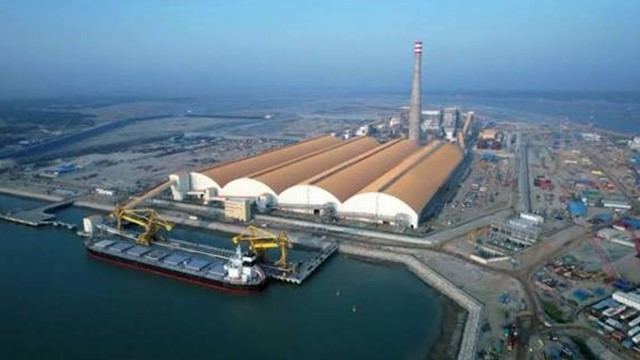
Bangladesh and Japan have agreed to take their flagship Bay of Bengal Industrial Growth Initiative (Big-B) to a new level, following Prime Minister Tarique Rahman's visit to Tokyo in the final week of last month.
In a joint statement issued during the visit, the two countries described the initiative as "Big-B for Shared Prosperity", signalling a renewed commitment to economic cooperation and regional development.
However, two aspects of the joint declaration have attracted particular attention: regional connectivity and the recognition of the importance of the Indo-Pacific strategy.
Questions have emerged over whether the connectivity agenda could give India special access to Bangladesh's infrastructure and trade routes. The country's main opposition party, Jamaat-e-Islami, has raised concerns about the issue at a public rally in Dhaka.
The government, however, has said there is no intention of granting any country preferential treatment.
So what exactly is happening in Matarbari, and why has the Big-B initiative become a subject of political and geopolitical debate?
From a Power Plant to a Deep-Sea Port
Matarbari is a coastal union in Maheshkhali Upazila of Cox's Bazar district. Bangladesh and Japan initially planned to build a coal-fired power plant there during the Awami League government's tenure in 2014. Following an agreement, construction began in 2017.
Rather than building the facility directly on the coastline, the project was located approximately 14 kilometres inland from the sea.
Since the plant required a regular supply of coal, a navigational channel was planned to transport coal to and from the facility.
Work began on excavating a channel approximately 250 metres wide and 14 kilometres long, connecting the power plant to the sea.
However, a preliminary study conducted by the Japan International Cooperation Agency (JICA) in 2017 introduced another possibility.
The study suggested that by making relatively minor modifications to the channel, a commercial port could be developed to its south.
The proposal was to use the same channel for both the coal-fired power plant and a commercial port. This would maximise land use and reduce infrastructure costs.
Bangladesh subsequently accepted the proposal. As a result, the original power plant project gradually evolved into a much larger deep-sea port development plan, requiring an expansion of the channel's depth and width.
Now, plans are also underway to develop the surrounding area into a major industrial and export hub.
What Is Being Developed Under Big-B?
Big-B stands for the Bay of Bengal Industrial Growth Initiative.
It is a Japanese economic investment strategy focused on the Bay of Bengal region, particularly Chattogram and Cox's Bazar.
Japan is seeking to develop an industrial zone around Bangladesh's deep-sea port at Matarbari. For nearly a decade, it has been working on plans to improve the region's transportation and logistics infrastructure alongside port development.
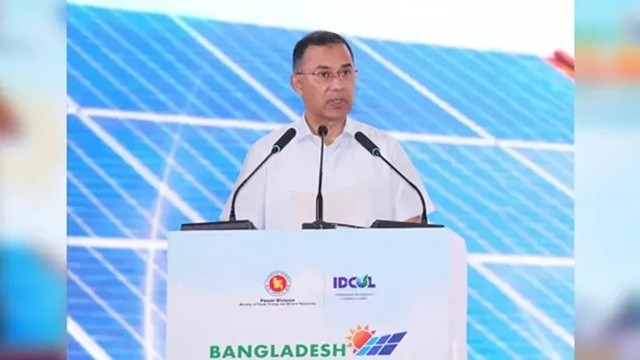
A coal-fired power plant has already been established in the area, while another solar power facility is under development.
Further plans include an LNG terminal, the deep-sea port and a wider industrial zone.
The Bangladesh-Japan joint declaration identifies four major areas of cooperation under Big-B.
First, regional connectivity: The Matarbari deep-sea port will serve as the central foundation for improving connectivity across the region.
Second, resilience: Both countries will work to strengthen their ability to deal with natural disasters and geopolitical uncertainties.
Third, public-private partnerships: Japan is expected to bring more than $6 billion in investment into Bangladesh's economy over the next five years.
Fourth, peace and stability: The initiative also includes cooperation in defence equipment and technology.
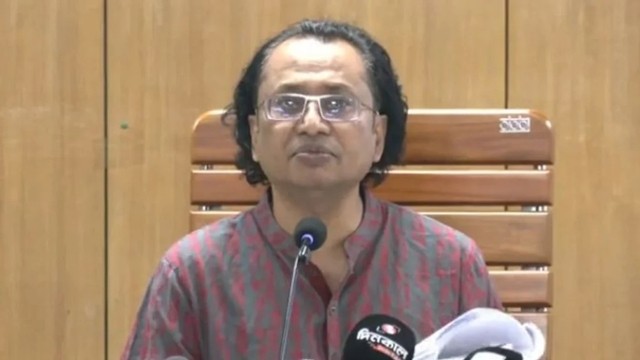
Rashed Al Mahmud Titumir, Bangladesh's Adviser for Finance and Planning, told BBC Bangla that the main objective was to transform Bangladesh into an export hub.
"Our first priority in Matarbari is to develop a deep-sea port, followed by energy infrastructure, logistics facilities, and economic and industrial zones. We are also developing a planned city so that the area can become a global export centre," he said.
He added that Bangladesh would seek to connect the facility with markets in East Asia, Southeast Asia, the Indian Ocean region and Africa.
Bangladesh Will Have to Repay the Loans
Developing Matarbari into a global export hub will require extensive infrastructure, including power plants, LNG terminals, industrial facilities, a deep-sea port and transport networks.
Japan is expected to provide much of the necessary financing. However, Bangladesh will ultimately have to repay the loans.
This has raised questions about how much economic benefit the country will actually receive from such a massive investment programme.
Economist Khandaker Golam Moazzem, president of the research organisation Knowledge Hub Institute, told BBC Bangla that Bangladesh has significant opportunities to benefit economically from the initiative.
He said the total investment could reach between $60 billion and $65 billion, of which approximately $48 billion to $50 billion could come from private-sector investors, particularly Japanese companies.
According to him, Japanese investment could bring more than just capital.
Large Japanese investors would also introduce new technologies, encourage local businesses to enter joint ventures and help develop domestic supply chains.
He estimated that the initiative could eventually generate employment opportunities for approximately 2.8 million people across the region over several decades.
Why Has India Become a Point of Controversy?
The Matarbari project was originally conceived during the Awami League government's tenure and formalised through agreements with Japan.
From the beginning, the Japanese vision included the creation of a large regional market connecting Bangladesh with India's northeastern states, Myanmar, Nepal and Bhutan.
The Big-B concept was first introduced in May 2014 by then Japanese Prime Minister Shinzo Abe during the visit of then Bangladesh Prime Minister Sheikh Hasina to Japan.
In June 2014, JICA President Akihiko Tanaka explained the initiative at an event at the Senate Building of Dhaka University.
He identified industrial development and trade centred around a deep-sea port as the initiative's primary foundation. Energy was the second pillar, followed by transportation infrastructure.
The broader vision was to transform Matarbari into an international trade hub, supported by electricity generation and expanded transport connections with neighbouring countries.
Hasina subsequently announced an extensive development plan for Matarbari, making it a flagship initiative of her government.
The regional industrial corridor concept resurfaced during then Japanese Prime Minister Fumio Kishida's visit to India in 2023, when proposals for economic development around the Bay of Bengal were discussed.
In other words, India has always been an important consideration in the broader Big-B vision.
Now, in 2026, with the BNP in power in Bangladesh, Dhaka and Tokyo have agreed to strengthen the initiative further.
Although the latest joint declaration does not explicitly mention India or any other country, its emphasis on regional connectivity and developing Matarbari as an international trade centre suggests that the project extends beyond Bangladesh's domestic economic interests.
This has prompted concerns that India could benefit from improved connectivity through Bangladesh, potentially gaining access to transit or transshipment facilities.
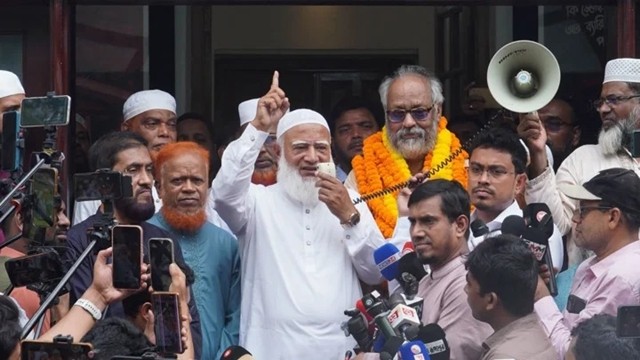
At a public rally in Dhaka on October 31, Jamaat-e-Islami, Bangladesh's main opposition party, raised questions about whether the Matarbari project could indirectly provide connectivity benefits to India.
Without explicitly naming India, Jamaat chief Shafiqur Rahman warned:
"The nation wants to know clearly whether anything is being concealed regarding the Matarbari deep-sea port. Bangladesh must not be leased to anyone in the name of connectivity."
When BBC Bangla sought further clarification, the party did not provide additional comments.
Its Secretary General, Mia Golam Parwar, said the party would examine the joint declaration and related agreements before making a formal statement.
However, the initial political reaction suggests that the central concern is whether India could secure corridor or transshipment advantages through the project.
Former diplomat Sakib Ali said the economic model behind Big-B was promising, but argued that any arrangement benefiting a country such as India would require political consensus within Bangladesh.
He said regional economic integration could create a larger unified market, but warned that the necessary political understanding had not yet been established.
Without such consensus, he argued, implementation could face serious difficulties.
China's Concerns and the Indo-Pacific Strategy
India is not the only regional power whose interests could be affected by the Big-B initiative. China's position is also attracting attention.
The joint declaration refers to the concept of a Free and Open Indo-Pacific, an important element of Japan's regional strategic outlook.
The Indo-Pacific strategy is closely associated with the United States and its regional partners. China, however, views some aspects of the strategy as an effort to contain its influence in the region.
Japan is one of Washington's key partners in promoting the Indo-Pacific vision.
Economist Khandaker Golam Moazzem has argued that Japan is placing considerable importance on India within the Big-B framework and could gradually expand the initiative's regional scope.
He said the project also has a geopolitical dimension, as Japan seeks to develop an economic zone across the region that can attract Japanese investment while reducing the influence of major powers.
There are also perceptions that Japan is increasing its investment in Bangladesh partly to counter China's growing influence.
Against this backdrop, analysts have urged Bangladesh to carefully balance its relationships with competing regional and global powers.
Moazzem said Bangladesh should prioritise economic interests rather than become deeply aligned with any particular geopolitical bloc.
He argued that China remains an important investment and strategic partner, while India represents a major neighbouring market that Bangladesh cannot afford to ignore.
Former diplomat Sakib Ali expressed a similar view, saying Bangladesh needs to maintain strong cooperation with Japan, the United States and China while managing its regional relationships.
What Does the Government Say?
The government has emphasised that Bangladesh intends to maintain balanced economic relations with all countries.
Speaking to BBC Bangla, Finance and Planning Adviser Rashed Al Mahmud Titumir said Bangladesh welcomed investment from every country.
He pointed out that Chinese investment was already flowing into economic and industrial zones linked to the ports of Chattogram and Mongla.
He also noted the presence of investors from the Middle East, Southeast Asia and Europe in Bangladesh's economic development projects.
Titumir stressed that Matarbari would remain open to all potential investors.
"Everyone is welcome to submit proposals. We will examine their economic justification and assess them in light of Bangladesh's national interests before accepting them," he said.
The government's position is that Matarbari should become an internationally connected economic hub without granting exclusive advantages to any particular country.
Ultimately, the success of Big-B will depend not only on the construction of a deep-sea port and industrial infrastructure, but also on whether Bangladesh can secure sufficient investment, generate employment, repay its loans and protect its strategic autonomy while benefiting from regional economic integration.