২৩ কার্তিক ১৪৩৩



Japan's Banking Sector Hit by Major IT Disruption and Data Breach, Raising Concerns in Europe
07 November 2026 17:11 PM
NEWS DESK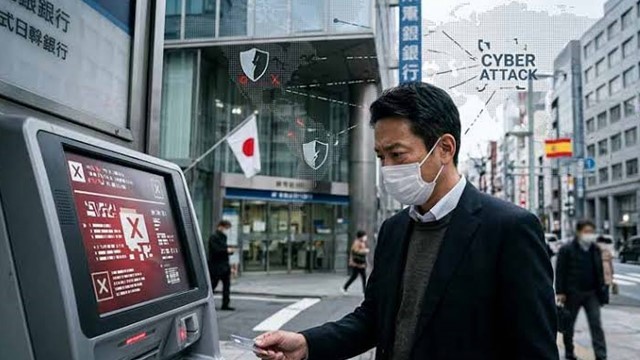
Japan's banking sector has faced two major technology-related incidents this week, affecting 128 banks and raising concerns over the potential theft of personal information belonging to more than 320,000 customers.
The incidents have renewed concerns about the growing dependence of financial institutions on digital infrastructure and the security risks associated with interconnected banking systems. They have also raised questions about whether European banks could face similar disruptions.
On November 5, Japan's SMBC Consumer Finance disclosed that hackers had gained access to its loan guarantee system. The breach may have exposed the personal information of 320,118 customers across 15 financial institutions.
The potentially compromised information includes customers' names, home addresses, telephone numbers, driving licence details, employment information and annual income.
Such data could be exploited for identity theft, financial fraud and other forms of deception.
Docomo SMBC Net Bank, one of the affected institutions, said that up to 122,635 of its customers might have been affected. However, no immediate financial losses were reported.
A day later, on November 6, the operations of 128 Shinkin banks across Japan were disrupted by a separate technical failure at their shared network centre.
Shinkin banks primarily serve local communities and small businesses.
The disruption began at around 1:30 pm local time, affecting cash withdrawals, fund transfers and transactions at bank branches. Services returned to normal shortly after 7 pm.
Authorities said the incident was caused by a mechanical or technical malfunction, not a cyberattack. They also found no connection between the service disruption and the earlier data breach.
The incidents in Japan are being viewed as a warning for European countries, including Spain and the United Kingdom, where banks are increasingly dependent on digital networks and third-party technology providers.
As financial institutions become more interconnected, a major failure in a shared technology system could disrupt services across multiple banks simultaneously.
The European Central Bank (ECB) is also working to strengthen cybersecurity and technological resilience across the financial sector.
The developments in Japan highlight that protecting financial assets and customers' personal information is only part of the challenge. Ensuring the uninterrupted operation of everyday banking services is equally important.
However, there is currently no evidence of any direct connection between the incidents in Japan and any similar disruption in Europe.