২৩ কার্তিক ১৪৩৩



Israel Faces Political Deadlock as President Herzog Prepares to Decide Who Will Form Government
07 November 2026 17:11 PM
NEWS DESK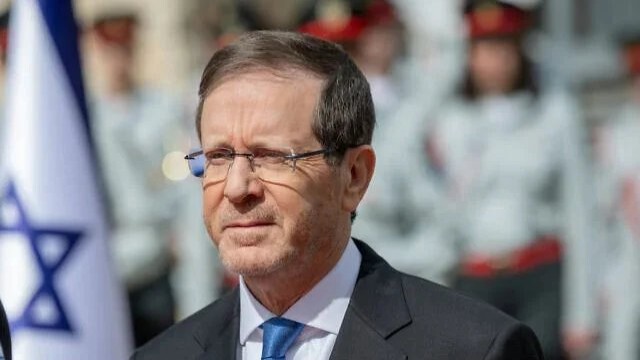
Israel is heading towards a potentially prolonged political deadlock after the latest election failed to give any political bloc an outright majority in parliament, leaving Prime Minister Benjamin Netanyahu and his main rival, former military chief Gadi Eisenkot, short of the numbers needed to form a government.
President Isaac Herzog is expected to announce on Sunday whom he will task with forming the next government.
Of the 120 members of the Knesset, 67 have expressed support for Eisenkot, while 46 have backed Netanyahu. However, Eisenkot's apparent majority includes support from Arab-led parties representing Palestinian citizens of Israel. Although these parties secured a record 19 seats in the October election, Eisenkot has ruled out bringing them into his government.
Consultations between Herzog and the leaders of political parties concluded on Thursday, but the president has yet to publicly endorse either candidate. Herzog has said that despite the seemingly clear numbers, internal divisions and disagreements among political alliances have made the government formation process complicated.
A majority in Israel's 120-member parliament requires at least 61 seats.
Netanyahu's right-wing and religious bloc holds 53 seats, while the four Jewish-led parties supporting Eisenkot control 48 seats. The remaining 19 seats belong to Arab-led parties.
Eisenkot has rejected the possibility of including Arab-led parties in his government. However, he could potentially secure the support of two ultra-Orthodox parties, United Torah Judaism and Shas, if he makes concessions over the compulsory military service of ultra-Orthodox Jewish men.
Such an arrangement could bring his support to the required 61 seats. However, Shas has already declared its backing for Netanyahu.
Netanyahu, meanwhile, would need to persuade at least one party from the opposition camp to switch sides to secure a parliamentary majority.
Another possibility is the formation of a national unity government under an agreement to share the premiership between the two rivals. However, several opposition leaders remain unwilling to join a government led by Netanyahu.
Among the Arab-led parties, Ra'am has expressed interest in joining an Eisenkot-led government, while the Joint List has offered to support it from outside the governing coalition.
In return for their support, these parties are demanding an end to demolition campaigns and incitement against Palestinian citizens, stronger action against crime and guarantees of their political rights.
Under Israel's government formation rules, the candidate appointed by the president will initially have 28 days to form a government. The deadline can be extended by an additional 14 days if necessary.
If the first candidate fails, the president can appoint another candidate, who will receive the same 28-day period. Should that attempt also fail, a majority of Knesset members can nominate a third candidate, who will have 14 days to form a government.
If all attempts prove unsuccessful, parliament will be dissolved and a new election must be held within 90 days. In that scenario, Netanyahu would remain in office as caretaker prime minister.
Israel analyst Nehru Jamhor believes a prolonged political stalemate is the most likely outcome.
He argues that another election could give Netanyahu an opportunity to weaken his political rivals and reduce voter turnout among Palestinian citizens of Israel, potentially improving his electoral prospects.