৫ কার্তিক ১৪৩৩



Pakistan Seeks Alliance with Bangladesh and China, Excluding India
07 December 2025 07:12 AM
NEWS DESK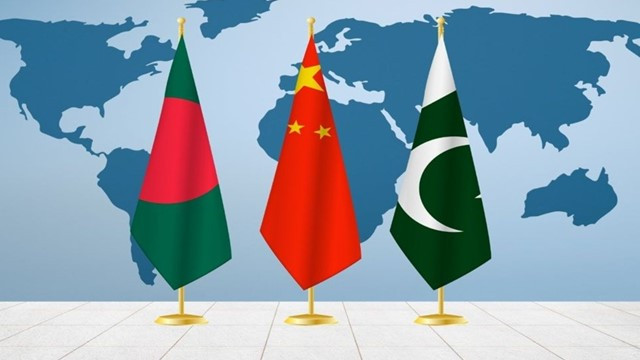
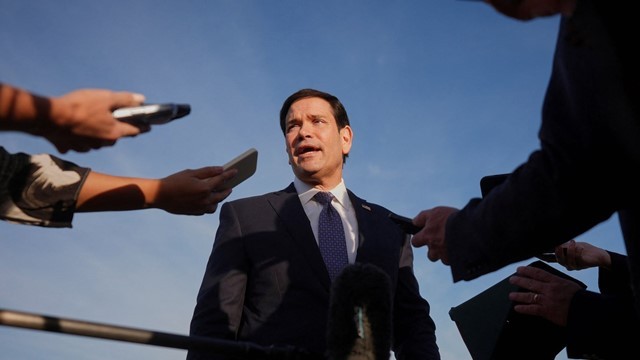
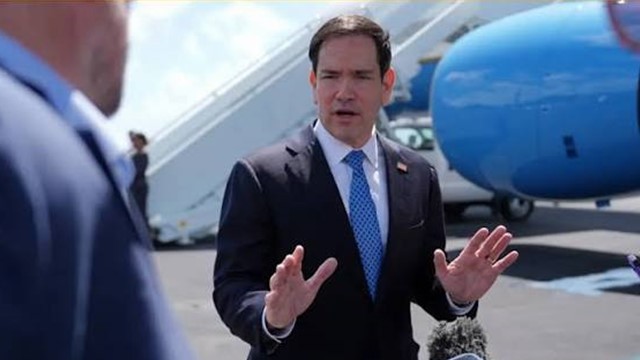
Pakistan Deputy Prime Minister Ishaq Dar has said that a recent trilateral initiative between Bangladesh, China and Islamabad could be “expanded” to include other regional nations and beyond.
“We have opposed … zero-sum approaches and consistently stressed the imperative of cooperation rather than confrontation,” he told the Islamabad Conclave forum on Wednesday.
In effect, the proposal amounts to the creation of an alternative bloc focused on South Asia, with China added, at a time when the South Asian Association for Regional Cooperation (SAARC) — the region’s main grouping — has been made almost defunct by heightened India-Pakistan tensions in recent years.
In June, diplomats from China, Pakistan and Bangladesh held trilateral talks focusing on regional stability, economic development and enhancing people’s lives, a cooperation they said was “not directed at any third party”.
Dar’s remarks come against a backdrop of escalating regional tensions, including Pakistan’s decades-long rivalry with India. The two nuclear-armed neighbours fought a brief four-day air war in May, further straining relations.
Meanwhile, ties between Dhaka and New Delhi have also deteriorated sharply following the ouster of former Bangladeshi Prime Minister Sheikh Hasina in August last year. Hasina fled to India after being deposed in a popular uprising, and New Delhi has so far refused to send the former PM back to Bangladesh, where she was convicted by a tribunal in November of crimes against humanity and sentenced to death.
But will most other South Asian nations — SAARC consists of India, Pakistan, Bangladesh, Sri Lanka, Nepal, Maldives, Bhutan and Afghanistan — agree to a new regional grouping that appears aimed at cutting India out, or at least limiting its influence?
Deputy Prime Minister Dar, who is also Pakistan’s foreign minister, said the trilateral initiative with Bangladesh and China aimed to “foster mutual collaboration” in areas of shared interest, and that the concept be “expanded and duplicated” to include more countries and regions.
“As I have said before, there could be groups with variable geometry on issues from economy to technology to connectivity,” he told the conclave in Islamabad.
“Our own national development needs and regional priorities cannot – and should not – be held hostage to anyone’s rigidity, and you know where I am referring to,” he said, in an apparent reference to India.
On tensions between Islamabad and New Delhi, Dar pointed out that a “structured dialogue” process between India and Pakistan has remained in limbo “for over 11 years”, adding that other regional states have had their share of a “seesaw relationship with our neighbour India”.
The foreign minister said Pakistan envisions a South Asia where links and cooperation replace “divisions, economies grow in synergy, disputes are resolved peacefully in accordance with international legitimacy, and where peace is maintained with dignity and honour”.
According to academic Rabia Akhtar, the proposal at this stage is likely “more aspirational than operational”.
“But it signals Pakistan’s intent to diversify and reimagine regional cooperation mechanisms at a time when SAARC remains paralysed,” told Akhtar, director at the Centre for Security, Strategy and Policy Research (CSSPR) at the University of Lahore.