১ আশ্বিন ১৪৩৩


Saudi Arabia May Invoke Pakistan Defense Pact Amid Escalating Iran Conflict, Analyst Says
19 March 2026 22:03 PM
NEWS DESK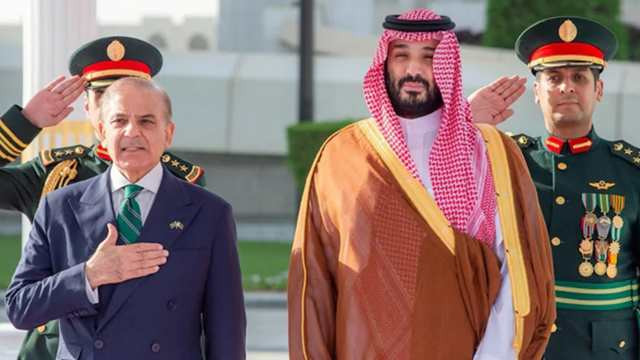
Amid the ongoing conflict involving Iran, the United States, and Israel, Saudi Arabia could activate its defense agreement with Pakistan if it joins the war, according to a Saudi geopolitical analyst.
Saudi researcher Salman Al-Ansari said in an interview that if Saudi Arabia decides to fully engage in the conflict, Iran would face severe consequences. “Saudi Arabia would activate its mutual defense agreement with Pakistan,” he said, adding that the Kingdom would effectively come under a “nuclear security umbrella.”
The defense pact between Saudi Arabia and Pakistan was signed last year following an Israeli strike targeting Hamas representatives in Doha. The agreement reportedly mirrors NATO’s Article 5 principle, which treats an attack on one member as an attack on all.
Both governments officially confirmed the agreement, stating that any attack on either country would be considered a joint attack. On paper, this obligates Pakistan to support Saudi Arabia if it comes under sustained assault.
Since the outbreak of the current war, Iran has already launched ballistic missile and drone attacks targeting Saudi Arabia, including strikes on the U.S. Embassy in Riyadh, Prince Sultan Air Base, and key Saudi energy infrastructure.
In response, Saudi Foreign Minister Faisal bin Farhan Al Saud warned that the Kingdom reserves the right to take military action if necessary.
The conflict escalated after joint U.S.-Israeli strikes on Iran began on February 28. In retaliation, Tehran has effectively restricted access through the Strait of Hormuz, a vital route that previously carried about one-fifth of the world’s crude oil and liquefied natural gas.
Due to Iran’s control over the strait, Saudi Arabia’s oil exports have been severely disrupted. The Kingdom has increasingly relied on its East-West pipeline, which bypasses the Strait of Hormuz by transporting crude from the Persian Gulf to the Red Sea. The pipeline currently supplies around 4 million barrels per day, compared to approximately 7 million barrels exported daily before the conflict.
Before the war began, Saudi Arabia and other Gulf states had urged U.S. President Donald Trump not to engage in a military confrontation with Iran. However, Iranian attacks across the Gulf have intensified since hostilities began, fueling debate within Riyadh over whether to directly join the war or support Washington militarily.
The Saudi-Pakistan defense pact has introduced a new dimension to the conflict, raising concerns that it could expand into a broader global crisis if not contained. At the same time, Saudi Arabia is believed to be relying in part on Pakistan to mediate with Iran.
Earlier this month, Pakistan’s Foreign Minister Ishaq Dar said he discussed the defense agreement with Iranian Foreign Minister Abbas Araghchi. Dar noted that Iran had sought assurances that Saudi territory would not be used for attacks against it.
Pakistan maintains close diplomatic and defense ties with Saudi Arabia, while also heavily depending on Gulf countries for crude oil and natural gas imports.
In a related development, a Pakistani-flagged vessel named “Karachi,” also known as “Lorax,” recently became the first non-Iranian crude oil tanker to pass through the Strait of Hormuz since the conflict escalated. The ship kept its Automatic Identification System (AIS) active throughout the journey—unlike some vessels that switch off tracking systems, known as operating in “dark mode,” to avoid detection.
The tanker belongs to Pakistan’s state-owned National Shipping Corporation and was transporting oil from the United Arab Emirates. Analysts believe Pakistan may have coordinated with Iranian authorities to ensure the vessel’s safe passage through the volatile waterway.