২৮ ভাদ্র ১৪৩৩



King Charles’ U.S. Visit Seen as Diplomatic Reset Amid Strained UK–US Ties
29 April 2026 19:04 PM
NEWS DESK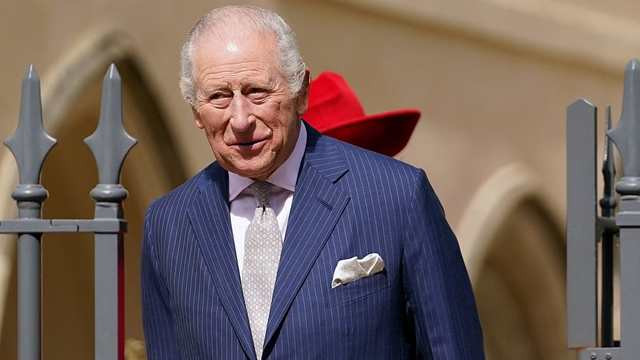
A former senior royal aide has described King Charles III’s recent visit to the United States as a “reset button” for relations between United Kingdom and United States.
Elsa Anderson, who served as communications and press secretary to Queen Elizabeth II from 2001 to 2013, said the King now appears more confident delivering major speeches on the global stage. “Although he is a head of state and not a political figure, he has offered something truly special to the American people over the past two days,” she noted.
During his state visit, King Charles III addressed the United States Congress—becoming the first British monarch to do so since Queen Elizabeth II in 1991. In his speech, he paid tribute to his late mother, recalling that she had once spoken in the same chamber.
The visit is being viewed both as a ceremonial milestone and a strategic diplomatic effort to mend ties between the two longtime allies. The occasion also coincided with celebrations marking the 250th anniversary of the United States and the enduring Anglo-American partnership.
However, relations between London and Washington have faced tensions in recent years, particularly during the administration of Donald Trump, with disagreements over Middle East policy. Analysts point to differences over the position toward Iran as a key source of friction, especially where the UK has not fully aligned with the positions of the U.S. and Israel.
In this context, King Charles’ visit is widely seen as an attempt to ease diplomatic strains. In both his congressional address and remarks at a White House state dinner, he emphasized the deep historical ties between the two nations.
Trump praised the monarch, calling him “a wonderful person” and describing the visit as “a great honor.” However, some elements of the King’s speech reportedly resonated more strongly with Democrats, while also creating mild unease within the White House.
Acknowledging current global uncertainty, King Charles said both nations are navigating a “time of profound challenges,” citing conflicts in the Middle East and Europe, as well as rising political violence that threatens democratic systems.
He also reflected on historical disagreements, referencing the spirit of 1776: “We may agree to disagree,” he suggested, underscoring that differences need not undermine cooperation.
The King stressed that when the U.S. and UK work together, they can achieve outcomes that benefit not only their own citizens but the wider world.
In a notable segment, he highlighted the principle of “checks and balances,” tracing its origins to British legal traditions such as the Magna Carta, which later influenced the U.S. Constitution. His remarks drew strong applause in Congress, initially led by Democrats before spreading across the chamber.
Toward the end of his speech, he remarked: “America’s voice matters, as it always has—but its actions matter even more,” a comment interpreted by some as both praise and a subtle warning about political responsibility.
The King also underscored the importance of NATO and transatlantic security cooperation, quoting former U.S. Secretary of State Henry Kissinger. He noted NATO’s historic activation after the 9/11 attacks and emphasized the alliance’s role in collective defense—from the deep Atlantic to the rapidly melting Arctic.
His comments came against the backdrop of Trump’s past criticism of the British military, including remarks dismissing Royal Navy assets. In response, King Charles referenced his own experience in the Royal Navy, highlighting the importance of defense and intelligence cooperation.
The speech avoided direct mention of disgraced financier Jeffrey Epstein, despite expectations he might address the issue or meet with victims. Instead, he spoke broadly about the need to support those harmed by soacial injustices.
Recent disclosures related to the Epstein investigation have drawn renewed attention, including references to figures such as Peter Mandelson and Prince Andrew. Analysts suggest the political fallout has been more pronounced in the UK than in the U.S., though the case remains under international scrutiny.
Despite serious undertones, the King maintained a light touch throughout the speech, joking that the UK and U.S. are alike in almost every way—“except for the language.” Observers say such humor helped ease tensions and reinforce goodwill.
However, the visit was not without controversy. Early in the trip, remarks by Christian Turner, the British ambassador to the U.S., were leaked, suggesting that Washington’s “special relationship” might be closer with Israel than the UK. The British Foreign Office later clarified that the comments were informal and did not reflect official policy.
At the White House dinner, Middle East policy again surfaced. Trump claimed King Charles supported his stance on Iran—an assertion Buckingham Palace later downplayed, stating the King was merely reflecting long-standing government policy.
While the visit has been widely described as a successful diplomatic engagement, analysts note that it also exposed underlying sensitivities in the UK–US relationship, even as both sides effort to strengthen ties.