[email protected] বৃহঃস্পতিবার, ১১ জুন ২০২৬
২৭ জ্যৈষ্ঠ ১৪৩৩

India Revives Plan for Undersea Gas Pipeline to Oman

10 June 2026 19:06 PM

NEWS DESK

File Photo

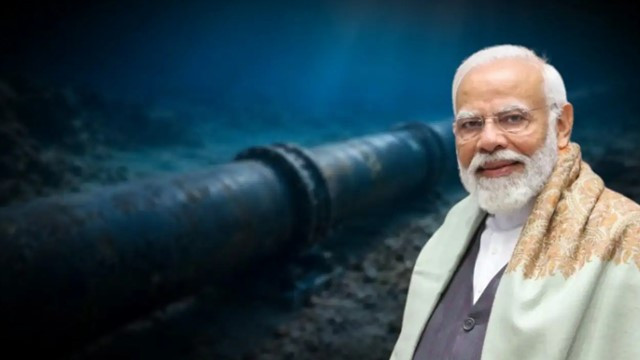
India is once again exploring the possibility of building a major undersea gas pipeline connecting its western coast to Oman, a project that supporters believe could significantly strengthen the country's long-term energy security.

The proposed pipeline would stretch approximately 2,000 kilometers beneath the Arabian Sea, linking the Indian state of Gujarat with Oman. The project is estimated to cost around 400 billion rupees (approximately $4.8 billion).

Although the idea has been discussed repeatedly over the past three decades, it has never progressed beyond the planning stage due to high costs, technological challenges, and questions regarding its commercial viability.

With policymakers increasingly focused on strengthening energy security amid global geopolitical uncertainties, the proposal has once again gained attention.

The project is being promoted by South Asia Gas Enterprise, which says it has already conducted technical and financial assessments, as well as seabed surveys along the proposed route. If completed, the pipeline would enable the direct transportation of natural gas from Oman to India's western coastline.

Supporters argue that the project could establish a strategic energy corridor between the Gulf region and India, reducing the country's dependence on shipping routes through the Strait of Hormuz, one of the world's most critical and potentially vulnerable waterways for energy trade.

According to recent reporting by India Today, India's Ministry of Petroleum has instructed several state-owned energy companies—including GAILEngineers India Limited, and Indian Oil Corporation—to prepare a detailed feasibility report based on the pre-feasibility study submitted by SAGE.

If approved, the pipeline could become one of the longest and most ambitious subsea energy infrastructure projects in the region. Analysts say it would not only diversify India's gas import options but also deepen energy cooperation between India and Gulf countries at a time when energy security has become a growing strategic priority.

However, experts caution that the project still faces significant engineering, financial, and regulatory hurdles before construction can begin. Any final investment decision will depend on detailed feasibility studies, projected gas demand, financing arrangements, and long-term commercial viability.

The renewed interest in the Oman-India pipeline reflects New Delhi's broader efforts to secure reliable energy supplies and reduce exposure to geopolitical risks affecting global energy transportation routes.

Comments Here:

Related Topic