৩০ ভাদ্র ১৪৩৩



Saudi Arabia Faces Oil Export Crisis as Key Pipeline Remains Shut
14 September 2026 21:09 PM
NEWS DESK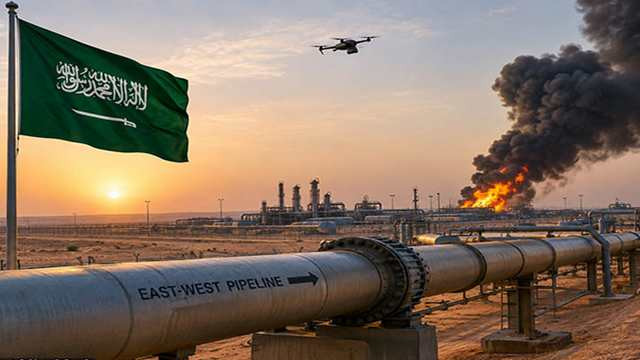
Saudi Arabia’s exportable oil reserves are rapidly dwindling, and the country could face a complete halt in oil exports within five to seven days unless its main East-West pipeline is restored, according to industry sources cited by Reuters.
The critical pipeline was reportedly targeted in a series of drone attacks launched from Iraq. Following the attacks, Saudi Arabia’s Ministry of Energy temporarily shut down the pipeline as a precautionary measure.
The East-West pipeline is a crucial part of Saudi Arabia’s oil transportation infrastructure, particularly amid ongoing disruptions to shipping through the Strait of Hormuz.
Industry sources gave differing estimates of how long repairs could take. One source said restoring the pipeline could require five to six weeks, while another suggested repairs could be completed more quickly and that partial oil flows might be restored even while repair work continues.
There has been no immediate official statement from the Saudi government’s media office or Ministry of Energy regarding the condition of the pipeline or the estimated repair timeline.
Over the past six months, the East-West pipeline, which stretches across the Arabian Peninsula, has played a critical role in helping Saudi Arabia mitigate the impact of disruptions in the Strait of Hormuz caused by military conflict. The strait is a major energy chokepoint through which a significant portion of the world’s oil supply normally passes.
Saudi Arabia uses the pipeline to transport roughly 4 million barrels of crude oil per day to the Red Sea port of Yanbu, equivalent to around 4% of global oil supplies.
Pressure on Saudi Arabia’s oil transportation network has increased further after Yemen’s Houthi forces, which have previously threatened the country’s oil infrastructure, reportedly seized an island near the entrance to the Red Sea on Friday.
Before the conflict began, the Middle East supplied approximately 22 million barrels of oil per day to global markets.
Industry sources estimate that oil flows through the Strait of Hormuz have since fallen sharply to between 6 million and 9 million barrels per day.
Saudi Arabia has also informed OPEC that its oil production has fallen substantially since the conflict began. The kingdom’s crude production stood at approximately 10.9 million barrels per day in February, before declining to around 6.2 million barrels per day in August.
The potential prolonged shutdown of the East-West pipeline could therefore further constrain Saudi Arabia’s ability to export crude and add additional pressure to already disrupted global oil markets.