২ কার্তিক ১৪৩৩



All Seven UN Secretary-General Candidates Receive Discouraging Votes from Permanent Security Council Members
17 October 2026 17:10 PM
NEWS DESK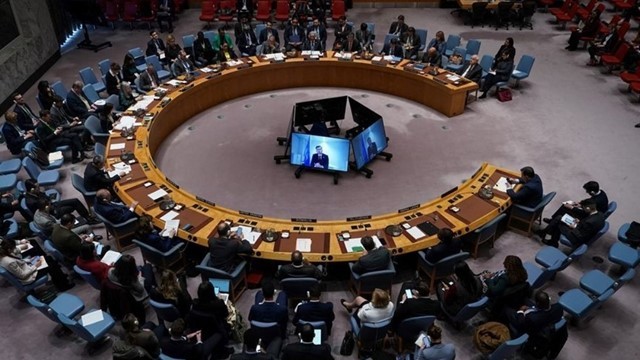
All seven candidates competing to become the next United Nations secretary-general have received at least one “discourage” vote from a permanent member of the UN Security Council, effectively signalling a potential veto, a diplomat said on Friday.
In the latest round of informal voting, the five permanent members—the United Kingdom, China, France, Russia and the United States—used coloured ballots for the first time to indicate potential vetoes. The council’s 10 elected members continued using the traditional ballots. The voting was conducted confidentially, with individual members’ choices kept secret.
Costa Rica’s Rebeca Grynspan, who had been among the leading candidates in the previous five rounds, again received the highest number of “encourage” votes. However, she also received five “discourage” votes, including two from permanent members.
According to US media reports, Washington is not backing any of the seven candidates currently in the race.
US Ambassador to the United Nations Mike Waltz declined to comment on the reports. However, he said on Friday, “We have always said that we just need the best candidate.”
Asked whether additional candidates could enter the race, Waltz said, “If a country wants to put forward more candidates, that is certainly their sovereign right.”
Diplomats have identified several possible contenders who could enter the race, including Nikolay Mladenov, a senior representative for Gaza under the US-backed Board of Peace, and Lana Nusseibeh, the United Arab Emirates’ assistant minister for political affairs.
Feridun Hadi Sinirlioğlu of Türkiye, secretary-general of the Organization for Security and Co-operation in Europe (OSCE), has also emerged as a possible candidate.
Grynspan had recorded the strongest average performance across the first five rounds of informal voting and retained her leading position on Friday, despite receiving two potential vetoes from permanent members.
The other candidates include former Guyanese foreign minister Carolyn Rodrigues-Birkett, International Atomic Energy Agency Director General Rafael Grossi of Argentina, former Senegalese president Macky Sall, Ecuadorian candidates Ivonne A-Baki and María Fernanda Espinosa, and Uganda’s Olara Otunnu.
The second five-year term of outgoing UN Secretary-General António Guterres of Portugal is due to end on December 31, 2026.
To secure the recommendation of the 15-member Security Council, a candidate must obtain at least nine votes and avoid a veto from any of the five permanent members. Those five countries often hold sharply differing positions on international issues.
A candidate who meets both requirements can be recommended to the UN General Assembly for final appointment by all member states.
The informal voting process was introduced in the early 1980s to help overcome deadlocks caused by vetoes against competing candidates. Despite criticism over its lack of transparency, the procedure has continued in various forms.
During these confidential ballots, Security Council members indicate one of three positions for each candidate: “encourage,” “discourage” or “no opinion.” A “discourage” vote from a permanent member signals that the candidate could face a veto in the formal selection process.
Although the UN Charter does not formally require regional rotation for the secretary-general’s position, an informal convention has developed around balancing representation among geographical regions.
Under that convention, Latin America and the Caribbean are expected to have a strong claim to the next appointment. Several candidates from the region are in the current race.
However, Sall and Otunnu represent Africa, adding another dimension to the competition as Security Council members weigh candidates amid differing political and regional considerations.