১১ আশ্বিন ১৪৩৩



Gaza Volunteers Rescue Ancient Manuscripts From Ruins
08 May 2026 09:05 AM
NEWS DESK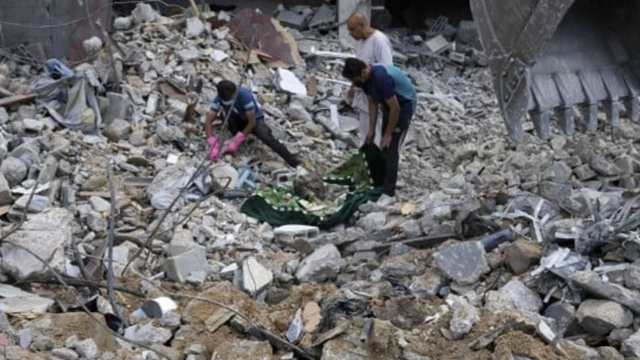
Inside the shattered library of the historic Great Omari Mosque, Palestinian volunteer Raneem Mousa carefully pulled a heavy book from a broken shelf.
Using a small brush, she gently removed layers of dust before handing the book to a colleague, who cleaned it with a soft cloth. Together, they carried the rescued manuscript to what they call the library’s “safest corner,” where salvaged books are now being stored.
The rescue mission is taking place amid the destruction caused by Israeli airstrikes during the ongoing war in Gaza. Rare manuscripts and historic books from one of Palestine’s oldest libraries now lie buried under rubble, exposed to rain, dust, and decay.
Reporting from the devastated site, journalist Ahmed Dremly described the volunteers’ painstaking efforts to preserve what remains of Gaza’s cultural heritage.
Thirty-five-year-old Raneem Mousa said the library had been filled with bomb fragments, stones, and animal waste after displaced street animals took shelter there. Hundreds of books and torn pages were trapped beneath collapsed debris.
Mousa, who holds a master’s degree in Arabic language studies, joined a group of Palestinian women volunteers from the Eyes on Heritage Institute. The team describes its mission as providing “first aid” to Gaza’s endangered historical archives.
Lacking professional preservation equipment, the volunteers rely on simple tools such as dry cloths, ordinary brushes, and open air to dry wet pages. They first cleared stones and rubble before beginning the painstaking process of cleaning and sorting the books.
The Great Omari Mosque is Gaza’s oldest and largest mosque, with a history stretching back thousands of years. The site once housed a Philistine temple, later became a Roman temple and church, and was finally transformed into a mosque during the 13th century. Its library was considered the third largest in Palestine, containing around 20,000 books, including 187 rare manuscripts.
According to the volunteers, Israeli strikes hit the mosque at least three times during the war, leaving both the mosque and its historic library in ruins.
Despite displacement, shortages, and destroyed infrastructure, Mousa and her colleagues continue their work. Many of them now live in tents after losing their homes. Mousa’s own house in Jabalia, northern Gaza, was destroyed in an Israeli airstrike, and the area has since been designated a restricted military zone.
She described winter rain and humidity as major threats to the fragile manuscripts. Since the volunteers have no secure storage facilities, the cleaned books remain inside a damaged section of the library where rainwater still leaks through the roof.
The volunteers coordinate through a WhatsApp group, deciding who can afford the difficult and costly journey to the library. With roads destroyed, fuel scarce, and transportation limited, even reaching the site has become a daily struggle.
Mousa said she fears a day may come when she can no longer afford the transportation costs from her tent in Deir al-Balah to Gaza City.
The director of the Eyes on Heritage Institute, Haneen Al-Amassi, said the women-led organization was founded in 2009 to rescue and preserve Gaza’s rare manuscripts and books.
When Al-Amassi entered the library during a temporary ceasefire in March 2025, she said she was shocked by the devastation. Many books and manuscripts had been burned, eaten by rats, or used as fuel by displaced residents struggling through severe shortages of cooking gas.
She believes Israeli attacks deliberately targeted Gaza’s archives and cultural centers in an attempt to erase Palestinian history and memory.
Al-Amassi also recalled a previous Israeli strike in 2014 that destroyed the organization’s office in Gaza City, killing five female volunteers who had taken shelter inside. Hundreds of books were lost in that attack as well.
After rebuilding and digitally archiving many manuscripts, the group suffered another devastating blow when its new office was destroyed in an Israeli airstrike in September 2025.
“We lost our libraries once again,” Al-Amassi said.
Despite repeated destruction, the volunteers remain determined to continue their work. Al-Amassi said preserving Palestinian cultural heritage is a responsibility owed to future generations.
“Someday,” she said, “future generations will ask what we did to save our history.”