The issue drew widespread attention in late April after images of four extremely emaciated Ukrainian soldiers circulated on social media. Reports claimed that troops stationed on the eastern bank of the Oskil River in Ukraine’s Donetsk region had gone nearly 17 days without food supplies.
According to reports, Russian attacks destroyed key bridges in the area, leaving the soldiers isolated from their main units and disrupting supply routes.
One soldier’s wife, Anastasiia Sylchuk, wrote on social media that “fighters are collapsing from hunger and drinking rainwater to survive.” She also alleged that repeated radio appeals for assistance were ignored.
A Ukrainian soldier identified as Oleksandr said troops on the front lines had survived for long periods on chocolate bars, oatmeal, and very limited water supplies.
“We dreamed of getting even a little hot food there,” he said.
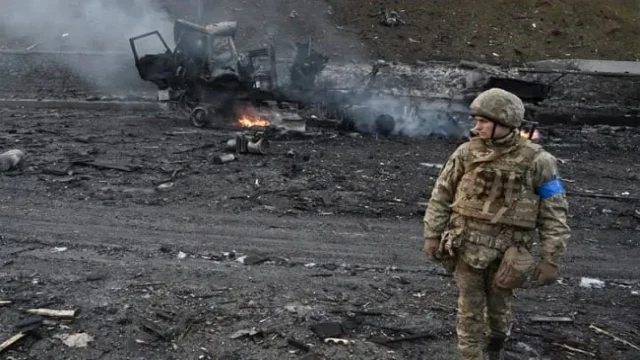
Military analysts say constant drone surveillance and attacks across the battlefield have made traditional supply operations increasingly ineffective. As a result, food, medicine, and ammunition are now often delivered using drones and robotic vehicles.
However, some military researchers argue that only a small portion of Ukraine’s armed forces currently receive regular drone-based food deliveries. When those supply lines are interrupted, soldiers can quickly face the risk of starvation.
Following the controversy, the commander of the brigade involved was dismissed, and Ministry of Defence of Ukraine launched an investigation into the incident.
The ministry stated that food shortages would not be allowed to become a “systemic problem” within the armed forces.
Meanwhile, reports have also emerged of food shortages among Russian troops. Various accounts suggest that some Russian soldiers are being sent on high-risk missions with inadequate food supplies, while isolated areas have reportedly experienced worsening humanitarian conditions linked to hunger and supply disruptions.