১১ আশ্বিন ১৪৩৩



Trump Says India Will Buy Venezuelan Oil, Not Iranian, as U.S.–India Trade Talks Advance
02 February 2026 04:02 AM
NEWS DESK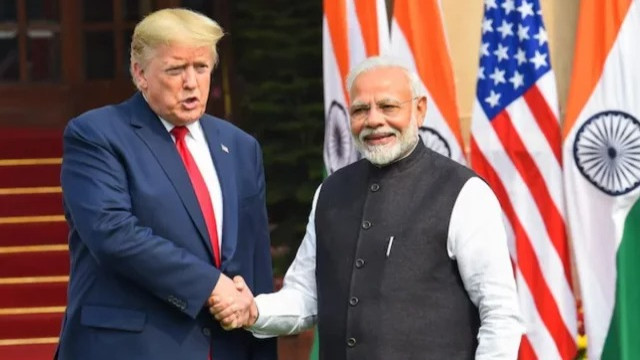
Former U.S. President Donald Trump said on Saturday that India would purchase crude oil from Venezuela instead of Iran, indicating that Venezuelan oil could become a key factor in advancing a proposed U.S.–India trade agreement.
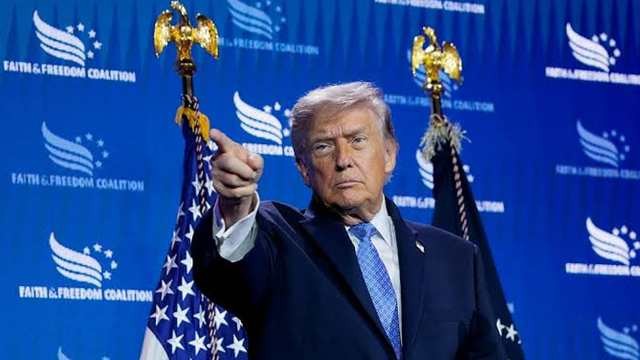
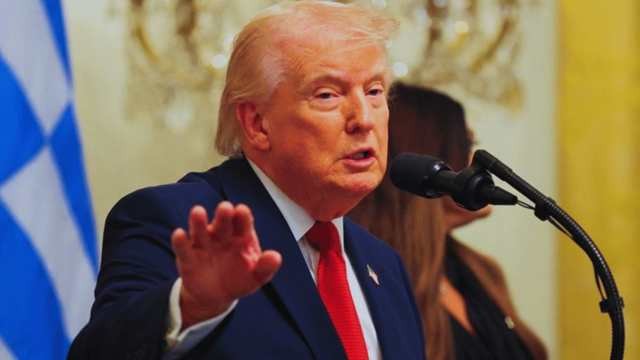
Speaking to reporters aboard Air Force One while traveling from Washington, D.C. to Florida, Trump said, “We have already made a deal—at least we have agreed on the conceptual framework of a deal.” His remarks suggested that India’s resumption of oil imports from Venezuela could serve as a major catalyst in finalizing a bilateral trade agreement between New Delhi and Washington.
The comment came a day after Washington informed India that it may soon resume oil imports from Venezuela as an alternative to Russian crude. Trump’s statement followed shortly afterward, reinforcing the strategic linkage between energy trade and broader economic negotiations.
Earlier, the Trump administration had imposed a 25% tariff on Indian goods, citing India’s purchase of Venezuelan oil as one of the main reasons. In March 2025, the United States imposed similar tariffs on several countries, including India, over their imports of Venezuelan crude.
However, on January 3 this year, following the detention of Venezuelan President Nicolás Maduro, the United States moved to establish direct control over the Caracas government. As part of that effort, Washington is reportedly planning long-term oversight of Venezuela’s oil sector.
According to sources, the primary U.S. objective behind facilitating Venezuelan oil exports to India is to reduce Russia’s oil revenue, which Washington claims is being used to finance the war in Ukraine. Details on how Venezuelan oil would be marketed to India remain unclear.
It is uncertain whether international trading houses such as Vitol or Trafigura would be involved, or whether Venezuela’s state-owned oil company PDVSA would sell crude directly. The White House and the U.S. Treasury Department declined to comment. India’s Ministry of Petroleum and Natural Gas and the Ministry of External Affairs also did not respond to Reuters’ emailed queries.
After Russia’s invasion of Ukraine in 2022, Western sanctions led to discounted prices for Russian crude, making India one of Moscow’s largest buyers. This drew criticism from the United States, which subsequently imposed an additional 25% tariff on Indian goods as a penalty for continued Russian oil imports, bringing total U.S. tariffs on Indian products to 50%.
Recently, however, India’s imports of Russian oil have declined for multiple reasons. India’s Petroleum Minister Hardeep Singh Puri has said the country is actively seeking alternative sources of crude oil.
Russian Oil Imports Declining
According to two Reuters sources, India is preparing to reduce its Russian oil imports to below 1 million barrels per day in the near future. Imports stood at around 1.2 million barrels per day in January, fell to about 1 million barrels per day in February, and could drop further to around 800,000 barrels per day in March.
Another source said that over time, India’s imports from Russia could decline to 500,000–600,000 barrels per day, placing India in a stronger position to negotiate a trade deal with the United States.
In December, India’s Russian oil imports fell to their lowest level in two years. As a result, the share of oil imported from OPEC countries rose to its highest level in 11 months.
To compensate for reduced Russian supplies, Indian refiners have increased purchases from the Middle East, Africa, and South America. State-run refiners Hindustan Petroleum Corporation Ltd, Mangalore Refinery and Petrochemicals Ltd, and private refiner HPCL-Mittal Energy Ltd have already stopped buying Russian crude.
However, Reliance Industries, which operates the world’s largest refining complex, is expected to purchase up to 150,000 barrels per day of Russian oil starting in February, according to a company source.
India–Russia Trade Diversification
Despite shifting energy dynamics, Russia remains a long-standing strategic partner of India. Both countries are working to deepen and diversify their trade relationship. India’s ambassador to Russia, Vinay Kumar, said efforts are underway to achieve bilateral trade worth $100 billion by 2030.
He noted that significant opportunities exist to expand mutual trade, particularly in agriculture and engineering. According to The Economic Times, following the U.S. decision to impose 50% tariffs on Indian goods, Russia assured India that it would increase imports from the country. Russian President Vladimir Putin personally conveyed this message.
India aims to expand exports of machinery, chemicals, food products, and pharmaceuticals to Russia, while Moscow is seeking to increase exports related to nuclear power projects. Agreements signed during Putin’s visit also include provisions for Russia to recruit Indian manpower.
Overall, these developments signal India’s broader strategy to reduce its dependence on the United States by strengthening alternative trade and strategic partnerships.