Tensions escalated earlier this week when Merz, speaking at a university event, criticized Washington’s handling of the Iran issue. He said the United States lacked a clear and forward-looking strategy and suggested that it had been “outmaneuvered” by Tehran’s negotiators. He also questioned whether Washington had a viable strategic exit from the crisis.
In response, Trump launched a series of attacks on his social media platform Truth Social, accusing Merz of failure and claiming his policies had weakened Germany economically and politically.
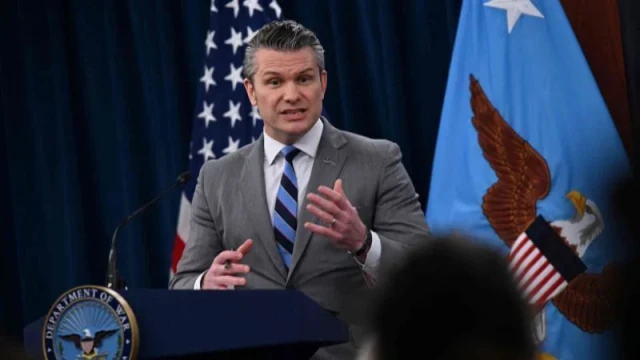
The troop withdrawal decision was made under the direction of Defense Secretary Pete Hegseth. Pentagon spokesperson Sean Parnell said the move followed a comprehensive review of US military posture in Europe, taking into account current geopolitical conditions and operational needs.
The withdrawal is expected to take place over the next six to twelve months. Around 36,000 US troops are currently stationed in Germany, many of them based at the Ramstein Air Base. The planned reduction would significantly lower the American military presence in the country.
At a White House press conference on Thursday, Trump also indicated that he is considering troop reductions in Italy and Spain. He criticized both countries for not supporting US operations aimed at maintaining maritime security in the Strait of Hormuz.
Trump said Italy had provided no meaningful assistance, while Spain had refused to get involved. He questioned why US troops should remain deployed to defend countries that, in his view, were not contributing.
The development is notable given Trump’s earlier criticism of Germany for failing to meet NATO defense spending targets. Under Merz’s government, however, Germany has increased its defense ambitions, aiming to spend €105.8 billion by 2027—about 3.1 percent of its GDP.
Despite the increased spending, there are no signs of easing tensions between Trump and Merz. Analysts say the move may reflect a broader US strategy to shift military focus away from Europe toward the Indo-Pacific region.
The decision has also raised questions about the unity of NATO. Several US lawmakers, including members of Trump’s own party, have voiced opposition, while Eastern European countries have expressed concern over potential security risks, particularly regarding Russia.
Neither the US Embassy in Berlin nor Germany’s Foreign Ministry has issued a joint statement so far. However, diplomats warn that the decision could create a lasting rift within NATO and reshape the balance of global power.