১৮ আশ্বিন ১৪৩৩



California Mayor Resigns After Admitting to Acting as Illegal Agent for China
19 May 2026 09:05 AM
NEWS DESK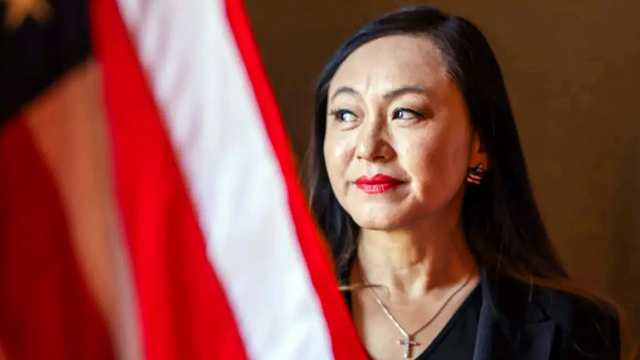
Eileen Wang has resigned as mayor of Arcadia after admitting to a criminal charge related to acting on behalf of China without proper registration in the United States.
The 58-year-old former official agreed on Monday to plead guilty to a felony charge connected to the case. She could face up to 10 years in federal prison.
According to a plea agreement filed with the United States Department of Justice, Wang and an associate worked with the Chinese government to promote Beijing’s interests. They allegedly published pro-China propaganda through a website that claimed to serve the local Chinese-American community.
The revelations have caused major controversy in Arcadia, a city often referred to as the “Chinese Beverly Hills” because of its large and affluent Chinese-American population. Nearly half of the city’s 56,000 residents are of Chinese descent.
Wang resigned last week after serving on the city council since winning election in 2022. Under Arcadia’s rotating leadership system, city council members take turns serving as mayor, and Wang was holding that position at the time of her resignation.
City officials described the allegations as “deeply concerning” and urged the community to move forward, stressing that the actions of one individual should not define the city’s identity.
Joshua Kurlantzick, a senior fellow for Southeast Asia and South Asia at the Council on Foreign Relations, said China’s efforts to expand influence beyond its borders have become increasingly common.
He noted that Beijing operates organizations specifically focused on influencing foreign governments and overseas communities. According to him, the goal is to shape narratives favorable to China, suppress dissent, and influence political discussions abroad.
Kurlantzick said China has shown growing interest in influencing politicians at every level — from local leaders to national figures — as well as media organizations and student groups. He added that local officials, such as mayors and state legislators, are often more vulnerable because they typically have fewer resources and less experience dealing with foreign influence operations.
The Justice Department stated that Wang’s admitted conduct took place before she was elected to the Arcadia City Council. However, analysts say China often supports individuals it believes may later rise to more influential positions.
Under U.S. federal law, anyone acting on behalf of a foreign government must register under the Foreign Agents Registration Act or related legal requirements. Wang was charged with violating provisions of that law, which carries a potential sentence of up to 10 years in prison or a $250,000 fine.
Rose Chan Loui, a legal expert at University of California, Los Angeles, said the law is broad in scope.
She explained that individuals can fall under the law if they knowingly engage in activities intended to influence public opinion on behalf of a foreign entity, even if the content itself does not appear overtly political.
Kurlantzick emphasized that such influence operations are not limited to Chinese-American communities. He pointed to a 2023 investigation by Associated Press that found China had developed close ties with officials in Utah, including the state’s former House speaker.
Mareike Ohlberg of the German Marshall Fund of the United States said China’s use of foreign voices to advance its interests abroad is not new, but has become more sophisticated in recent years.
She said Beijing commonly seeks to recruit foreigners to repeat or amplify pro-China narratives and to challenge criticism of the Chinese government.
One of the articles cited in the Justice Department’s case against Wang was reportedly written by a Chinese official and denied allegations of forced labor and genocide in Xinjiang, where China has faced years of international criticism over its treatment of Uyghurs.
Rushan Abbas said Wang’s case serves as a troubling reminder of China’s efforts to silence dissent and shape global narratives.
Abbas, whose sister Gulshan Abbas was arrested in China in 2018 after she publicly spoke about Beijing’s treatment of Uyghurs in the United States, said the case was “deeply disturbing, but not surprising.”
She added that the case highlights how far the influence of the Chinese Communist Party extends globally and warned that more people are beginning to recognize the scale of the issue.