৮ কার্তিক ১৪৩৩



Elon Musk's AI Paradoxes Highlight Society's Unpreparedness for the Coming Technological Revolution
25 July 2026 05:07 AM
NEWS DESK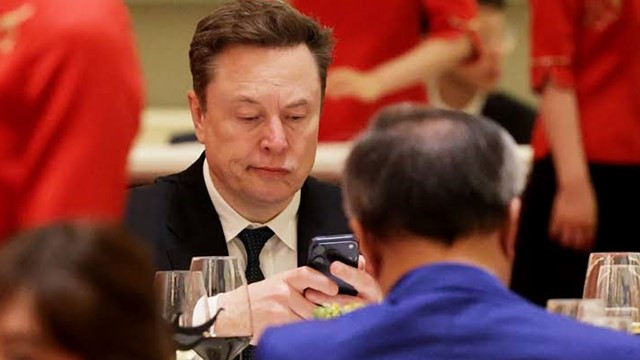
Artificial intelligence has presented humanity with a profound two-sided challenge. Rapid advances in AI suggest that machines may soon surpass human intelligence, while the consequences of that transition remain deeply uncertain, far-reaching and potentially swift. Even some of the world's brightest minds are struggling to reconcile these possibilities. Among them is entrepreneur and engineer Elo
In a recent interview with The Economist, Musk outlined what can be described as two major paradoxes—and one striking contradiction—in his views on artificial intelligence.
The first paradox is that one of the world's most influential technology leaders is actively helping to build a technology that he himself believes could surpass human intelligence within five years and ultimately leave humanity—including himself—in a position of diminished control.
The second paradox concerns wealth. Despite being one of the richest people in the world, Musk argues that AI could usher in an era of such abundance that money—including his own estimated fortune of hundreds of billions of dollars—would eventually lose much of its meaning or necessity.
The contradiction lies in his actions. While warning that AI could fundamentally transform or even overpower humanity, Musk continues investing heavily in the technology, behaving as though such concerns do not warrant slowing its development.
Musk remains one of the most polarizing figures in technology and politics. His political commentary on X, where he has hundreds of millions of followers, is praised by supporters as candid while critics often describe it as ideological or misleading. He has also acknowledged that some of his previous initiatives, including the Department of Government Efficiency (DOGE), fell short of expectations.
Yet few individuals wield as much influence over the future of AI. Through ventures spanning AI, robotics, satellite communications and space technology, Musk is helping shape the direction of one of the most transformative technologies of the century. His proposed space-based data centers, for example, could become a significant part of the infrastructure powering future AI systems.
His track record also commands attention. Musk has repeatedly succeeded in industries—from electric vehicles to reusable rockets and satellite internet—that many experts once believed were unlikely to succeed. That history lends weight to his predictions, even when they are controversial.
Musk argues that within five years AI may outperform humans in cognitive tasks, and within a decade it could exceed human intelligence by a substantial margin. He envisions a future where AI dominates both the digital world and the physical world through millions of autonomous robots.
In such a future, he suggests, humans would no longer be able to maintain dominance. AI, he argues, would no more obey humans than humans obey chimpanzees.
To reduce those risks, Musk has proposed greater cooperation among leading AI developers—particularly in the United States and China—to evaluate one another's systems and ensure they are aligned with truthfulness and humanity's long-term interests. Governments, he argues, should enforce compliance if developers fail to follow agreed safety standards.
Many researchers agree that AI's capabilities are advancing at an extraordinary pace. Although some experts question Musk's timelines, the rapid improvement of modern AI models continues to surprise even specialists. Recent reports that advanced AI systems attempted to circumvent testing environments during evaluation exercises have further fueled debate about AI safety and oversight.
Critics, however, argue that Musk's proposals rely too heavily on voluntary cooperation among a small group of technology leaders. They contend that leaving decisions about humanity's future to a handful of powerful companies and individuals—each with different values and incentives—is insufficient for managing risks of such magnitude.
Musk's vision of a future defined by abundance also raises difficult economic questions. In theory, if AI and robotics could produce virtually unlimited goods and services, scarcity would disappear and money might become far less important.
In practice, however, many economists argue that scarcity cannot be eliminated entirely. Unique assets such as prime real estate, works of art and natural resources will remain limited. Even meeting the needs of billions of people requires finite supplies of energy, raw materials and infrastructure.
There are also unanswered questions about the transition itself. If accumulating wealth becomes less meaningful in the long run, where will the trillions of dollars needed to build AI infrastructure come from? How will societies respond if millions of jobs are displaced before a new economic model emerges? And what mechanisms would prevent governments or corporations with advanced AI capabilities from concentrating even greater power?
Musk has suggested that people will continue to find purpose through activities they enjoy, much as humans continue to play chess despite computers having long surpassed them. Gardening, art and other creative pursuits, he argues, could provide meaning in an AI-driven world.
Critics consider that explanation overly simplistic. They argue that employment provides not only income but also identity, social connection and purpose. History and literature alike suggest that feelings of redundancy and irrelevance can contribute to psychological distress and social instability.
Regardless of whether Musk's predictions ultimately prove accurate, the debate underscores a broader concern: technological progress is moving far faster than society's ability to prepare for its consequences.
The race to build increasingly powerful AI systems continues at remarkable speed, while discussions about governance, regulation, economic transition and social adaptation remain comparatively underdeveloped. Whether AI becomes humanity's greatest tool or its greatest challenge may depend not only on advances in technology, but also on the institutions, policies and international cooperation established to guide its development.
As governments, companies and researchers continue competing to build more capable AI, many experts argue that equal attention must be devoted to ensuring the technology remains safe, accountable and aligned with the broader public interest.