৪ আশ্বিন ১৪৩৩



Bangladesh Constitution Set for Major Overhaul as Committee Proposes Sweeping Amendments
05 August 2026 06:08 AM
NEWS DESK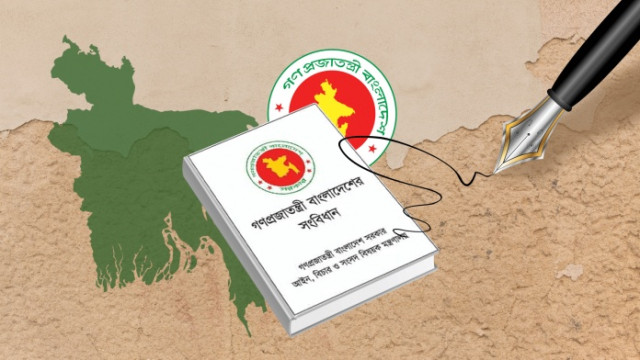
Bangladesh's Constitution is set to undergo significant changes, with a series of proposed amendments that would recognize former President and Bangladesh Nationalist Party (BNP) founder Ziaur Rahman for his role in the 1971 Liberation War while removing several constitutional provisions introduced thro
According to multiple sources, the proposed amendments include incorporating into the Constitution Ziaur Rahman's declaration of Bangladesh's independence, delivered from the Kalurghat Radio Station in Chattogram during the Liberation War. At the same time, provisions recognizing Sheikh Mujibur Rahman as the "Father of the Nation," his historic March 7 speech, and his March 26 declaration of independence are expected to be removed. The constitutional requirement to display Sheikh Mujibur Rahman's portrait in government offices and educational institutions would also be repealed.
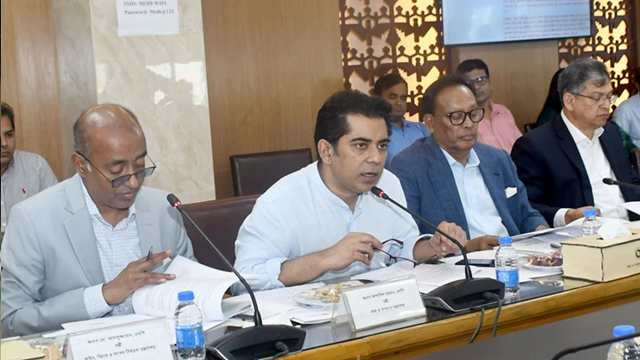
The proposals surfaced following the first meeting of the parliamentary Special Committee on Constitutional Amendment, held at the Jatiya Sangsad complex on Tuesday. The meeting was chaired by Salahuddin Ahmed, a BNP Standing Committee member and the committee's chairman.
The proposed amendments would restore the caretaker government system and the constitutional provision for holding referendums, both of which were abolished by the Fifteenth Amendment. The Constitution would also formally recognize the 2024 student-led uprising and the contributions of the "July fighters."
Committee members are also considering several institutional reforms, including:
- Introducing a bicameral parliament;
- Limiting an individual to two terms as prime minister;
- Expanding the powers of the president;
- Creating multiple deputy speaker positions;
- Increasing reserved seats for women in Parliament; and
- Establishing provisions to revoke the parliamentary membership of lawmakers convicted of moral offences.
- These proposals are being discussed in the context of the proposed "July Charter."
The committee also discussed implementing a recent High Court judgment concerning the Fifteenth Amendment. According to sources, the committee plans to remove Articles 4A, 7A(1)(a) and (b), 7A(2), 7A(3), Article 7B, and Article 44(2) from the Constitution in line with the court's ruling.
The committee is also expected to remove two constitutional schedules added by the Fifteenth Amendment. These include the Fifth Schedule containing Sheikh Mujibur Rahman's March 7 speech and the Sixth Schedule containing his March 26 declaration of independence. The Seventh Schedule, relating to the Mujibnagar Government's Proclamation of Independence issued on April 10, 1971, remains under discussion.
Possible Changes to State Principles
The committee is considering revising the constitutional provision defining the state's guiding principles. Discussions include modifying Article 9 by replacing the term "Bengali nationalism" with "Bangladeshi nationalism."
The constitutional provision requiring the display of Sheikh Mujibur Rahman's portrait in the offices of the President, Prime Minister, Speaker, Chief Justice, government institutions, autonomous bodies, educational institutions, and Bangladesh missions abroad is also proposed to be repealed. However, the existing practice of displaying portraits of the President and Prime Minister would continue.
The High Court previously declared unconstitutional several provisions introduced by the Fifteenth Amendment, particularly those abolishing the caretaker government system and referendum provisions. The court observed that eliminating the caretaker government system had politicized the electoral process, undermined democracy and popular sovereignty, and contributed to controversial national elections in 2014, 2018, and 2024. According to the judgment, these developments ultimately led to the July–August 2024 student-led uprising.
The court also struck down Articles 7A, 7B, and 44(2), describing them as inconsistent with constitutional principles. It stated that Article 7A was vague and could be used to suppress dissent, while Article 7B improperly restricted Parliament's constitutional amendment powers and limited judicial review. Article 44(2) was found to interfere with judicial independence.
Although the court invalidated these specific provisions, it did not strike down the Fifteenth Amendment in its entirety. Instead, it ruled that the remaining provisions could be reviewed, amended, or revised by a future Parliament after consulting the public.
The 12-member Special Committee on Constitutional Amendment was formed on July 13, two days before the conclusion of the second session of the 13th Jatiya Sangsad. Although a 17-member committee had initially been planned, only 12 members were appointed after opposition parties declined to nominate representatives.
Five positions remain vacant, with opposition parties—including Bangladesh Jamaat-e-Islami, the National Citizen Party (NCP), and Bangladesh Khelafat Majlis—yet to submit nominations.
The committee is expected to continue deliberations before finalizing its recommendations for parliamentary consideration.