৪ আশ্বিন ১৪৩৩



Bangladesh, South Korea Sign CEPA; 97% of Bangladeshi Exports to Receive Preferential Tariff Access
05 August 2026 06:08 AM
NEWS DESK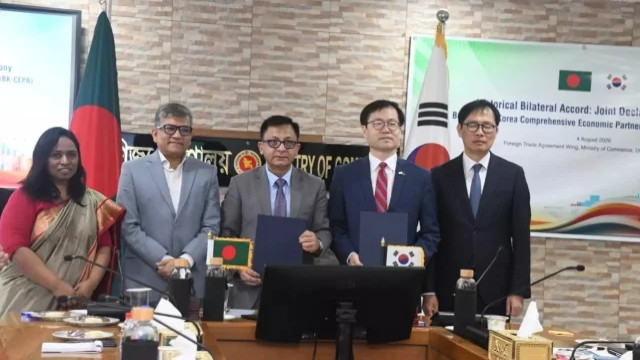
Bangladesh and South Korea have signed a Comprehensive Economic Partnership Agreement (CEPA), under which 97 percent of Bangladeshi exports to the South Korean market will enjoy preferential tariff treatment. In return, Bangladesh will grant preferential market access to 87 percent of South Korean products, including selected agricultural goods, plastics, and completely knocked down (CKD) products
The announcement was made by Bangladesh's Commerce Minister Khandaker Abdul Muqtadir during a joint press conference following the signing ceremony at the Secretariat on Tuesday.
Calling the agreement a "historic achievement" for Bangladesh, the minister said the CEPA would create new employment opportunities, boost exports, and further accelerate the country's economic growth.
Muqtadir said the agreement would provide easier access to the South Korean market for Bangladesh's major export industries, including ready-made garments, leather products, and jute goods. He added that the deal would also support export diversification and strengthen Bangladesh's competitiveness in global markets.
"Securing preferential access for Bangladeshi products in South Korea is a major milestone. The agreement will elevate bilateral trade and economic cooperation to a new level," he said.
The commerce minister noted that the CEPA would play a vital role in helping Bangladesh maintain its trade competitiveness after graduating from the Least Developed Country (LDC) category. It is also expected to attract higher levels of foreign direct investment (FDI).
Bangladesh has set a target of becoming a US$1 trillion economy by 2034, Muqtadir said, adding that achieving this goal will require not only domestic resources but also advanced technology and high-quality foreign investment.
Describing South Korea as a technology-driven economy worth nearly US$2 trillion, he expressed hope that the agreement would encourage greater South Korean investment in sectors such as semiconductors, information technology, shipbuilding, ship recycling, and light engineering.
South Korean Trade Minister Yeo Han-koo praised Bangladesh's economic progress, describing the successful conclusion of the agreement within a short period as a significant achievement.
He said economic relations between the two countries had previously been centered largely on Bangladesh's ready-made garment industry, but the new agreement would expand cooperation into manufacturing, technology, industrial collaboration, and investment.
Highlighting Bangladesh's large and youthful workforce, Yeo said the country's growing pool of skilled human resources has made it an attractive manufacturing destination for South Korean companies.
"Korean companies will be able to manufacture products in Bangladesh and export them not only to South Korea but also to global markets," he said.
Responding to a question about the negotiation process, Muqtadir said the CEPA was concluded through careful and professional negotiations rather than being rushed.
He noted that similar trade agreements typically take 10 to 20 years to finalize, but Bangladesh completed negotiations in just six months through sustained government efforts.
The minister also emphasized that protecting domestic industries remained the government's highest priority throughout the negotiations. To ensure transparency, the full text of the agreement will be made public so that businesses and other stakeholders can better understand its provisions and long-term benefits.
Both Bangladesh and South Korea expressed optimism that the CEPA would mark the beginning of a new chapter in bilateral economic relations, creating fresh opportunities for trade expansion, increased investment, and sustainable economic growth.