[email protected]
শনিবার, ১০ অক্টোবর ২০২৬
২৪ আশ্বিন ১৪৩৩
২৪ আশ্বিন ১৪৩৩

Friday, 9th October 2026


Tarique Rahman Faces a Major Test as Bangladesh’s Energy Crisis Deepens
26 August 2026 07:08 AM
NEWS DESK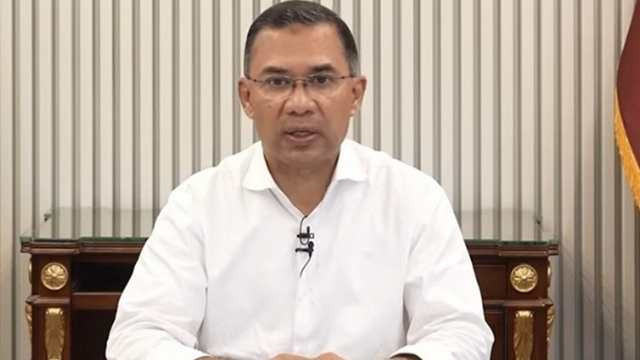
Prime Minister Tarique Rahman’s first months in office have been marked by an effort to project a simpler, more accessible style of governance. But as his government approaches its first six months, a worsening electricity and fuel crisis is emerging as one of its biggest challenges.
Rahman, who returned to Bangladesh after 17 years in exile, entered office promising a fresh political and economic direction. His early moves—including reducing elaborate security arrangements and maintaining a relatively ordinary public presence—have generated expectations that his administration would break with established political practices and focus on improving the lives of ordinary citizens.
Yet the government inherited an economy already under severe pressure. Inflation remains high, private investment has been weak, the banking sector is fragile and businesses continue to face difficulties obtaining financing and importing raw materials and machinery. Government revenues have also fallen short of expectations, leaving the administration dependent on domestic and foreign borrowing to meet its spending needs.
The energy sector has now become an especially serious concern.
Across Bangladesh, prolonged load-shedding has disrupted daily life and industrial production. Factories are reportedly operating below capacity because of inadequate supplies of electricity and natural gas, with some businesses reporting substantial declines in productivity. While rural communities have been particularly affected, electricity shortages have increasingly become a problem in urban areas as well.
Officials have attributed much of the crisis to fuel shortages and difficulties in securing adequate gas supplies. Private power producers have also been pressing the government to clear outstanding payments, including capacity charges, while problems at liquefied natural gas terminals have reportedly further constrained gas supplies.
The situation has prompted allegations that vested interests may be deliberately attempting to destabilize the energy sector and undermine the new government.
Rahman himself has recently warned that a group is conspiring to create instability in the energy sector. Other senior government officials have made similar allegations. The claims have raised concerns about possible collusion involving sections of the bureaucracy, officials associated with state energy institutions, vested business interests and political actors opposed to the government.
However, such allegations require careful investigation and evidence. The government must distinguish between genuine operational failures, financial constraints, international market pressures and any deliberate attempt to manipulate the crisis.
Global energy-market volatility has also contributed to Bangladesh’s difficulties. Disruptions in international supply chains and fluctuations in fuel prices have increased pressure on energy-importing countries. But external shocks alone may not explain the scale of the problems now confronting Bangladesh.
The political implications are particularly significant. Electricity shortages have historically proved highly sensitive in Bangladesh because they affect households, factories, transport, agriculture and virtually every part of the economy. A prolonged energy crisis can quickly translate into public dissatisfaction and political instability.
For that reason, the Rahman government needs to treat the crisis as an immediate national priority rather than simply a political dispute.
One urgent step would be to conduct a comprehensive review of the entire electricity and fuel supply chain, including the Bangladesh Petroleum Corporation and other agencies responsible for energy procurement and distribution. Any evidence of corruption, collusion or unauthorized commissions in power-sector payments should be investigated transparently and, where proven, dealt with decisively.
At the same time, the government needs to engage directly with private power producers and establish a clear plan for settling legitimate outstanding payments. Financial constraints cannot be allowed to become an excuse for further deterioration in electricity generation.
Bangladesh’s foreign-exchange reserves also provide some room for emergency energy procurement. If economically and strategically justified, the government could use available foreign currency to secure additional LNG and other fuel supplies from the international market. Ensuring adequate gas for industries should be a priority because prolonged production disruptions could damage exports, supply chains and employment.
The government could also establish a temporary expert panel comprising energy specialists, economists, engineers and representatives of relevant industries to recommend immediate and medium-term measures. Decisions should be based on transparent data and technical assessments rather than political speculation.
Another concern is government communication. Public statements suggesting that the electricity and fuel situation may not improve for another two years can undermine business confidence and create unnecessary panic. Senior officials need to communicate the seriousness of the problem while demonstrating that the government has a credible plan to address it.
Tarique Rahman’s government has inherited a deeply troubled economy and a strained energy system. But the public will ultimately judge the administration not by the difficulties it inherited, but by how effectively it responds to them.
The immediate task is therefore clear: restore reliable electricity and gas supplies, protect industrial production, stabilize the energy market and investigate any credible evidence of corruption or sabotage.
If the government can achieve those objectives while maintaining transparency and accountability, the optimism surrounding Rahman’s return to Bangladesh could gain a stronger foundation. If it fails, the energy crisis could become not only an economic problem but also a major political liability for the new administration.
Advertisement