In a historic shift, the Bharatiya Janata Party (BJP) is set to form a government in West Bengal for the first time. Meanwhile, actor-turned-politician Vijay (actor)’s party, Tamilaga Vettri Kazhagam (TVK), has emerged as the largest political force in Tamil Nadu.
In Kerala, the Indian National Congress-led United Democratic Front (UDF) is returning to power after a decade.
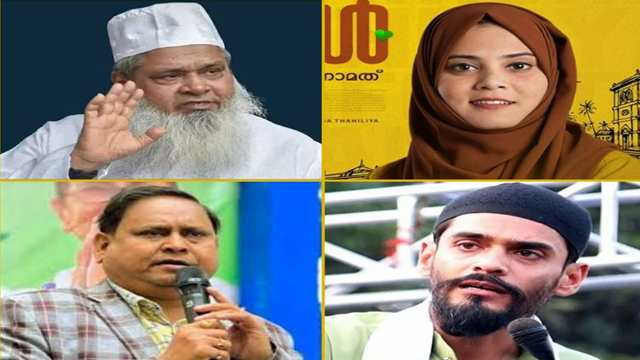
According to a report by ABP News, 107 Muslim candidates have won seats out of a total of 824 across the five regions. Notably, the BJP, which governs at the federal level, did not field a single Muslim candidate in any of these elections.
West Bengal recorded the highest number of winning Muslim candidates, with 40 victories out of 293 contested seats—down from 44 in the 2021 election. The All India Trinamool Congress (TMC) fielded fewer Muslim candidates this time (34 compared to 43 previously), contributing to the decline.
In Kerala, 35 Muslim candidates were elected from 140 seats, making up about 25% of the assembly. Of these, 30 belong to the ruling UDF alliance, including members from the Congress and the Indian Union Muslim League (IUML).
Assam saw 22 Muslim candidates win out of 126 seats, down from 31 previously. Interestingly, 18 of the 19 winning Congress candidates in the state are Muslim. Other winners include members from the All India United Democratic Front (AIUDF) and smaller regional parties.
In Tamil Nadu, Muslim candidates secured 9 out of 134 seats. These included representatives from the Tamil Nadu Muslim Munnetra Kazhagam (TMMK), IUML, Congress, and TVK. Despite Muslims comprising about 5.86% of the population, their legislative representation remains around 3%.
In Puducherry’s 30-member assembly, only one Muslim candidate was elected—AMH Nazeem of the Dravida Munnetra Kazhagam (DMK), representing the Karaikal South constituency. This is seen as disproportionately low given the region’s roughly 6% Muslim population.
Overall, Muslim candidates performed strongly in Kerala and Assam, with success rates exceeding 80%. However, representation in Tamil Nadu and Puducherry remains comparatively low, highlighting ongoing disparities in political inclusion across regions.