৭ কার্তিক ১৪৩৩



India's ‘Cockroach Party’ Sparks Youth Revolt Against Unemployment and Government Neglect
08 June 2026 05:06 AM
NEWS DESK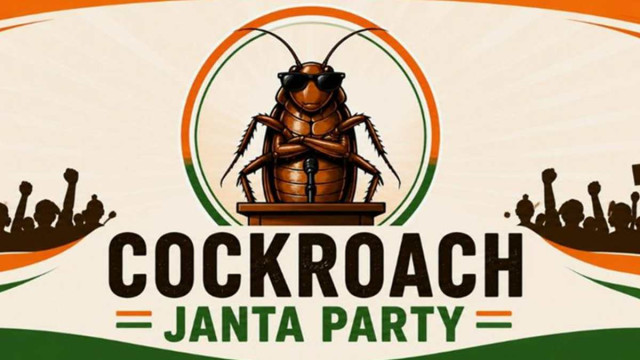
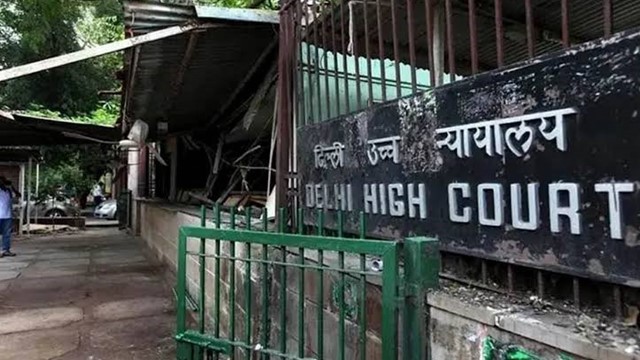
A controversial remark by one of India's top judges comparing unemployed young people to "cockroaches" and "parasites" has triggered what has become the largest online youth protest movement of Prime Minister Narendra Modi's 12-year tenure.
The movement, known as the Cockroach Janata Party (CJP), has rapidly gained momentum across social media platforms, turning a sarcastic political joke into a nationwide expression of frustration among India's youth. The movement now faces its first major test as it attempts to translate online popularity into real-world political action.
Its founder, 30-year-old Abhijit Deepke, arrived in New Delhi from the United States on Saturday to lead the group's first street demonstrations.
"We are seen by the system as nothing more than pests," Deepke told The Telegraph. "We are considered insignificant, disposable, and easy to ignore. But cockroaches survive in every environment. You can try to suppress us, but you cannot wipe us out."
Deepke created the satirical political group after reading remarks made by Chief Justice Surya Kant. During a court hearing, the judge reportedly stated that some young people who fail to secure jobs or establish professional careers become journalists, social media users, right-to-information activists, or other activists who spend their time attacking others.
Although Justice Surya Kant later clarified that his comments were aimed at individuals holding fake degrees, many young Indians viewed the remarks as deeply insulting. What began as online mockery quickly evolved into one of the country's most talked-about protest movements.
The CJP now claims more than 22 million followers on Instagram alone, highlighting widespread dissatisfaction among young Indians who feel ignored by political leaders.
Deepke says the party represents the "lazy, unemployed, and permanently truthful." With more than half of India's 1.42 billion citizens under the age of 30, he believes the movement reflects growing anxiety about education, employment, and opportunity.
The country's examination system has become a particular source of frustration. Every year, millions of students compete for limited places in higher education institutions and government jobs through highly competitive exams. However, repeated incidents involving question paper leaks, scoring errors, and technical failures have fueled anger among students.
According to Deepke, these failures expose broader structural problems facing young people. While India remains one of the world's fastest-growing economies, many young citizens feel that opportunities are not keeping pace with their aspirations.
Official government data shows that unemployment among Indians aged 15 to 20 fell to 9.9 percent in 2025, down from 10.3 percent the previous year. However, World Bank figures indicate that unemployment among those aged 15 to 24 remained close to 16 percent last year.
A recent report by Azim Premji University found that 67 percent of unemployed Indians between the ages of 20 and 29 are university graduates, underscoring the growing gap between educational attainment and job availability.
Deepke argues that the CJP reflects dissatisfaction not only with unemployment but also with democratic institutions and the political establishment itself.
"Young Indians feel completely neglected," he said. "We have record levels of unemployment, a failing education system, and a deeply compromised examination process."
On Saturday, hundreds of protesters gathered near India's Parliament carrying placards and toy cockroaches. The demonstration marked the movement's first major street protest after weeks of online mobilization.
One of the protesters' primary demands was the resignation of Education Minister Dharmendra Pradhan. Deepke accused the government of failing to take responsibility for repeated examination controversies.
"How can an education minister remain in office after such large-scale failures?" he asked. Demonstrators chanted, "The cockroaches are coming, Dharmendra Pradhan is going."
Part of Deepke's appeal stems from his personal story. Raised in Maharashtra's Sambhajinagar district in a Dalit family, he says experiences of caste discrimination and social inequality shaped his political outlook.
"As a Dalit, I have seen life very closely," he said. "Rejecting inequality and discrimination has become a natural part of who I am."
Before moving to the United States in 2024 for postgraduate studies, Deepke worked as a communications strategist for the Aam Aadmi Party, a political organization that emerged from India's anti-corruption movement and became known for its effective use of social media.
Like many educated Indians seeking better opportunities abroad, Deepke left the country in search of a more secure future. He believes this shared experience helps explain why so many young people identify with him.
"Even three weeks ago, I was facing the same concerns as millions of ordinary students," he said.
Supporters have written to him describing the emotional and financial toll of preparing for years only to see examinations canceled or compromised. Others pledged to join protests as soon as he arrived in Delhi, while some warned him to be cautious about potential efforts to suppress the movement.
The rise of the CJP comes at an uncomfortable moment for Prime Minister Narendra Modi. Although his Bharatiya Janata Party (BJP) remains India's dominant political force, growing youth frustration has created a new avenue for public dissent.
Still, analysts caution against overstating the movement's immediate political significance. Modi remains one of the world's most popular elected leaders. A Morning Consult survey published in March found that 68 percent of Indians approved of his performance, placing him ahead of many leaders of major democracies.
Nevertheless, the rapid growth of the Cockroach Janata Party has raised questions about whether a generation that has come of age under Modi's leadership could become a significant source of political opposition.
Deepke insists the movement is not seeking electoral power.
"We are not an electoral party," he said. "But the numbers speak for themselves."
He argued that no generation can be expected to remain loyal to leaders who fail to protect the futures of millions of hardworking young people.
Political analyst Yogendra Yadav, national convenor of the civil society campaign Bharat Jodo Abhiyan, urged caution when assessing the movement's long-term significance.
"I do not yet see the CJP as a movement," Yadav told The Telegraph. "It is better understood as a moment."
According to Yadav, that moment reflects growing discomfort among young Indians with the Modi government, a lack of effective opposition politics, and rising frustration over economic insecurity.
He also highlighted what he described as a central contradiction in contemporary India: increasing public dissatisfaction alongside the government's growing influence over institutions such as elections, the media, and the judiciary.
Yadav argued that traditional opposition parties have struggled to channel public anger effectively, creating a vacuum that new forms of protest can occupy.
Around the world, movements built on humor, memes, and online activism have often proved surprisingly effective at challenging established political systems. Yadav believes the Cockroach Party may be an example of that trend.
Deepke agrees that the frustration extends beyond support for or opposition to any single political party.
"Today's youth are dissatisfied with the entire political structure," he said. "Traditional parties do not speak seriously about young people's problems. They see young people as a vote bank, useful only during elections every five years."
"But politics is not seasonal," he added. "It is a daily process of demanding accountability."