১১ আশ্বিন ১৪৩৩



Europe Scorched by Record Heatwave as Temperatures Soar Above 40°C
29 June 2026 04:06 AM
NEWS DESK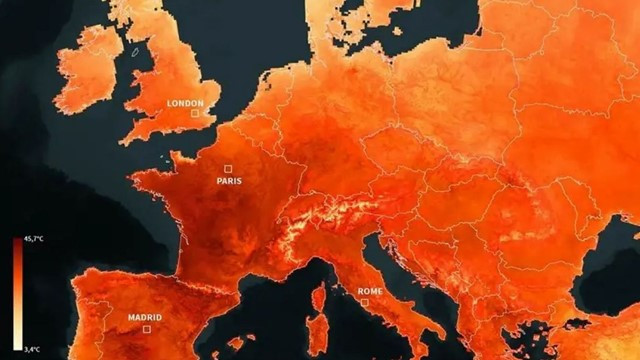
Germany and Italy faced severe disruption on Saturday as an intense heatwave gripped much of Europe, with temperatures surpassing 40°C in several countries and the extreme weather linked to dozens of deaths across Western Europe. Meteorologists warn that the heatwave is now spreading eastward, with more temperature records expected to fall.
Denmark recorded its hottest day since weather observations began in 1874. According to the Danish Meteorological Institute, the temperature reached 36.6°C north of Odense, marking the highest temperature ever recorded in the country. Meanwhile, Slovakia confirmed its warmest night on record, with temperatures remaining above 26.3°C throughout Friday night.
The United Kingdom, France, Switzerland, and Germany have all experienced record-breaking June temperatures. Weather experts say the heatwave is expected to intensify as it moves toward Poland.
In the UK, four people—including a teenager, two men, and a woman—drowned while swimming in open water on Saturday. Two additional drowning deaths were reported earlier in the week, bringing the total number of fatalities during the current heatwave to six. During a heatwave in May, at least 15 people also lost their lives in water-related accidents.
Climate scientists say such an extreme heatwave would have been virtually impossible without human-induced climate change. They estimate that unusually warm nighttime temperatures this week have become 100 times more likely than they were two decades ago.
German meteorologist Carsten Brandt said parts of Germany would experience the peak of the heatwave over the weekend, with temperatures expected to rise well above 40°C. Germany's national weather service reported a preliminary temperature of 41.3°C near Saarbrücken, close to the French border, which could become a new national record.
Authorities issued extreme heat warnings across most of Germany on Saturday and urged residents to conserve water. Temperatures of around 36°C were forecast nationwide, with some regions expected to reach 42°C.
France has also reported multiple heat-related deaths affecting people of all ages. Temperatures exceeding 40°C have disrupted rail services, strained electricity production, forced school closures, postponed outdoor events, and prompted restrictions on alcohol sales in some areas.
Italy's Health Ministry issued the highest-level red heat alert for 18 cities, including Milan, Rome, Turin, Venice, Genoa, Florence, and Bologna, for Saturday and Sunday. Temperatures in parts of the country are forecast to reach 39°C.
French authorities said that although temperatures are expected to ease gradually, pressure on hospitals will likely remain high for several more days. Officials also reported an increase in wildfires compared with the same period last year. Concerns over damage to infrastructure have led some public service providers to reduce transport operations, as extreme heat threatens to warp roads and railway tracks.
Germany's national rail operator, Deutsche Bahn, has allowed passengers to cancel long-distance tickets free of charge until early next week. The company said intense sunshine, thunderstorms, and wildfires have placed additional stress on signalling systems, railway lines, and overhead power cables. Near Hamburg, part of the A7 motorway was closed after extreme heat caused the road surface to crack.
The start of Milan's Pride parade was delayed to avoid the hottest part of the day, while organizers of the Ironman European Championship in Frankfurt shortened the cycling and running routes due to safety concerns.
Germany's Association of Towns and Municipalities called on citizens to use water responsibly. Chief Executive André Berghegger said voluntary conservation should be encouraged before authorities consider imposing restrictions.
Forecasters expect the most intense heat to gradually subside after the weekend, with heavy thunderstorms likely from Sunday onward.
The heatwave has also forced the temporary closure of several historical and cultural landmarks across Europe. Agriculture has suffered significant losses, while hospitals continue to struggle with rising patient numbers.
According to Reuters' climate monitoring system, temperatures in some areas have climbed as much as 18°C above seasonal averages. Meteorologists attribute the prolonged heat to an atmospheric phenomenon known as an "Omega Block," in which a high-pressure system traps hot air over a region while cooler air circulates around it.
Meanwhile, demand for electric fans has surged across Europe, and Asian manufacturers of air conditioners have reported a sharp increase in sales. Experts note that many homes in Northern Europe were originally designed to retain heat during cold winters, leaving them poorly equipped to cope with increasingly frequent and intense summer heatwaves.